Samuel (also Samuil, representing Bulgarian Самуил, pronounced [samuˈil]) was the Tsar (Emperor) of the First Bulgarian Empire from 997 to 6 October 1014. From 977 to 997, he was a general under Roman I of Bulgaria, the second surviving son of Emperor Peter I of Bulgaria, and co-ruled with him, as Roman bestowed upon him the command of the army and the effective royal authority.
As Samuel struggled to preserve his country's independence from the Byzantine Empire, his rule was characterized by constant warfare against the Byzantines and their ambitious ruler Basil II.
In his early years Samuel managed to inflict several major defeats on the Byzantines and to launch offensive campaigns into their territory. But from 1001, he was forced mainly to defend the Empire against the Byzantine armies.
Samuel died of a heart attack on 6 October 1014, two months after the catastrophic battle of Kleidion, and Bulgaria was fully subjugated by Basil II four years later, ending the five decades-long Byzantine–Bulgarian conflict.
Samuel was considered "invincible in power and unsurpassable in strength". Similar comments were made even in Constantinople, where John Kyriotes penned a poem offering a punning comparison between the Bulgarian Emperor and a comet which appeared in 989.
During Samuel's reign, Bulgaria gained control of most of the Balkans (with the notable exception of Thrace) as far as southern Greece. He moved the capital from Skopje to Ohrid, which had been the cultural and military center of southwestern Bulgaria since Boris I's rule, and made the city the seat of the Bulgarian Patriarchate.
Although Samuel's reign brought the end of the First Bulgarian Empire, he is regarded as a heroic ruler in Bulgaria.
References:
http://en.wikipedia.org/wiki/Samuel_of_Bulgaria
Related:
Очите на паметника на цар Самуил светнаха (снимки), 24chasa, 2015 http://buff.ly/1efkr7Z
Showing posts with label Bulgarian History. Show all posts
Showing posts with label Bulgarian History. Show all posts

The Liberation of Sofia in 1878
5 минути София - Освобождението на София, 1878 / 5 minutes Sofia - The Liberation of Sofia in 1878 - YouTube http://buff.ly/1cTnda3
Всяка година на 4 януари камбаните на столичния храм "Света Неделя" бият празнично, възвестявайки благодарствения молебен за освобождението на София от турците.
On 4th January every year the bells of St. Nedelya Church in Sofia announce with their festive ringing the thanksgiving service for the liberation of Sofia from the Turkish rule.
Всяка година на 4 януари камбаните на столичния храм "Света Неделя" бият празнично, възвестявайки благодарствения молебен за освобождението на София от турците.
On 4th January every year the bells of St. Nedelya Church in Sofia announce with their festive ringing the thanksgiving service for the liberation of Sofia from the Turkish rule.
Bulgarian History: Bombing of Sofia in 1940's
5 минути София - Бомбардировките над София / 5 minutes Sofia - Bombing of Sofia - YouTube http://buff.ly/1cTmXbb
Бомбардировките над София през Втората световна война са едно от най-големите нещастия, сполетели града през цялата му история. Между есента на 1943 г. и пролетта на 1944 г. повече от 2000 души загиват, централната част на българската столица е разрушена, а някои исторически сгради и улици се изгубват завинаги.
The bombing of Sofia in World War II was one of the biggest disasters in the city's entire history. Between the autumn 1943 and the spring of 1944 more than 2,000 people were killed, the center of Bulgaria's capital was destroyed, historic buildings and streets were lost forever.
Бомбардировките над София през Втората световна война са едно от най-големите нещастия, сполетели града през цялата му история. Между есента на 1943 г. и пролетта на 1944 г. повече от 2000 души загиват, централната част на българската столица е разрушена, а някои исторически сгради и улици се изгубват завинаги.
The bombing of Sofia in World War II was one of the biggest disasters in the city's entire history. Between the autumn 1943 and the spring of 1944 more than 2,000 people were killed, the center of Bulgaria's capital was destroyed, historic buildings and streets were lost forever.
St. Alexander Nevski Cathedral in Sofia, Bulgaria
Ако има символ, който да се откроява най-силно в новата история на София, то това безспорно е Храм-паметник „Свети Александър Невски". Той е един недвусмислен духовен и архитектурен символ в сърцето на столицата. Когато и да се погледне София от високо, първото, което хваща погледа са златните кубета на храма.
If there is a single most prominent symbol in the recent history of Sofia, it is undoubtedly St. Alexander Nevski Cathedral. As a building and a cultural site the cathedral is a true jewel in the crown of the capital.
If there is a single most prominent symbol in the recent history of Sofia, it is undoubtedly St. Alexander Nevski Cathedral. As a building and a cultural site the cathedral is a true jewel in the crown of the capital.
New Bulgarian house built with only 3 traditional materials: stone, wood, clay
Euromaxx visits a house designed by architect Stefan Dobrev in Bulgaria. Made out of natural materials, Dobrev creates a luxurious yet simple living space that blends in well with the surrounding Rhodope mountains.
"5 minute Sofia" video project
YouTube channel for 5 minute Sofia: http://www.youtube.com/user/5minutesSofia
From Bulgarian:
5 минути София - Спасяването на българските евреи. Според плана на Гестапо първата група евреи от България трябва да бъде депортирана през март 1943 г. В прецизната организация на нацистите не са предвидени действията на няколко смели мъже, подкрепени от цялото българско общество. Спасяването на 40 000 български евреи е един от големите триумфи на толерантността и цивилизованото мислене, които историята помни.
More videos: 5 минути София - Жълтите павета - YouTube http://bit.ly/Ww0tLN
From Bulgarian:
5 минути София - Спасяването на българските евреи. Според плана на Гестапо първата група евреи от България трябва да бъде депортирана през март 1943 г. В прецизната организация на нацистите не са предвидени действията на няколко смели мъже, подкрепени от цялото българско общество. Спасяването на 40 000 български евреи е един от големите триумфи на толерантността и цивилизованото мислене, които историята помни.
More videos: 5 минути София - Жълтите павета - YouTube http://bit.ly/Ww0tLN
5 minute Sofia: Boyana Church
From Bulgarian:
5 минути София - Севастократор Калоян
В пределите на Втората българска държава градът става известен като „един от най-славните и забележителни градове в европейските предели". По време на Второто българско царство се създава книжовна школа. Тук се кръстосвали и пътищата на монаси и книжовници.Севастократор става ктитор на един от най-големите шедьоври на средновековна България - Боянската черква.
YouTube channel for 5 minute Sofia: http://www.youtube.com/user/5minutesSofia
Nesebar, Bulgaria
The town of Nesebar (with a population of 10 000 people) is situated on the Black Sea Shore, 36 km northeast of Burgas. It is in close proximity to another big Bulgarian resort -- Slanchev bryag (Sunny Beach). Today the old and the new part of the town are connected by a narrow isthmus. The old town lies on a small peninsula.
Because of its exceptional cultural and historical value Nesebar was declared a museum, tourist, and resort complex of international importance by virtue of Ordinance No 243 of the Council of Ministers of 18 July 1956. In 1983 Old Nesebar was included in the List of World Cultural Heritage Sites of UNESCO.
Source: NESEBAR -- THE FAIRY PENINSULA - YouTube http://buff.ly/YaWrrt
Related:
Синеморец | Пътуване до... http://bit.ly/1aN0E6j
Опознай България – Несебър – 18 септември 2013 http://buff.ly/19P75d0
Черноморието (2): От Ахелой до о-в Света Анастасия през Поморие и Бургаските минерална бани http://bit.ly/1EVVDdL
Because of its exceptional cultural and historical value Nesebar was declared a museum, tourist, and resort complex of international importance by virtue of Ordinance No 243 of the Council of Ministers of 18 July 1956. In 1983 Old Nesebar was included in the List of World Cultural Heritage Sites of UNESCO.
Source: NESEBAR -- THE FAIRY PENINSULA - YouTube http://buff.ly/YaWrrt
Related:
Синеморец | Пътуване до... http://bit.ly/1aN0E6j
Опознай България – Несебър – 18 септември 2013 http://buff.ly/19P75d0
Черноморието (2): От Ахелой до о-в Света Анастасия през Поморие и Бургаските минерална бани http://bit.ly/1EVVDdL
The Thracian sanctuary near Tatul Village, Bulgaria
The Thracian sanctuary near Tatul Village, Momchilgrad Municipality, is one of the most imposing megalithic monuments discovered on the territory of Bulgaria. It lies just 200 m away from the village and approximately 15 km away from Momchilgrad.
The sanctuary is a massive rock structure and its top is a truncated pyramid. The complex comprises two sarcophagi, a rectangular bed for the main altar, and a three-metre-deep well. It dates back to the end of the 5th and the beginning of the 4th centuries BC. Evidence to that is provided by the clay vessels that were discovered in the region.
Source: Tatul, The Rhodope Mountains - YouTube http://buff.ly/YaVsYn
The sanctuary is a massive rock structure and its top is a truncated pyramid. The complex comprises two sarcophagi, a rectangular bed for the main altar, and a three-metre-deep well. It dates back to the end of the 5th and the beginning of the 4th centuries BC. Evidence to that is provided by the clay vessels that were discovered in the region.
Source: Tatul, The Rhodope Mountains - YouTube http://buff.ly/YaVsYn
Bulgarian Kings: Presian (Bulgarian: Пресиян)
From Wikipedia:
Presian (Bulgarian: Пресиян, Персиян) was the ruler of Bulgaria in 836–852. The Byzantine sources indicate that Presian I was the son of Zvinica (Zbēnitzēs), who was a son of Omurtag.
Presian may have been young and inexperienced at the time of his accession, and state affairs may have been dominated by the minister (kaukhanos) Isbul, as under Presian's uncle Malamir.
Soon after Presian's accession, the Slavs in the vicinity of Thessalonica rebelled against the Byzantine Empire in 837. Emperor Theophilos sought Bulgarian support in putting down the rebellion, but simultaneously arranged for his fleet to sail through the Danube delta and undertake a clandestine evacuation of some of the Byzantine captives settled in trans-Danubian Bulgaria by Krum and Omurtag.
In retaliation Isbul campaigned along the Aegean coasts of Thrace and Macedonia and captured the city of Philippi, where he set up a surviving memorial inscription set up in a local church.
Presian's reign apparently coincides with the extension of Bulgarian control over the Slavic tribes in and around Macedonia. However, Presian's campaigns against the Serbs in about 839–842 failed. By the end of Presian's reign Serbia and Bulgaria lived in an uneasy peace.
References:
Presian. Wikipedia.
http://en.wikipedia.org/wiki/Presian
Presian (Bulgarian: Пресиян, Персиян) was the ruler of Bulgaria in 836–852. The Byzantine sources indicate that Presian I was the son of Zvinica (Zbēnitzēs), who was a son of Omurtag.
Presian may have been young and inexperienced at the time of his accession, and state affairs may have been dominated by the minister (kaukhanos) Isbul, as under Presian's uncle Malamir.
Soon after Presian's accession, the Slavs in the vicinity of Thessalonica rebelled against the Byzantine Empire in 837. Emperor Theophilos sought Bulgarian support in putting down the rebellion, but simultaneously arranged for his fleet to sail through the Danube delta and undertake a clandestine evacuation of some of the Byzantine captives settled in trans-Danubian Bulgaria by Krum and Omurtag.
In retaliation Isbul campaigned along the Aegean coasts of Thrace and Macedonia and captured the city of Philippi, where he set up a surviving memorial inscription set up in a local church.
Presian's reign apparently coincides with the extension of Bulgarian control over the Slavic tribes in and around Macedonia. However, Presian's campaigns against the Serbs in about 839–842 failed. By the end of Presian's reign Serbia and Bulgaria lived in an uneasy peace.
References:
Presian. Wikipedia.
http://en.wikipedia.org/wiki/Presian
Bulgarian Kings: Malamir (Bulgarian: Маламир)
From Wikipedia:
Malamir was a son of Omurtag and a grandson of Krum. His name is said to be of Slavic origin, and is claimed to be the first Bulgar khan to possess a Slavic name. This has led to the speculation that his mother was a Slav, which cannot be proven.
Malamir became ruler of Bulgaria in 831 on the death of his father Omurtag, because his older brother Enravota (Voin) had forfeited his right to the succession by becoming a Christian. It is possible that Malamir was young and inexperienced at the time of his accession, and that affairs of state were managed by his minister (kaukhanos) Isbul.
Around 833, Malamir executed his older brother Enravota for refusing to renounce Christianity. After the expiration of the original 20-year peace treaty with the Byzantine Empire in 836, emperor Theophilos ravaged the regions inside the Bulgarian frontier.
The Bulgarians retaliated, and under the leadership of Isbul they reached Adrianople. At this time, if not earlier, the Bulgarians annexed Philippopolis (Plovdiv) and its environs.
Malamir died in 836, allegedly as retribution for his execution of his older brother.
References:
Malamir. Wikipedia.
http://en.wikipedia.org/wiki/Malamir_of_Bulgaria
Malamir was a son of Omurtag and a grandson of Krum. His name is said to be of Slavic origin, and is claimed to be the first Bulgar khan to possess a Slavic name. This has led to the speculation that his mother was a Slav, which cannot be proven.
Malamir became ruler of Bulgaria in 831 on the death of his father Omurtag, because his older brother Enravota (Voin) had forfeited his right to the succession by becoming a Christian. It is possible that Malamir was young and inexperienced at the time of his accession, and that affairs of state were managed by his minister (kaukhanos) Isbul.
Around 833, Malamir executed his older brother Enravota for refusing to renounce Christianity. After the expiration of the original 20-year peace treaty with the Byzantine Empire in 836, emperor Theophilos ravaged the regions inside the Bulgarian frontier.
The Bulgarians retaliated, and under the leadership of Isbul they reached Adrianople. At this time, if not earlier, the Bulgarians annexed Philippopolis (Plovdiv) and its environs.
Malamir died in 836, allegedly as retribution for his execution of his older brother.
References:
Malamir. Wikipedia.
http://en.wikipedia.org/wiki/Malamir_of_Bulgaria
Bulgarian Kings: Omurtag (Bulgarian: Омуртаг)
From Wikipedia:
Omurtag or Omortag (Bulgarian: Омуртаг) was a Great Khan (Kana syubigi) of Bulgaria from 815 to 831. He is known as "the Builder".
In the very beginning of his reign he signed a 30-year peace treaty with the Byzantines which remained in force to the end of his life. Omurtag successfully coped with the aggressive policy of the Frankish Empire to take Bulgaria's north-western lands and suppressed the unrest among several Slavic tribes. He made administrative reforms which increased the power and the authority of the central government. His reign was marked with a strong development of the Bulgarian architecture with a number of significant construction projects.
Omurtag's Tarnovo Inscription
The Omurtag's Tarnovo Inscription is an inscription in Greek language, engraved on a column of dark syenite found in the SS. Forty Martyrs Church in Tarnovo. The inscription was known since 1858 when Hristo Daskalov from Tryavna managed to visit the church (which was converted to a mosque at that time) and to make a replica of the inscription.
Along with the Chatalar Inscription, the Tarnovo inscription testifies for the active construction during the reign of Khan Omurtag (814-831). It is assumed that the inscription was made in 822. The historians are uncertain about the original location of the inscription (probably Pliska) and the location of the "new home on the Danube", for which the inscription was created - Silistra, the village of Malak Preslavets.
The final lines of Omurtag's Turnovo Inscription reveal Omurtag's message to future generations:
"Even if a man lives well, he dies and another one comes into existence. Let the one who comes later upon seeing this inscription remember the one who had made it."
Persecution of the Christians
Omurtag pursued policy of repression against Christians, in particular against the Byzantine prisoners of war settled by his father Krum in Bulgaria (mostly north of the Danube). This policy may have been motivated in part by the Byzantine invasion of 811 or with the beginning of Christian proselytizing by members of the substantial captive population. In connection with these policies, Omurtag disinherited his eldest son Enravota (Voin or Boyan), who had shown himself sympathetic to Christianity.
References:
Omurtag. Wikipedia.
http://en.wikipedia.org/wiki/Omurtag_of_Bulgaria
Omurtag's Tarnovo Inscription
http://en.wikipedia.org/wiki/Omurtag's_Tarnovo_Inscription
Omurtag or Omortag (Bulgarian: Омуртаг) was a Great Khan (Kana syubigi) of Bulgaria from 815 to 831. He is known as "the Builder".
In the very beginning of his reign he signed a 30-year peace treaty with the Byzantines which remained in force to the end of his life. Omurtag successfully coped with the aggressive policy of the Frankish Empire to take Bulgaria's north-western lands and suppressed the unrest among several Slavic tribes. He made administrative reforms which increased the power and the authority of the central government. His reign was marked with a strong development of the Bulgarian architecture with a number of significant construction projects.
Omurtag's Tarnovo Inscription
The Omurtag's Tarnovo Inscription is an inscription in Greek language, engraved on a column of dark syenite found in the SS. Forty Martyrs Church in Tarnovo. The inscription was known since 1858 when Hristo Daskalov from Tryavna managed to visit the church (which was converted to a mosque at that time) and to make a replica of the inscription.
Along with the Chatalar Inscription, the Tarnovo inscription testifies for the active construction during the reign of Khan Omurtag (814-831). It is assumed that the inscription was made in 822. The historians are uncertain about the original location of the inscription (probably Pliska) and the location of the "new home on the Danube", for which the inscription was created - Silistra, the village of Malak Preslavets.
The final lines of Omurtag's Turnovo Inscription reveal Omurtag's message to future generations:
"Even if a man lives well, he dies and another one comes into existence. Let the one who comes later upon seeing this inscription remember the one who had made it."
Persecution of the Christians
Omurtag pursued policy of repression against Christians, in particular against the Byzantine prisoners of war settled by his father Krum in Bulgaria (mostly north of the Danube). This policy may have been motivated in part by the Byzantine invasion of 811 or with the beginning of Christian proselytizing by members of the substantial captive population. In connection with these policies, Omurtag disinherited his eldest son Enravota (Voin or Boyan), who had shown himself sympathetic to Christianity.
References:
Omurtag. Wikipedia.
http://en.wikipedia.org/wiki/Omurtag_of_Bulgaria
Omurtag's Tarnovo Inscription
http://en.wikipedia.org/wiki/Omurtag's_Tarnovo_Inscription
Bulgarian Kings: Krum (Bulgarian: Крум)
From Wikipedia:
Krum (Bulgarian: Крум) was Khan of Bulgaria, from after 796 to 814 AD. During his reign the Bulgarian territory doubled in size, spreading from the middle Danube to the Dnieper and from Odrin to the Tatra Mountains.
Family Origin
There are two hypotheses about the family origin of Krum. According to the first one, his family has come from Pannonia, where it had been in service of the Avars whereas according the second and more popular, Krum was born in Macedonia. This could give further explanation to the fact that Krum was described and portrayed by the Byzantine chronists as a light-hairеd man with light eyes.
Establishment of New Borders
In c. 805, Krum took advantage of the defeat of the Avar Khaganate to destroy the remainder of the Avars and to expand his authority across the Carpathians over Transylvania and along the Danube into eastern Pannonia. This resulted in the establishment of a common border between the Frankish Empire and Bulgaria, which would have important repercussions for the policy of Krum's successors.
5 интересни факта за хан Крум - YouTube https://www.youtube.com/watch?v=XbAMIV1xjfY
Conflict with Nikephoros I
Krum engaged in a policy of territorial expansion. In 807 the Bulgarian forces defeated the Byzantine army in the Struma valley. In 809 Krum besieged and forced the surrender of Serdica (Sofia), slaughtering the Byzantine garrison of 6,000 men in spite of his promise of safe conduct (Siege of Serdica, 809). This provoked the reaction of the Byzantine Emperor Nikephoros I, who proceeded to settle Anatolian populations along the frontier to protect it. He also attempted to retake and refortify Serdica, although this enterprise ultimately failed.
In early 811, Nikephoros I undertook a massive expedition against Bulgaria, and advanced to Marcellae (near Karnobat). Here Krum attempted to negotiate on July 11, 811, but Nikephoros was determined to continue with his advance. His army managed to avoid the Bulgarian ambushes in the Balkan Mountains and defeated an army of 12,000 men that tried to block their advance into Moesia. Another hastily assembled army of 50,000 men was defeated before the walls of the Bulgarian capital Pliska, which fell to the emperor on July 20. Here Nikephoros, who had been a financial minister before becoming emperor, helped himself to the treasures of Krum, while setting the city afire and turning his army on the population. A new diplomatic tentative from Krum was rebuffed.
While Nikephoros I and his army were busy pillaging, devastating and plundering the Bulgarian capital, Krum mobilized his people (including the women) to set traps and ambushes in the mountain passes. On his way back to Constantinople the emperor learnt about these preparations for battle. The panicked emperor repeatedly stated to his companions "Even if we have had wings we could not have escaped from peril." At dawn on July 26 the Byzantines found themselves trapped against a moat and wooden wall in the Vărbica pass. Nikephoros was killed in the ensuing battle together with many of his troops, while his son Staurakios was carried to safety by the imperial bodyguard after receiving a paralyzing wound to his neck. According to tradition, Krum had the Emperor's skull lined with silver and used it as a drinking cup.
Krum spent the winter of 813 preparing for a major attack on Constantinople, where rumor reported the assembling of an extensive siege park to be transported on 5,000 carts. However, before he set out, he died on April 13, 814, and was succeeded by his son Omurtag.
Legacy
Krum was also remembered for instituting the first known written Bulgarian law code which ensured subsidies to beggars and state protection to all poor Bulgarians. Drinking, slander and robbery were severely punished. Through his laws he became known as a strict but just ruler, bringing Slavs and Bulgars into a centralized state.
References:
Krum. Wikipedia.
Related reading:
Загадъчната смърт на кханасюбиги Крум - SegaBG, 2014 http://buff.ly/1cXbR4W
Krum (Bulgarian: Крум) was Khan of Bulgaria, from after 796 to 814 AD. During his reign the Bulgarian territory doubled in size, spreading from the middle Danube to the Dnieper and from Odrin to the Tatra Mountains.
Family Origin
There are two hypotheses about the family origin of Krum. According to the first one, his family has come from Pannonia, where it had been in service of the Avars whereas according the second and more popular, Krum was born in Macedonia. This could give further explanation to the fact that Krum was described and portrayed by the Byzantine chronists as a light-hairеd man with light eyes.
Establishment of New Borders
In c. 805, Krum took advantage of the defeat of the Avar Khaganate to destroy the remainder of the Avars and to expand his authority across the Carpathians over Transylvania and along the Danube into eastern Pannonia. This resulted in the establishment of a common border between the Frankish Empire and Bulgaria, which would have important repercussions for the policy of Krum's successors.
5 интересни факта за хан Крум - YouTube https://www.youtube.com/watch?v=XbAMIV1xjfY
Conflict with Nikephoros I
Krum engaged in a policy of territorial expansion. In 807 the Bulgarian forces defeated the Byzantine army in the Struma valley. In 809 Krum besieged and forced the surrender of Serdica (Sofia), slaughtering the Byzantine garrison of 6,000 men in spite of his promise of safe conduct (Siege of Serdica, 809). This provoked the reaction of the Byzantine Emperor Nikephoros I, who proceeded to settle Anatolian populations along the frontier to protect it. He also attempted to retake and refortify Serdica, although this enterprise ultimately failed.
In early 811, Nikephoros I undertook a massive expedition against Bulgaria, and advanced to Marcellae (near Karnobat). Here Krum attempted to negotiate on July 11, 811, but Nikephoros was determined to continue with his advance. His army managed to avoid the Bulgarian ambushes in the Balkan Mountains and defeated an army of 12,000 men that tried to block their advance into Moesia. Another hastily assembled army of 50,000 men was defeated before the walls of the Bulgarian capital Pliska, which fell to the emperor on July 20. Here Nikephoros, who had been a financial minister before becoming emperor, helped himself to the treasures of Krum, while setting the city afire and turning his army on the population. A new diplomatic tentative from Krum was rebuffed.
While Nikephoros I and his army were busy pillaging, devastating and plundering the Bulgarian capital, Krum mobilized his people (including the women) to set traps and ambushes in the mountain passes. On his way back to Constantinople the emperor learnt about these preparations for battle. The panicked emperor repeatedly stated to his companions "Even if we have had wings we could not have escaped from peril." At dawn on July 26 the Byzantines found themselves trapped against a moat and wooden wall in the Vărbica pass. Nikephoros was killed in the ensuing battle together with many of his troops, while his son Staurakios was carried to safety by the imperial bodyguard after receiving a paralyzing wound to his neck. According to tradition, Krum had the Emperor's skull lined with silver and used it as a drinking cup.
Krum spent the winter of 813 preparing for a major attack on Constantinople, where rumor reported the assembling of an extensive siege park to be transported on 5,000 carts. However, before he set out, he died on April 13, 814, and was succeeded by his son Omurtag.
Legacy
Krum was also remembered for instituting the first known written Bulgarian law code which ensured subsidies to beggars and state protection to all poor Bulgarians. Drinking, slander and robbery were severely punished. Through his laws he became known as a strict but just ruler, bringing Slavs and Bulgars into a centralized state.
References:
Krum. Wikipedia.
Khan Krum in the mind of today's students during exams. Trud.bg, newspaper, in Bulgarian.
Related reading:
Загадъчната смърт на кханасюбиги Крум - SegaBG, 2014 http://buff.ly/1cXbR4W
Bulgarian Kings: Kardam (Bulgarian: Кардам)
From Wikipedia:
Kardam (Bulgarian: Кардам) was the ruler of Bulgaria 777–803.
The name of Kardam is first encountered in the Byzantine sources in 791, when Emperor Constantine VI embarked on an expedition against Bulgaria, in retaliation for Bulgarian incursions in the Struma valley since 789. Kardam pre-empted the Byzantine invasion and met the enemy near Adrianople in Thrace. The Byzantine army was defeated and turned to flight.
In 792 Constantine VI led another army against the Bulgarians and encamped at Marcellae (near Karnobat), which he proceeded to fortify. Kardam arrived with his army on July 20 and occupied the neighboring heights. After some time passed with the two forces sizing up, Constantine VI gave in to the reassuring advice of a "false prophet" and ordered the attack. But the Byzantine forces lost formation and once again were defeated and turned to flight, while Kardam captured the imperial tent and the emperor's servants (battle of Marcelae). After his return to Constantinople, Constantine VI signed a peace treaty and undertook to pay an annual tribute to Bulgaria.
By 796 the imperial government was recalcitrant and Kardam found it necessary to demand the tribute while threatening to devastate Thrace if it were not paid. According to the chronicler Theophanes the Confessor, Constantine VI mocked the demand by having dung sent instead of gold as "fitting tribute" and promising to lead a new army against the elderly Kardam at Marcellae.
Once again the emperor headed north, and once again he encountered Kardam in the vicinity of Adrianople. The armies faced each other for 17 days without entering into battle, while the two monarchs probably engaged in negotiations. In the end conflict was averted and the peace resumed on the same terms as in 792.
The reign of Kardam represents the restoration of order in Bulgaria, which had suffered from a rapid turnover of rulers and had been repeatedly defeated by the Byzantines in the third quarter of the 8th century. Kardam not only stood his ground against Constantine VI (who was trying to emulate his much more successful grandfather and namesake Constantine V), but he may have succeeded in precipitating a crisis at the Byzantine court, where Constantine VI's repeated failures undermined the emperor's position and he was dethroned by his mother Irene in 797. Kardam probably did not long survive his opponent, as he is not heard of after 796 and was already dead by 803.
References:
Kardam. Wikipedia.
http://en.wikipedia.org/wiki/Kardam_of_Bulgaria
Kardam (Bulgarian: Кардам) was the ruler of Bulgaria 777–803.
The name of Kardam is first encountered in the Byzantine sources in 791, when Emperor Constantine VI embarked on an expedition against Bulgaria, in retaliation for Bulgarian incursions in the Struma valley since 789. Kardam pre-empted the Byzantine invasion and met the enemy near Adrianople in Thrace. The Byzantine army was defeated and turned to flight.
In 792 Constantine VI led another army against the Bulgarians and encamped at Marcellae (near Karnobat), which he proceeded to fortify. Kardam arrived with his army on July 20 and occupied the neighboring heights. After some time passed with the two forces sizing up, Constantine VI gave in to the reassuring advice of a "false prophet" and ordered the attack. But the Byzantine forces lost formation and once again were defeated and turned to flight, while Kardam captured the imperial tent and the emperor's servants (battle of Marcelae). After his return to Constantinople, Constantine VI signed a peace treaty and undertook to pay an annual tribute to Bulgaria.
By 796 the imperial government was recalcitrant and Kardam found it necessary to demand the tribute while threatening to devastate Thrace if it were not paid. According to the chronicler Theophanes the Confessor, Constantine VI mocked the demand by having dung sent instead of gold as "fitting tribute" and promising to lead a new army against the elderly Kardam at Marcellae.
Once again the emperor headed north, and once again he encountered Kardam in the vicinity of Adrianople. The armies faced each other for 17 days without entering into battle, while the two monarchs probably engaged in negotiations. In the end conflict was averted and the peace resumed on the same terms as in 792.
The reign of Kardam represents the restoration of order in Bulgaria, which had suffered from a rapid turnover of rulers and had been repeatedly defeated by the Byzantines in the third quarter of the 8th century. Kardam not only stood his ground against Constantine VI (who was trying to emulate his much more successful grandfather and namesake Constantine V), but he may have succeeded in precipitating a crisis at the Byzantine court, where Constantine VI's repeated failures undermined the emperor's position and he was dethroned by his mother Irene in 797. Kardam probably did not long survive his opponent, as he is not heard of after 796 and was already dead by 803.
References:
Kardam. Wikipedia.
http://en.wikipedia.org/wiki/Kardam_of_Bulgaria
Poem "Levski" from "Epic of the Forgotten" by Ivan Vazov
This is one of the most moving literary works devoted to Vasil Levski, one of Bulgaria's national heroes.
Vasil Levski (Bulgarian: Васил Левски, originally spelled Василъ Львскій, 18 July 1837–18 February 1873), dubbed the Apostle of Freedom, strategised a revolutionary movement to liberate Bulgaria from Ottoman rule.

Ivan Vazov (Bulgarian: Иван Вазов) (June 27, 1850 - September 22, 1921) was one of the most famous Bulgarian poets, novelists and playwrights. He was born in Sopot, a town in the Rose Valley of Bulgaria (then part of the Ottoman Empire).

Ivan Vazov. Image source: Wikipedia, public domain.
Excerpts from the Poem "Levski" from "Epic of the Forgotten" by Ivan Vazov (in Bulgarian)
Девет годин той
скита се бездомен, без сън, без покой,
под вънкашност чужда и под име ново
и с сърце порасло и за кръст готово,
и носи съзнанье, крепост, светлина
на робите слепи в робската страна.
Думите му бяха и прости и кратки,
пълни с упованье и надежди сладки.
Говореше често за бунт, за борба,
кат за една ближна обща веселба,
часът на която беше неизвестен;
изпитваше кой е сърцат, сиреч честен,
участник да стане във подвига свят;
всяк един слушател беше му и брат.
В бъдещето тъмно той гледаше ясно.
Той любеше свойто отечество красно.
Той беше скиталец и кат дете прост
и като отшелник живееше в пост.
Горите, полята познати му бяха;
всичките пътеки кракът му видяха,
пустинята знайше неговия глас,
хижата го знайше и на всеки час
вратата й за него отворена беше.
Той се не боеше, под небето спеше,
ходеше замислен, сам-си без другар.
Тая заран млад е, довечера стар,
одеве търговец, сега просяк дрипав,
кога беше нужно - хром, и сляп, и клипав;
днес в селото глухо, утре в някой град
говореше тайно за ближний преврат,
за бунт, за свобода, за смъртта, за гробът,
и че време веч е да въстане робът;
че щастлив е оня, който дигне пръв
народното знаме и пролее кръв,
и че трябва твърдост, кураж, постоянство,
че страхът е подлост, гордостта - пиянство,
че равни сме всички в големия час -
той внасяше бодрост в народната свяст.
И всякоя възраст, класа, пол, занятье
зимаше участье в това предприятье;
богатий с парите, сюрмахът с трудът,
момите с иглата, учений с умът,
а той беден, гол, бос, лишен от имотът,
за да е полезен дал си бе животът!
Той беше невидим, фантом, или сянка.
Озове се в черква, мерне се в седянка.
Покаже се, скрий се без знак и без след,
навсякъде гонен, всякъде приет.
Веднъж във събранье едно многобройно
той влезна внезапно, поздрави спокойно,
и лепна плесница на един подлец,
и излезе тихо из малкий градец.
Името му беше знак зарад тревога,
властта беше вредом невидима, строга,
обсаждаше двайсет града изведнъж,
да улови тоя демон вездесъщ.
От лице му мрачно всички се бояха,
селяните прости светец го зовяха
и сбрани, сдушени във тайни места
слушаха със трепет, с зяпнали уста
неговото слово сладко и опасно,
И тям на душата ставаше по-ясно.
Click here for the English translation from Slovoto.bg.
References:
Vasil Levski. Wikipedia.
Ivan Vazov. Wikipedia.
Ivan Vazov - The revolutionary poet. Sofia Echo, 2003.
Vasil Levski (Bulgarian: Васил Левски, originally spelled Василъ Львскій, 18 July 1837–18 February 1873), dubbed the Apostle of Freedom, strategised a revolutionary movement to liberate Bulgaria from Ottoman rule.
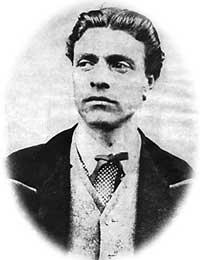
Photograph portrait of Vasil Levski (1837–73). Image source: Wikipedia, public domain.

Ivan Vazov (Bulgarian: Иван Вазов) (June 27, 1850 - September 22, 1921) was one of the most famous Bulgarian poets, novelists and playwrights. He was born in Sopot, a town in the Rose Valley of Bulgaria (then part of the Ottoman Empire).
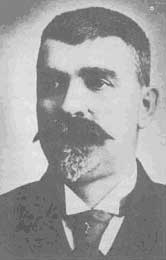
Ivan Vazov. Image source: Wikipedia, public domain.

Excerpts from the Poem "Levski" from "Epic of the Forgotten" by Ivan Vazov (in Bulgarian)
Девет годин той
скита се бездомен, без сън, без покой,
под вънкашност чужда и под име ново
и с сърце порасло и за кръст готово,
и носи съзнанье, крепост, светлина
на робите слепи в робската страна.
Думите му бяха и прости и кратки,
пълни с упованье и надежди сладки.
Говореше често за бунт, за борба,
кат за една ближна обща веселба,
часът на която беше неизвестен;
изпитваше кой е сърцат, сиреч честен,
участник да стане във подвига свят;
всяк един слушател беше му и брат.
В бъдещето тъмно той гледаше ясно.
Той любеше свойто отечество красно.
Той беше скиталец и кат дете прост
и като отшелник живееше в пост.
Горите, полята познати му бяха;
всичките пътеки кракът му видяха,
пустинята знайше неговия глас,
хижата го знайше и на всеки час
вратата й за него отворена беше.
Той се не боеше, под небето спеше,
ходеше замислен, сам-си без другар.
Тая заран млад е, довечера стар,
одеве търговец, сега просяк дрипав,
кога беше нужно - хром, и сляп, и клипав;
днес в селото глухо, утре в някой град
говореше тайно за ближний преврат,
за бунт, за свобода, за смъртта, за гробът,
и че време веч е да въстане робът;
че щастлив е оня, който дигне пръв
народното знаме и пролее кръв,
и че трябва твърдост, кураж, постоянство,
че страхът е подлост, гордостта - пиянство,
че равни сме всички в големия час -
той внасяше бодрост в народната свяст.
И всякоя възраст, класа, пол, занятье
зимаше участье в това предприятье;
богатий с парите, сюрмахът с трудът,
момите с иглата, учений с умът,
а той беден, гол, бос, лишен от имотът,
за да е полезен дал си бе животът!
Той беше невидим, фантом, или сянка.
Озове се в черква, мерне се в седянка.
Покаже се, скрий се без знак и без след,
навсякъде гонен, всякъде приет.
Веднъж във събранье едно многобройно
той влезна внезапно, поздрави спокойно,
и лепна плесница на един подлец,
и излезе тихо из малкий градец.
Името му беше знак зарад тревога,
властта беше вредом невидима, строга,
обсаждаше двайсет града изведнъж,
да улови тоя демон вездесъщ.
От лице му мрачно всички се бояха,
селяните прости светец го зовяха
и сбрани, сдушени във тайни места
слушаха със трепет, с зяпнали уста
неговото слово сладко и опасно,
И тям на душата ставаше по-ясно.
Click here for the English translation from Slovoto.bg.
References:
Vasil Levski. Wikipedia.
Ivan Vazov. Wikipedia.
Ivan Vazov - The revolutionary poet. Sofia Echo, 2003.
Интрига лишава Вазов от Нобел. 24Chasa.bg newspaper, 2010 (in Bulgarian).
Expat in Bulgaria.
Epic of the Forgotten. Ivan Vazov. Slovoto: Bulgarian and English.
Expat in Bulgaria.
Epic of the Forgotten. Ivan Vazov. Slovoto: Bulgarian and English.
Lest We Forget | Flickr http://goo.gl/GFOt
Hero | Flickr http://goo.gl/WMYB
Related books:
Related books:
Books about Bulgarian Cuisine
Cuisine of Bulgaria - Wikibooks http://goo.gl/fLpne
Bulgarian Cuisine http://goo.gl/FPYPi
https://www.mamaenbulgaria.com/2017/07/gastronomia-bulgara-platos-tipicos-Bulgaria.html
Bulgarian Cuisine http://goo.gl/FPYPi
https://www.mamaenbulgaria.com/2017/07/gastronomia-bulgara-platos-tipicos-Bulgaria.html
Bulgarian Kings: Kardam (Bulgarian: Кардам)
From Wikipedia:
Kardam (Bulgarian: Кардам) was the ruler of Bulgaria 777–803. The name of Kardam is first encountered in the Byzantine sources in 791, when Emperor Constantine VI embarked on an expedition against Bulgaria, in retaliation for Bulgarian incursions in the Struma valley since 789. Kardam pre-empted the Byzantine invasion and met the enemy near Adrianople in Thrace. The Byzantine army was defeated and turned to flight.
In 792 Constantine VI led another army against the Bulgarians and encamped at Marcellae (near Karnobat), which he proceeded to fortify. Kardam arrived with his army and occupied the neighboring heights. Constantine VI ordered an attack but the Byzantine forces lost formation and were defeated and turned to flight, while Kardam captured the imperial tent and the emperor's servants. After his return to Constantinople, Constantine VI signed a peace treaty and undertook to pay an annual tribute to Bulgaria.
By 796 the imperial government was recalcitrant and Kardam found it necessary to demand the tribute while threatening to devastate Thrace if it were not paid. Constantine VI mocked the demand by having dung sent instead of gold as "fitting tribute" and promising to lead a new army against the elderly Kardam. Once again the emperor headed north, and he encountered Kardam in the vicinity of Adrianople. The armies faced each other for 17 days without entering into battle, while the two monarchs probably engaged in negotiations. In the end, conflict was averted and the peace resumed on the same terms as in 792.
The reign of Kardam represents the restoration of order in Bulgaria, which had suffered from a rapid turnover of rulers and had been repeatedly defeated by the Byzantines in the third quarter of the 8th century. Kardam not only stood his ground against Constantine VI (who was trying to emulate his much more successful grandfather and namesake Constantine V), but he may have succeeded in precipitating a crisis at the Byzantine court, where Constantine VI's repeated failures undermined the emperor's position and he was dethroned by his mother Irene in 797. Kardam probably did not long survive his opponent, as he is not heard of after 796 and was already dead in 803.
His successor Korym (i.e., Krum) was probably his nephew. Kardam's accession signifies the final restoration of the Dulo clan, which would have retained the throne until the death of Roman in 997.
Video: The Bulgarian Rulers (for illustrative purposes only, the accuracy can be disputed).
References:
Kardam of Bulgaria. Wikipedia.
Kardam (Bulgarian: Кардам) was the ruler of Bulgaria 777–803. The name of Kardam is first encountered in the Byzantine sources in 791, when Emperor Constantine VI embarked on an expedition against Bulgaria, in retaliation for Bulgarian incursions in the Struma valley since 789. Kardam pre-empted the Byzantine invasion and met the enemy near Adrianople in Thrace. The Byzantine army was defeated and turned to flight.
In 792 Constantine VI led another army against the Bulgarians and encamped at Marcellae (near Karnobat), which he proceeded to fortify. Kardam arrived with his army and occupied the neighboring heights. Constantine VI ordered an attack but the Byzantine forces lost formation and were defeated and turned to flight, while Kardam captured the imperial tent and the emperor's servants. After his return to Constantinople, Constantine VI signed a peace treaty and undertook to pay an annual tribute to Bulgaria.
By 796 the imperial government was recalcitrant and Kardam found it necessary to demand the tribute while threatening to devastate Thrace if it were not paid. Constantine VI mocked the demand by having dung sent instead of gold as "fitting tribute" and promising to lead a new army against the elderly Kardam. Once again the emperor headed north, and he encountered Kardam in the vicinity of Adrianople. The armies faced each other for 17 days without entering into battle, while the two monarchs probably engaged in negotiations. In the end, conflict was averted and the peace resumed on the same terms as in 792.
The reign of Kardam represents the restoration of order in Bulgaria, which had suffered from a rapid turnover of rulers and had been repeatedly defeated by the Byzantines in the third quarter of the 8th century. Kardam not only stood his ground against Constantine VI (who was trying to emulate his much more successful grandfather and namesake Constantine V), but he may have succeeded in precipitating a crisis at the Byzantine court, where Constantine VI's repeated failures undermined the emperor's position and he was dethroned by his mother Irene in 797. Kardam probably did not long survive his opponent, as he is not heard of after 796 and was already dead in 803.
His successor Korym (i.e., Krum) was probably his nephew. Kardam's accession signifies the final restoration of the Dulo clan, which would have retained the throne until the death of Roman in 997.
Video: The Bulgarian Rulers (for illustrative purposes only, the accuracy can be disputed).
References:
Kardam of Bulgaria. Wikipedia.
Bulgarian Kings: Telerig (Bulgarian: Телериг)
From Wikipedia:
Telerig (Bulgarian: Телериг) was the ruler of Bulgaria 768–777. He was the immediate successor of Pagan, who was murdered in 768. In May 774, the Byzantine Emperor Constantine V Kopronymos embarked on a major expedition against Bulgaria, leading his field army on land, and dispatching a fleet of 2,000 ships carrying horsemen towards the Danube delta. The fleet dismebarked in the vicinity of Varna, but the emperor inexplicably retreated.
Shortly afterwards the two sides signed a truce promising the cessation of hostilities. However, in October 774 Telerig sent an army of 12,000 men to raid Berzitia, Macedonia and to transfer its population to Bulgaria. Collecting a large army of 80,000 troops, Constantine V surprised the Bulgarians and won a resounding victory. The subsequent attack on Bulgaria failed, because the imperial fleet encountered contrary winds in the Black Sea.
At this point Telerig sent a secret emissary to Constantine V, indicating his intention to flee Bulgaria and seek refuge with the emperor, and seeking assurances of hospitality. Telerig succeeded in having the emperor betray his own agents in Bulgaria, who were duly rounded up and executed. The expected Byzantine retaliation failed to materialize as Constantine V died in 775. In spite of his apparent success, Telerig found it necessary to flee to the new Byzantine emperor, Leo IV the Khazar in 777. The Byzantine government gave Telerig asylum and the title of patrikios. Telerig converted to Christianity under the name of Theophylaktos and married a cousin of the Empress Eirene.
References:
Telerig. Wikipedia.
Related books:
Telerig (Bulgarian: Телериг) was the ruler of Bulgaria 768–777. He was the immediate successor of Pagan, who was murdered in 768. In May 774, the Byzantine Emperor Constantine V Kopronymos embarked on a major expedition against Bulgaria, leading his field army on land, and dispatching a fleet of 2,000 ships carrying horsemen towards the Danube delta. The fleet dismebarked in the vicinity of Varna, but the emperor inexplicably retreated.
Shortly afterwards the two sides signed a truce promising the cessation of hostilities. However, in October 774 Telerig sent an army of 12,000 men to raid Berzitia, Macedonia and to transfer its population to Bulgaria. Collecting a large army of 80,000 troops, Constantine V surprised the Bulgarians and won a resounding victory. The subsequent attack on Bulgaria failed, because the imperial fleet encountered contrary winds in the Black Sea.
At this point Telerig sent a secret emissary to Constantine V, indicating his intention to flee Bulgaria and seek refuge with the emperor, and seeking assurances of hospitality. Telerig succeeded in having the emperor betray his own agents in Bulgaria, who were duly rounded up and executed. The expected Byzantine retaliation failed to materialize as Constantine V died in 775. In spite of his apparent success, Telerig found it necessary to flee to the new Byzantine emperor, Leo IV the Khazar in 777. The Byzantine government gave Telerig asylum and the title of patrikios. Telerig converted to Christianity under the name of Theophylaktos and married a cousin of the Empress Eirene.
References:
Telerig. Wikipedia.
Related books:
Subscribe to:
Posts (Atom)
