Google Arts & Culture App
https://itunes.apple.com/us/app/arts-culture/id1050970557?mt=8
https://www.google.com/culturalinstitute/beta/
Showing posts with label Art. Show all posts
Showing posts with label Art. Show all posts

Whistler and the Thames - The Economist video
London's river was a ready muse for James Whistler, who chronicled its twists and turns for decades in the 19th century.
The business of art reproduction - Deutsche Welle video
Déjà Vu - Art, Artifice and Avarice: In the aftermath of the banking crisis more and more investors are putting their money in paintings or sculptures. They regard fine art as a safe haven for their savings. But opting for the art market is almost as unpredictable as gambling on the stock market. The challenge is compounded by a flood of excellent forgeries. It takes an expert eye to distinguish the original from the fake. There is also a huge market for legitimate copies and high-quality prints for those who cannot afford the real thing. Déjà Vu Art, Artifice and Avarice paints its own picture of the business of reproduction.
Art Institute of Chicago
Art Institute of Chicago (album).

The impressionists collection.

The arms and armor collection.

Mexican and African art.

Ancient Egypt.
The basic level of membership cost $80 and includes 2 adults and their children under the age of 18.
The most cost-effective parking is probably at the East Monroe Garage ($14) (it closes for renovation in May 2011 for one year) (source: 1, 2).
References:
Art Institute of Chicago. Wikipedia.
One of history’s most accomplished underachievers? Leonardo da Vinci
From the Economist:
Scientist, engineer, musician and great artist, Leonardo da Vinci is the archetypal Renaissance man. This undisputed genius, who lived to be 67, was also one of history’s most accomplished underachievers. He started many projects he did not finish; he accepted commissions he never began; his many planned treatises remained just notes. Only 18 of his paintings survive.
The artist was born near Florence in 1452 and went to Milan at the age of 30.
Intitally a painter, towards end of life he became a scientist. His works show a questing, never satisfied mind.
References:
Deciphering the da Vinci code. Economist.
Leonardo da Vinci: The man, the myth, the mystery. CNN.
Scientist, engineer, musician and great artist, Leonardo da Vinci is the archetypal Renaissance man. This undisputed genius, who lived to be 67, was also one of history’s most accomplished underachievers. He started many projects he did not finish; he accepted commissions he never began; his many planned treatises remained just notes. Only 18 of his paintings survive.
The artist was born near Florence in 1452 and went to Milan at the age of 30.
Intitally a painter, towards end of life he became a scientist. His works show a questing, never satisfied mind.
References:
Deciphering the da Vinci code. Economist.
Leonardo da Vinci: The man, the myth, the mystery. CNN.
"Art is a lie that makes us realize truth" - Pablo Picasso
From Writer's Almanac:
October 25 is the birthday of the man who said, "Art is a lie that makes us realize truth." That's Pablo Picasso, born in Malaga, Spain (1881), who helped found the Cubist movement. His paintings include Guernica (1937), set amidst the Spanish Civil War, and Les Demoiselles d'Avignon, (The Young Ladies of Avignon) (1907), which features five naked ladies in a brothel in Barcelona. That painting now hangs at New York City's MOMA.
October 25 is the birthday of the man who said, "Art is a lie that makes us realize truth." That's Pablo Picasso, born in Malaga, Spain (1881), who helped found the Cubist movement. His paintings include Guernica (1937), set amidst the Spanish Civil War, and Les Demoiselles d'Avignon, (The Young Ladies of Avignon) (1907), which features five naked ladies in a brothel in Barcelona. That painting now hangs at New York City's MOMA.
French painter Édouard Manet (1832-1883)
Édouard Manet (23 January 1832 – 30 April 1883) was a French painter. One of the first nineteenth century artists to approach modern-life subjects, he was a pivotal figure in the transition from Realism to Impressionism.
Manet died of untreated syphilis and rheumatism, which he contracted in his forties. The disease caused him considerable pain and partial paralysis from locomotor ataxia in the years prior to his death. He continued to work until his premature death in April 1883.
His left foot was amputated because of gangrene, an operation followed 11 days later by his death. He continued to work until his premature death at age 51 in Paris in April 1883.
Painter Paul Gauguin was also said to have suffered from syphilis.
This is the PDF of the NYTimes' original announcement of Manet's death from 1883: PDF.
References:
Édouard Manet. Wikipedia.
Notable syphilis-infected people in history. Wikipedia.
Manet died of untreated syphilis and rheumatism, which he contracted in his forties. The disease caused him considerable pain and partial paralysis from locomotor ataxia in the years prior to his death. He continued to work until his premature death in April 1883.
His left foot was amputated because of gangrene, an operation followed 11 days later by his death. He continued to work until his premature death at age 51 in Paris in April 1883.
Painter Paul Gauguin was also said to have suffered from syphilis.
This is the PDF of the NYTimes' original announcement of Manet's death from 1883: PDF.
Manet began his career late in life, but he developed his talent quickly. His last works revealed no deterioration in quality. What would he have gone on to produce in his later years will, sadly, remain unknown.
References:
Édouard Manet. Wikipedia.
Notable syphilis-infected people in history. Wikipedia.
Manet's Death. MyStudios.
BBC Great Lives: Picasso
A good program by BBC - Great Lives: Picasso. Available to listen here.
Video: Paul McCartney - Picasso's Last Words (Drink To Me). Paul McCartney paid homage to Picasso in the song Picasso's Last Words (Drink to Me), which can be found on the Band on the Run album.
Lyrics excerpt:
"The grand old painter died last night
His paintings on the wall
Before he went he bade us well
And said goodnight to us all.
Drink to me, drink to my health
You know i can't drink any more
Drink to me, drink to my health
You know i can't drink any more"
Related:
"Matthew Parris presents the biographical series in which his guests choose someone who has inspired their lives. Photographer David Bailey first saw Picasso's work in Look magazine in the 1950s - it was a revelation to him. He discusses the founder of Cubism's work and the enigma of the man himself, and their influence on him."
Don't forget to check David Bailey's work: http://www.davidbaileyphotography.com
Podcasts are available here: http://www.bbc.co.uk/podcasts/series/greatlives
Video: Paul McCartney - Picasso's Last Words (Drink To Me). Paul McCartney paid homage to Picasso in the song Picasso's Last Words (Drink to Me), which can be found on the Band on the Run album.
Lyrics excerpt:
"The grand old painter died last night
His paintings on the wall
Before he went he bade us well
And said goodnight to us all.
Drink to me, drink to my health
You know i can't drink any more
Drink to me, drink to my health
You know i can't drink any more"
Related:
Video: Sand Animation
Kseniya Simonova (born 1985) is a sand animator from Ukraine. She was the 2009 Winner of Ukraine's Got Talent, constructing an animation that portrayed life during Ukraine's war against the Germans in World War II.
Link via Digital Inspiration.
Spanish painter Diego Velázquez
From Wikipedia:
Diego Rodríguez de Silva y Velázquez (June 6, 1599 – August 6, 1660) was a Spanish painter who was the leading artist in the court of King Philip IV. He was an individualistic artist of the contemporary baroque period, important as a portrait artist. In addition to numerous renditions of scenes of historical and cultural significance, he painted scores of portraits of the Spanish royal family, other notable European figures, and commoners, culminating in the production of his masterpiece Las Meninas (1656).
My favorite painting by Diego Velázquez is The Waterseller of Seville:

The Waterseller of Seville, 1618-1622, Oil on canvas. Image source: Wikipedia, public domain.
Wikipedia has detailed reviews of most of his more popular paintings in Selected works.
From WebMuseum:
Related:
Diego Velázquez. Olga's Gallery.
Velázquez (or Velásquez), Diego. WebMuseum.
Diego Rodríguez de Silva y Velázquez (June 6, 1599 – August 6, 1660) was a Spanish painter who was the leading artist in the court of King Philip IV. He was an individualistic artist of the contemporary baroque period, important as a portrait artist. In addition to numerous renditions of scenes of historical and cultural significance, he painted scores of portraits of the Spanish royal family, other notable European figures, and commoners, culminating in the production of his masterpiece Las Meninas (1656).
My favorite painting by Diego Velázquez is The Waterseller of Seville:
The Waterseller of Seville, 1618-1622, Oil on canvas. Image source: Wikipedia, public domain.

Wikipedia has detailed reviews of most of his more popular paintings in Selected works.
From WebMuseum:
Spain's greatest painter was also one of the supreme artists of all time. A master of technique, highly individual in style, Diego Velasquez may have had a greater influence on European art than any other painter.
When he was 24 he painted a portrait of Philip IV, who became his patron.
The artist made two visits to Italy. On his first, in 1629, he copied masterpieces in Venice and Rome. He returned to Italy 20 years later and bought many paintings--by Titian, Tintoretto, and Paolo Veronese--and statuary for the king's collection.
Except for these journeys Velasquez lived in Madrid as court painter.
Duties of Velasquez' royal offices also occupied his time. He was eventually made marshal of the royal household, and as such he was responsible for the royal quarters and for planning ceremonies.
In 1660 Velasquez had charge of his last and greatest ceremony--the wedding of the Infanta Maria Theresa to Louis XIV of France. This was a most elaborate affair. Worn out from these labors, Velasquez contracted a fever from which he died on August 6.
Velasquez was called the "noblest and most commanding man among the artists of his country." He was a master realist, and no painter has surpassed him in the ability to seize essential features and fix them on canvas with a few broad, sure strokes. "His men and women seem to breathe," it has been said; "his horses are full of action and his dogs of life."
Because of Velasquez' great skill in merging color, light, space, rhythm of line, and mass in such a way that all have equal value, he was known as "the painter's painter."
Related:
Diego Velázquez. Olga's Gallery.
Velázquez (or Velásquez), Diego. WebMuseum.
Joslyn Art Museum in Omaha, Nebraska
Author: V. Dimov
Joslyn Art Museum in Omaha, Nebraska. Click here for the slideshow.
The Joslyn Art Museum, located in Omaha, is the main fine arts museum in the state of Nebraska. The museum opened in 1931, a gift from Sarah H. Joslyn in memory of her husband, George A. Joslyn.
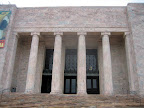
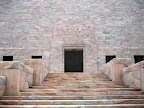
It occupies a large and impressive Art Deco building designed by John and Alan McDonald, constructed of Georgia Pink marble, with 38 different marbles from all over the world in the interior. The structure of Art Deco is based on mathematical geometric shapes.

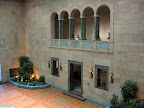
The museum's tiled Fountain Court.
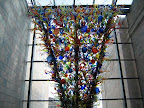
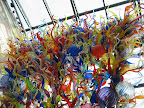
Inside and Out installation by Dale Chihuly at the Joslyn Art Museum.
European collection: 16th and 17th century works include paintings by Veronese, Titian, Claude Lorrain and El Greco. However the strongest collections are from the 19th century, including romantic works by Delacroix and Gustave Doré, realist works by Corot and Gustave Courbet, and an impressionist works by Degas, Monet, Pissarro, and Renoir.
Western American collection: including important collections of work by the Swiss artist Karl Bodmer based on his 1832-34 journey to the Missouri River frontier, and by Alfred Jacob Miller, also illustrating the West of the 1830s.
Although the best known names appear in the European and American collections, it is probably the Western American and Native American collections that have the greatest importance as collections, allowing a rare opportunity to study these genres and periods of art as well as giving an important insight into the history of the western United States.
References:
Joslyn Art Museum, from Wikipedia, the free encyclopedia.
George Catlin, from Wikipedia, the free encyclopedia.
Published: 02/21/2009
Updated: 04/14/2009
Joslyn Art Museum in Omaha, Nebraska. Click here for the slideshow.
The Joslyn Art Museum, located in Omaha, is the main fine arts museum in the state of Nebraska. The museum opened in 1931, a gift from Sarah H. Joslyn in memory of her husband, George A. Joslyn.
It occupies a large and impressive Art Deco building designed by John and Alan McDonald, constructed of Georgia Pink marble, with 38 different marbles from all over the world in the interior. The structure of Art Deco is based on mathematical geometric shapes.
The museum's tiled Fountain Court.
Inside and Out installation by Dale Chihuly at the Joslyn Art Museum.
European collection: 16th and 17th century works include paintings by Veronese, Titian, Claude Lorrain and El Greco. However the strongest collections are from the 19th century, including romantic works by Delacroix and Gustave Doré, realist works by Corot and Gustave Courbet, and an impressionist works by Degas, Monet, Pissarro, and Renoir.
Western American collection: including important collections of work by the Swiss artist Karl Bodmer based on his 1832-34 journey to the Missouri River frontier, and by Alfred Jacob Miller, also illustrating the West of the 1830s.
Although the best known names appear in the European and American collections, it is probably the Western American and Native American collections that have the greatest importance as collections, allowing a rare opportunity to study these genres and periods of art as well as giving an important insight into the history of the western United States.
References:
Joslyn Art Museum, from Wikipedia, the free encyclopedia.
George Catlin, from Wikipedia, the free encyclopedia.
Published: 02/21/2009
Updated: 04/14/2009
Viktor Schreckengost and Elephant Sculptures at Cleveland Zoo
Viktor Schreckengost was a Cleveland artist, teacher and industrial designer who was credited with producing the cab-over-engine design for trucks and buses that allows for greater towing length and a tighter turning radius. The little red metal wagons that so many children use were also Schreckengost's brainchild.
His beloved giant sculptures of elephants at the Pachyderm Building of the Cleveland Metroparks Zoo are shown below:
Viktor Schreckengost and Elephant Sculptures at Cleveland Zoo
Viktor Schreckengost passed away while visiting family in Florida on January 26, 2008 at the age of 101. An artist to the end, he had designed his own headstone.
References:
Viktor Schreckengost, Master of Product Design, Dies at 101. NYTimes.
Viktor Schreckengost has died at age 101. Cleveland Plain Dealer.
Viktor Schreckengost, from Wikipedia, the free encyclopedia.
Career Produced an Elegant Design For Myriad Household Products. WSJ.
Viktor Schreckengost, Industrial Designer, 101. NY Sun.
Related:
Is That a TV Anchor Shoveling Elephant Poo? The Roar Report Blog, 07/2008.
Cleveland Metroparks Zoo Moves Elephants to Columbus
Cleveland Zoo: The Pachyderm Building Has Closed, 09/2008.
Study Finds Elephants In Zoos Live Shorter Lives. NPR, 12/2008.
Cleveland Metroparks Zoo Announces Fifth Elephant for African Elephant Crossing (from Omaha) http://goo.gl/dYhcq
His beloved giant sculptures of elephants at the Pachyderm Building of the Cleveland Metroparks Zoo are shown below:
Viktor Schreckengost and Elephant Sculptures at Cleveland Zoo
Viktor Schreckengost passed away while visiting family in Florida on January 26, 2008 at the age of 101. An artist to the end, he had designed his own headstone.
References:
Viktor Schreckengost, Master of Product Design, Dies at 101. NYTimes.
Viktor Schreckengost has died at age 101. Cleveland Plain Dealer.
Viktor Schreckengost, from Wikipedia, the free encyclopedia.
Career Produced an Elegant Design For Myriad Household Products. WSJ.
Viktor Schreckengost, Industrial Designer, 101. NY Sun.
Related:
Is That a TV Anchor Shoveling Elephant Poo? The Roar Report Blog, 07/2008.
Cleveland Metroparks Zoo Moves Elephants to Columbus
Cleveland Zoo: The Pachyderm Building Has Closed, 09/2008.
Study Finds Elephants In Zoos Live Shorter Lives. NPR, 12/2008.
Cleveland Metroparks Zoo Announces Fifth Elephant for African Elephant Crossing (from Omaha) http://goo.gl/dYhcq
Parade the Circle at the University Circle in Cleveland
Parade the Circle is an yearly event in June. It is organized by the Cleveland community and is truly a feast for the eyes.

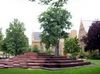

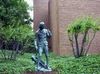

The parade is at the University circle - a magnificent place between the Botanical garden and the Museums of Art and Natural History. Actually, the "base camp" for the parade is at the parking lot of the Cleveland Museum of Art. All participants assemble their costumes there and this is the starting point for the parade.


Every year the themes and costumes are different, so the parade is never the same. The event is about an hour and a half long, with hundreds of participants. In order to know which part of the parade you are looking at, the organizers subdivide the procession by color arches made with balloons. This is the sunshine lady (the picture above) and there was plenty of sun during the parade, so please make sure that you wear a hat and a SPF of at least 50.


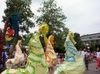
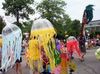
This is the sea theme with fish, sea horses, jelly fish, etc.
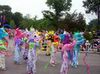
I do not know what these creatures are but they certainly look scary.
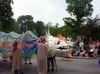
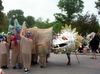

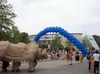
This huge fish can actually turn his head backwards! That was the blue arch procession. Let's see what the yellow arch will bring...


The parade music varies from marches to jazz, to reggae, to Beatles, you name it...

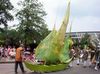


Yellow arch with boats and elephants
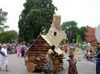
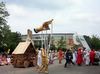

And what is this? I am not sure... Walking trees?
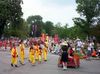

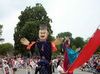
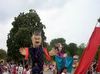
This is the Chinese procession.
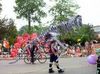
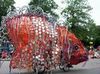
Dinosaurs are back! And some huge fish...

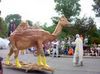
Camel-riding bedouins, and there is a camel carrying a whole city on her back.
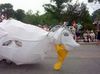
I am not sure what this creature is but it surely looks quite peaceful.



More parade participants.
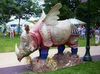

Magical creatures can be seen after the parade - like this rhinoceros with wings and the tired dinosaur taking a nap leaning on this lamp post.
Published: 06/14/2005
Updated: 06/12/2009
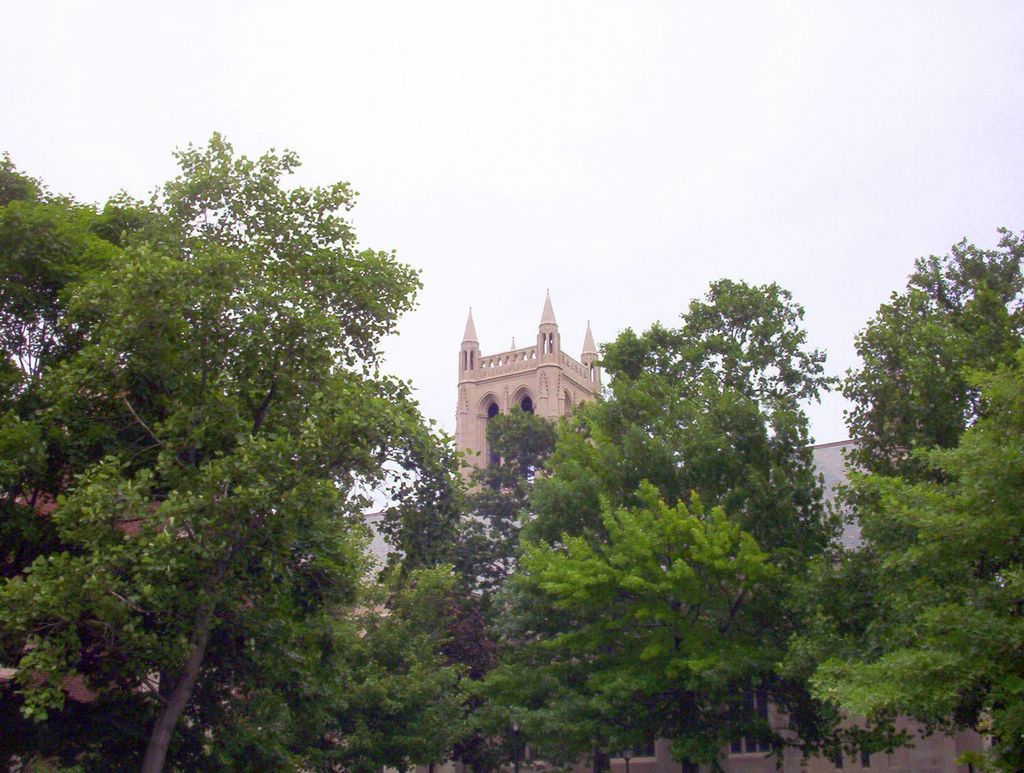
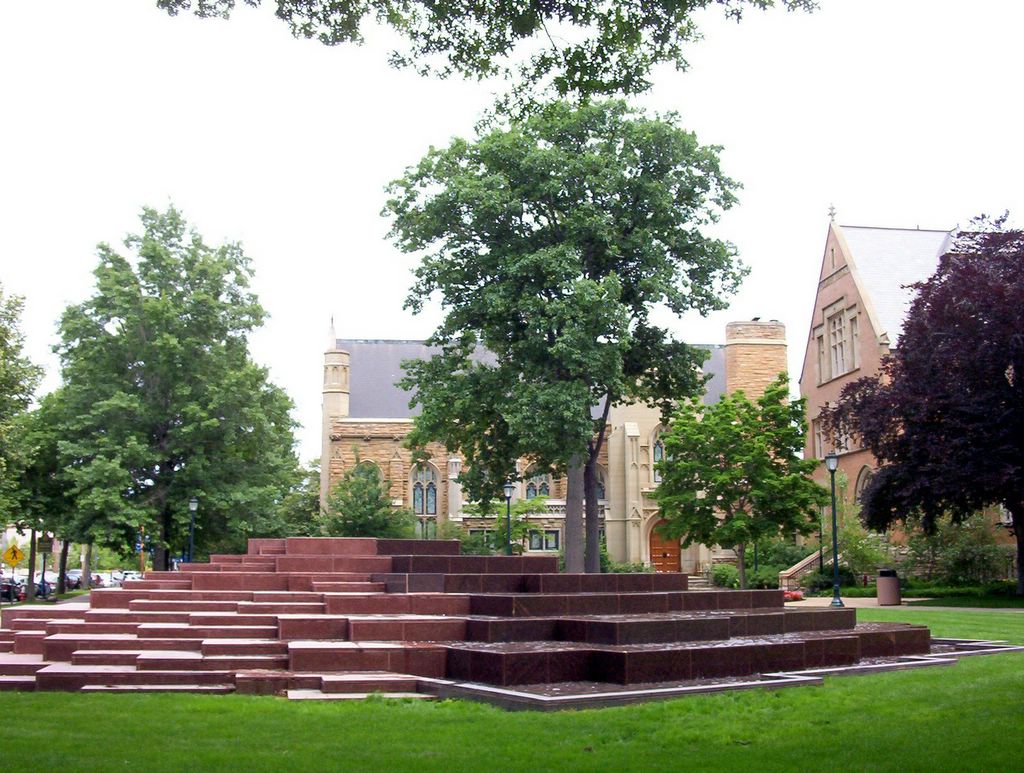
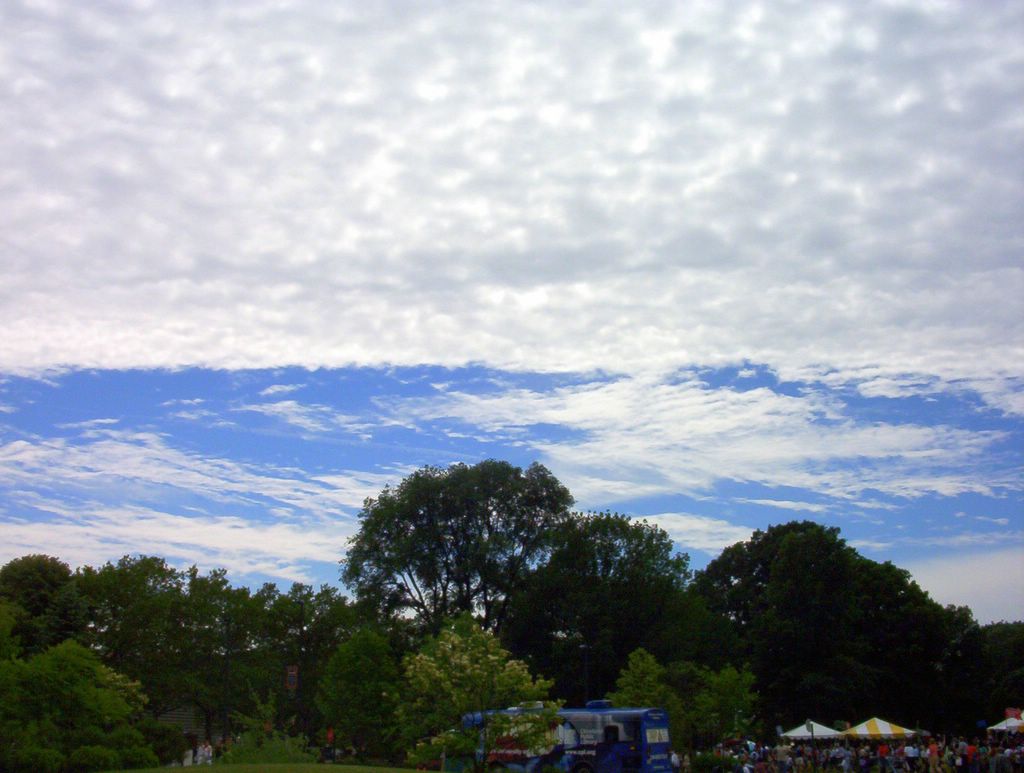
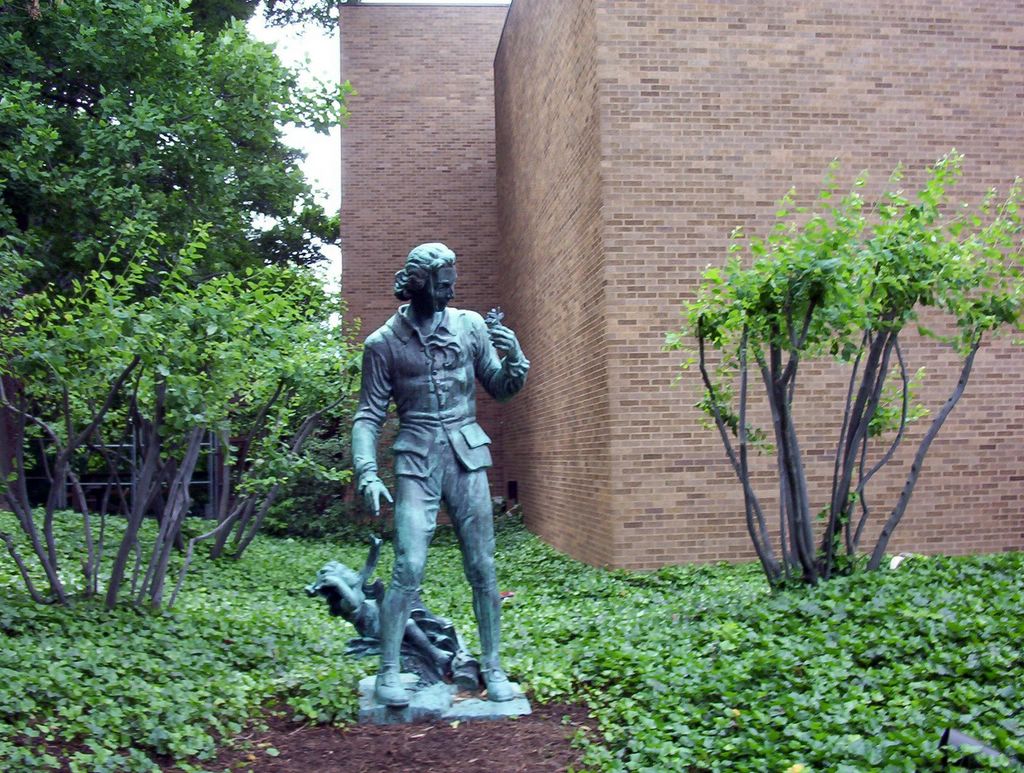
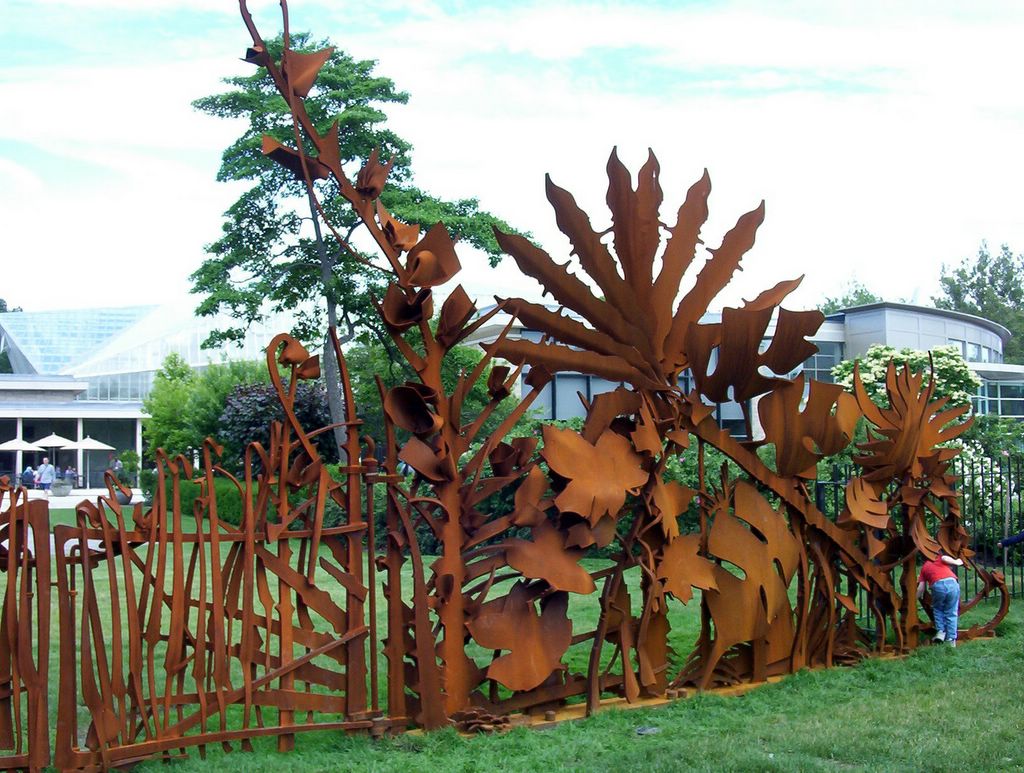
The parade is at the University circle - a magnificent place between the Botanical garden and the Museums of Art and Natural History. Actually, the "base camp" for the parade is at the parking lot of the Cleveland Museum of Art. All participants assemble their costumes there and this is the starting point for the parade.
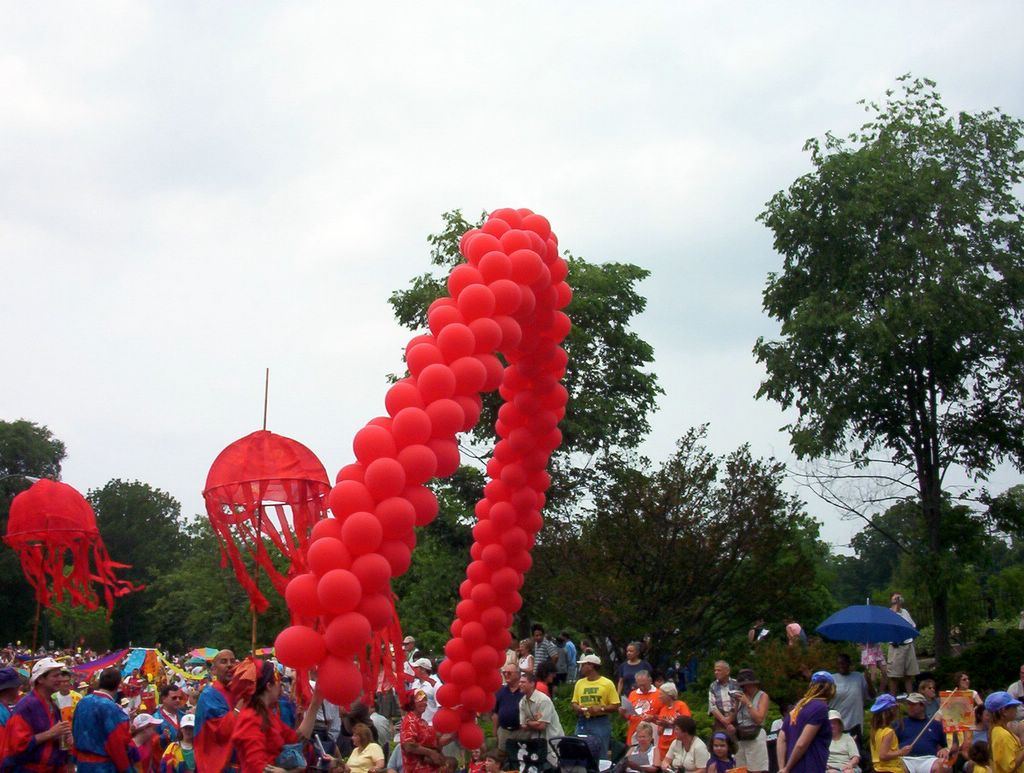
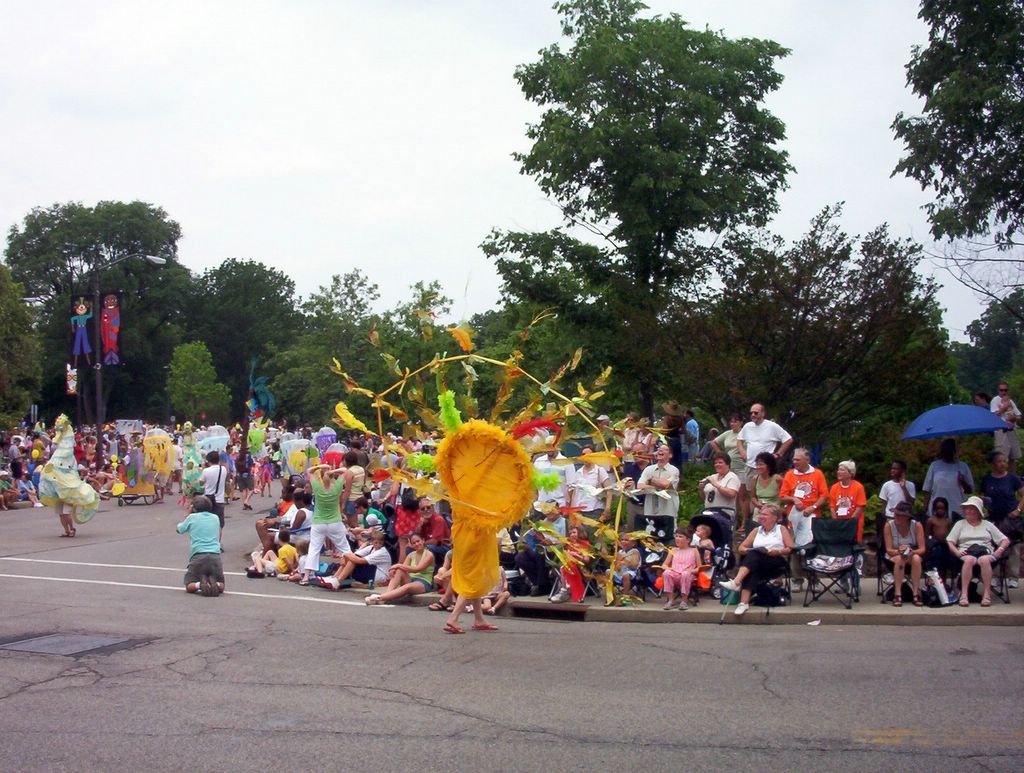
Every year the themes and costumes are different, so the parade is never the same. The event is about an hour and a half long, with hundreds of participants. In order to know which part of the parade you are looking at, the organizers subdivide the procession by color arches made with balloons. This is the sunshine lady (the picture above) and there was plenty of sun during the parade, so please make sure that you wear a hat and a SPF of at least 50.

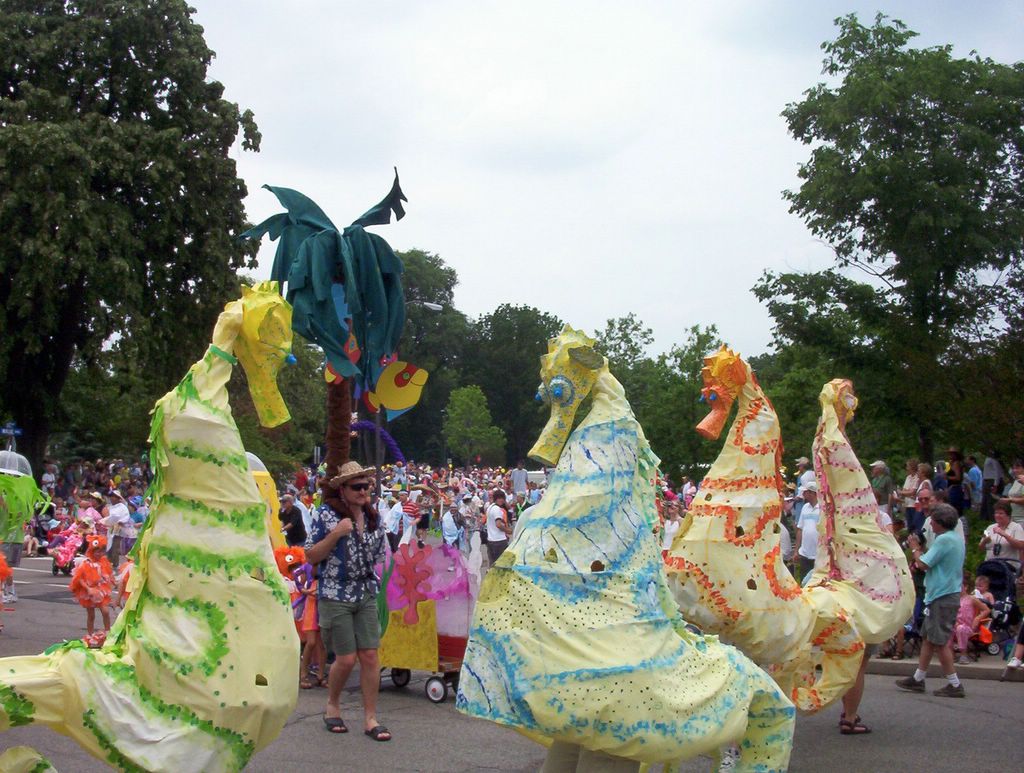


This is the sea theme with fish, sea horses, jelly fish, etc.
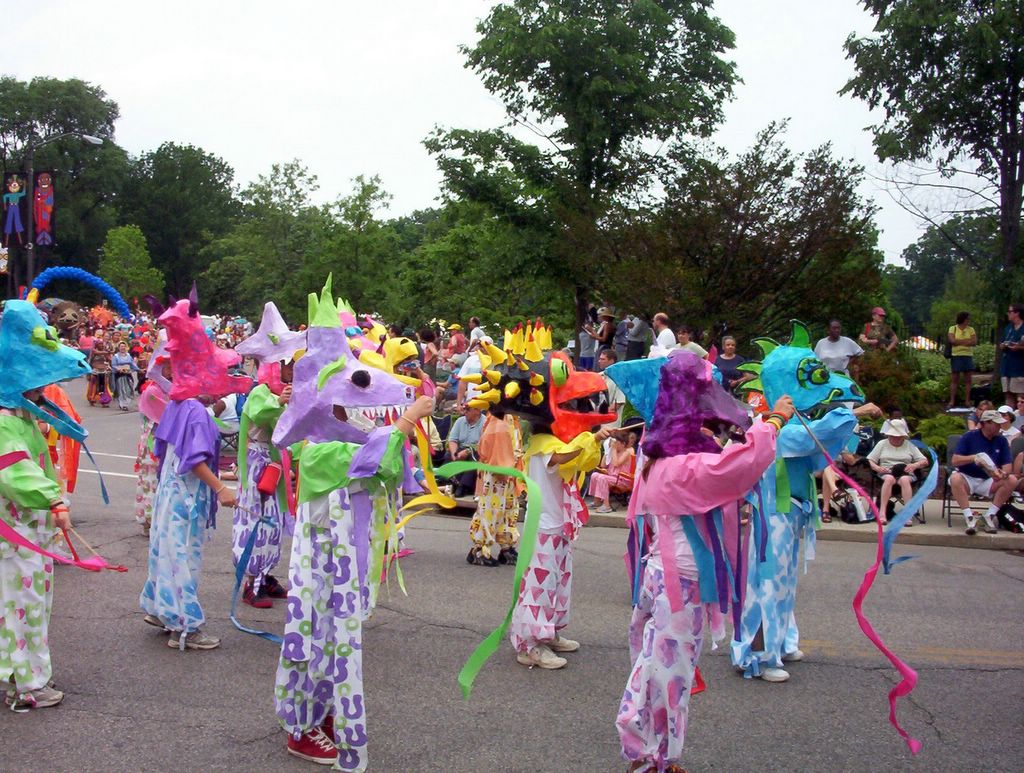
I do not know what these creatures are but they certainly look scary.
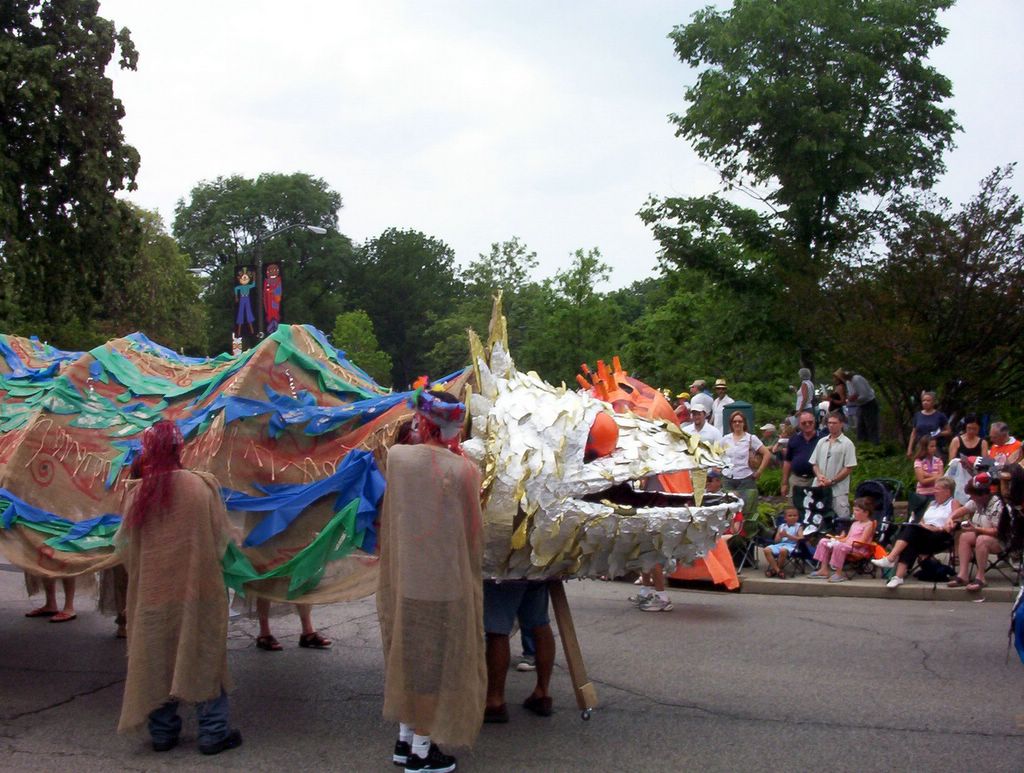

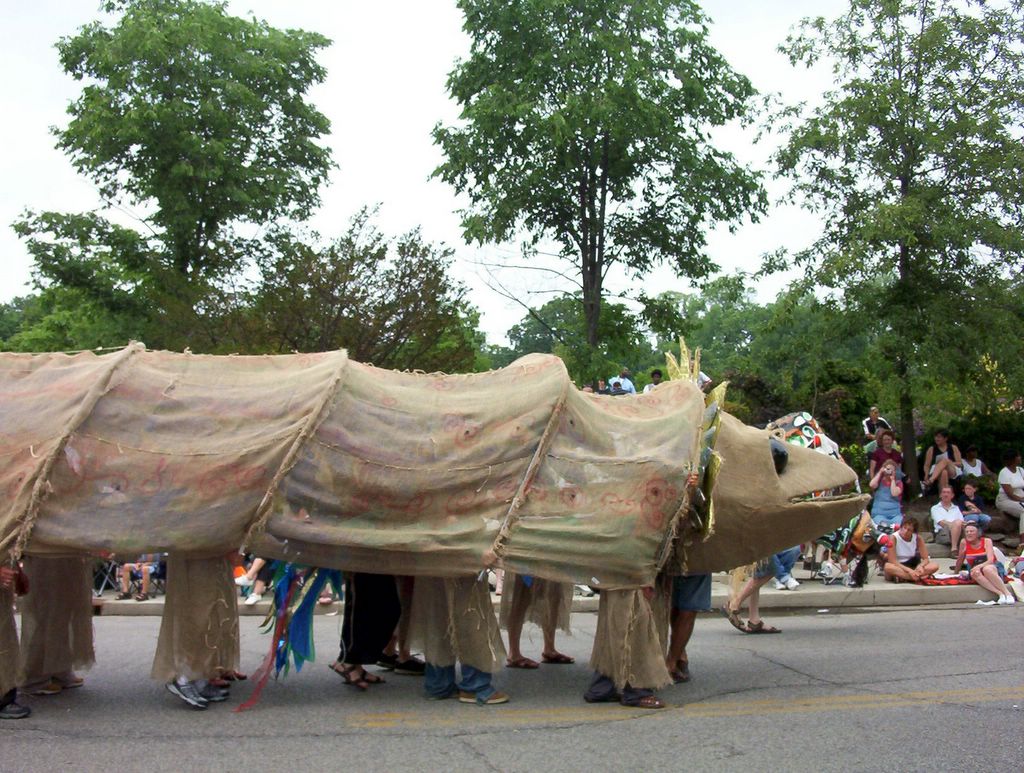
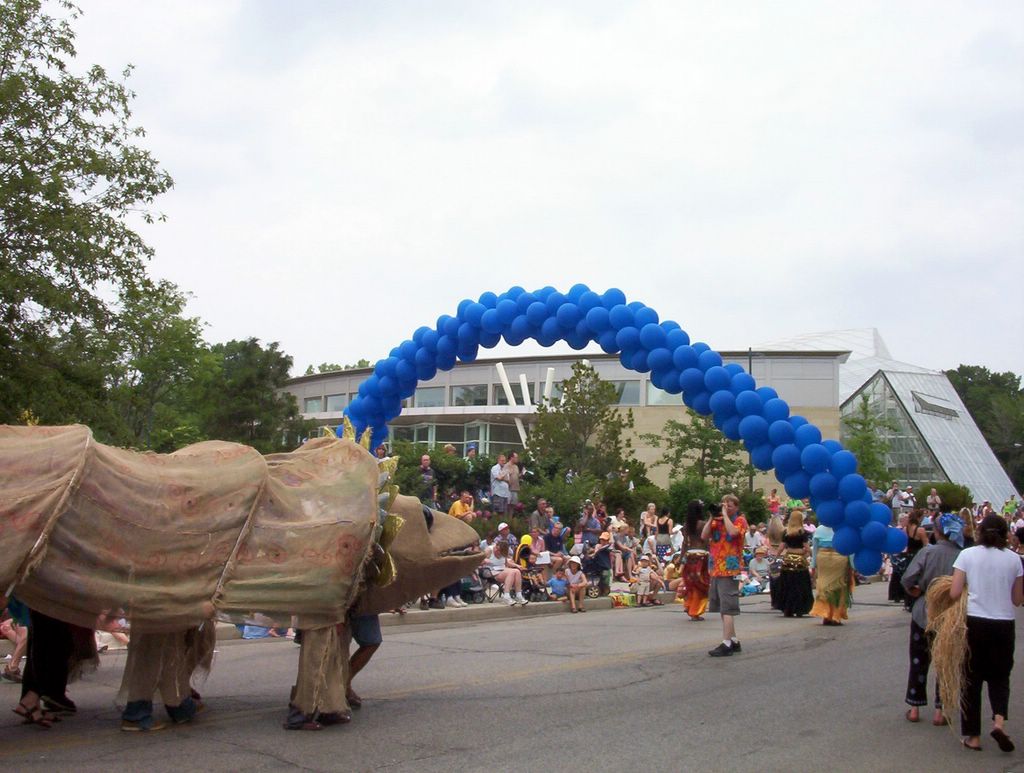
This huge fish can actually turn his head backwards! That was the blue arch procession. Let's see what the yellow arch will bring...
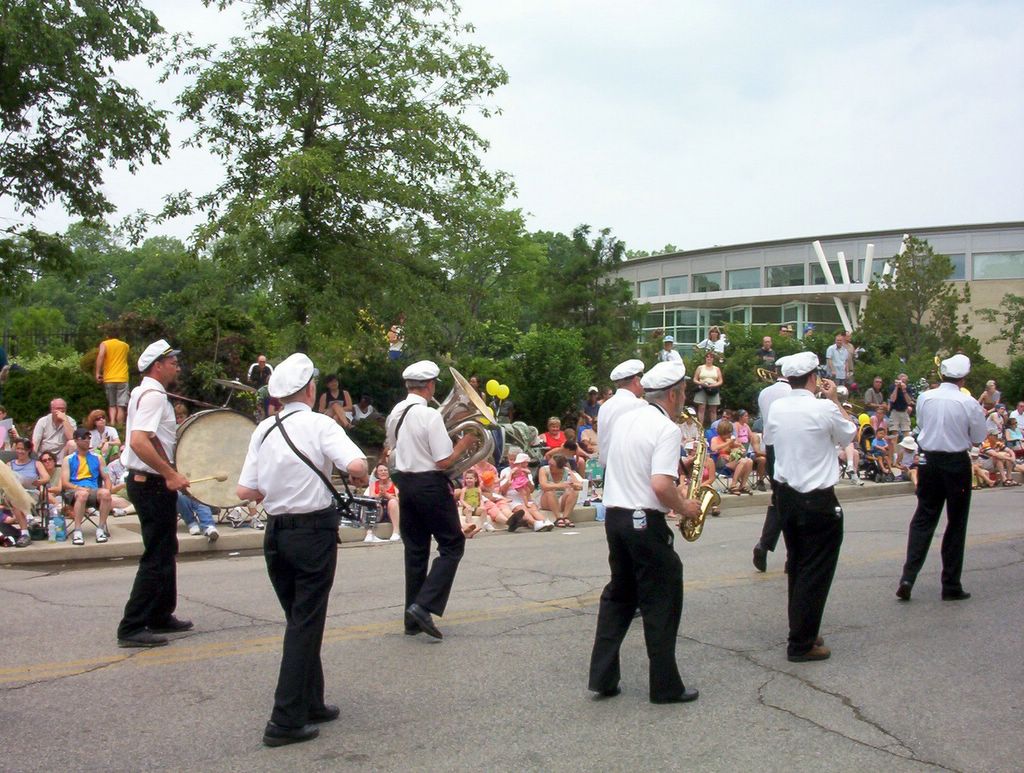
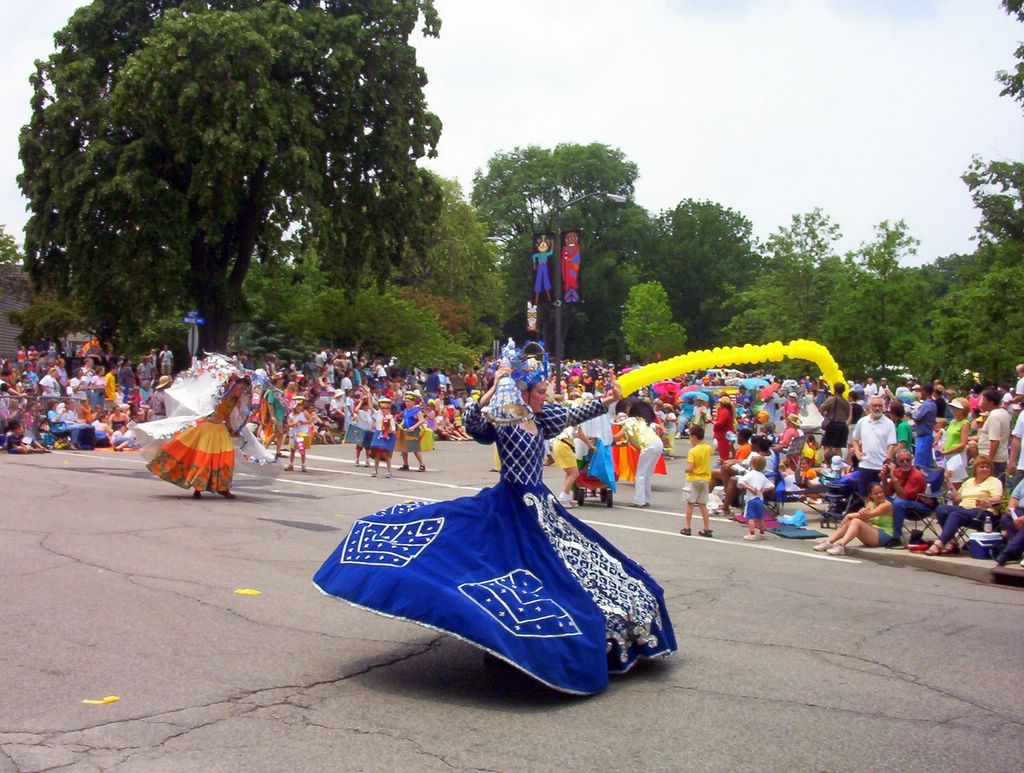
The parade music varies from marches to jazz, to reggae, to Beatles, you name it...

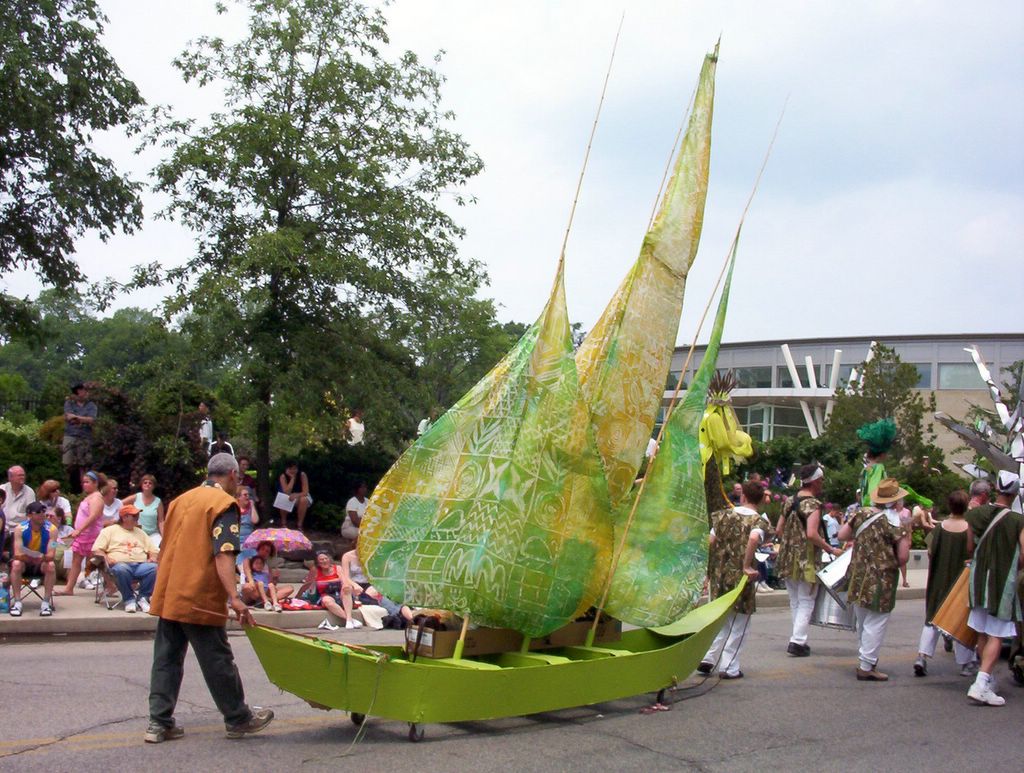
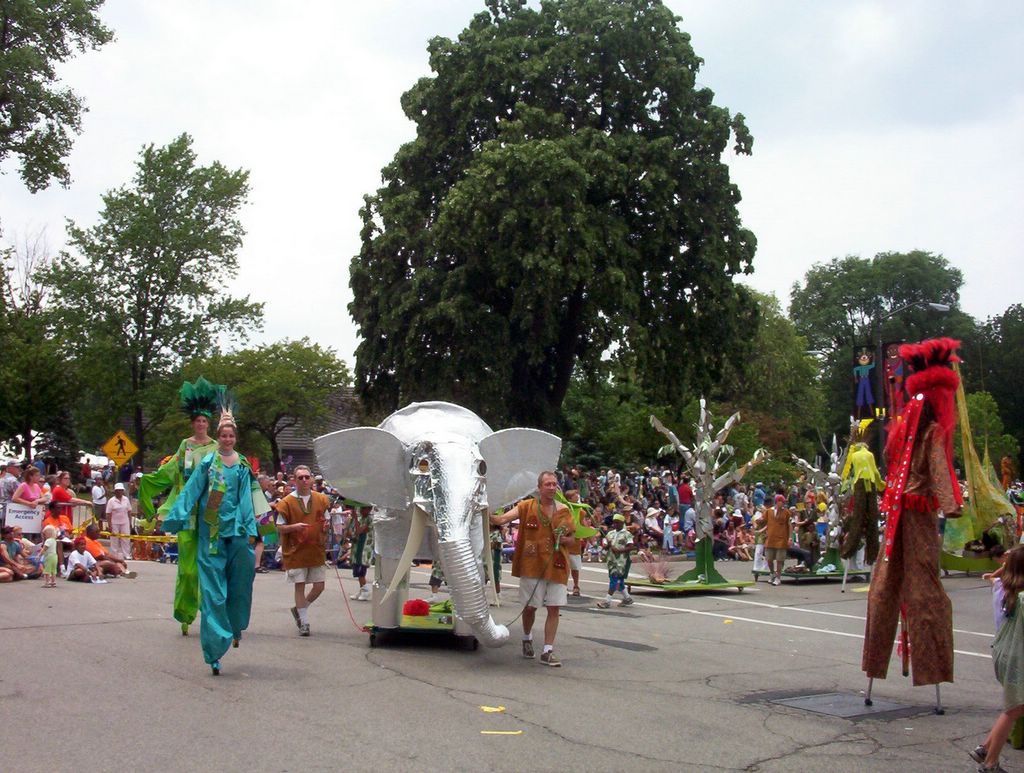
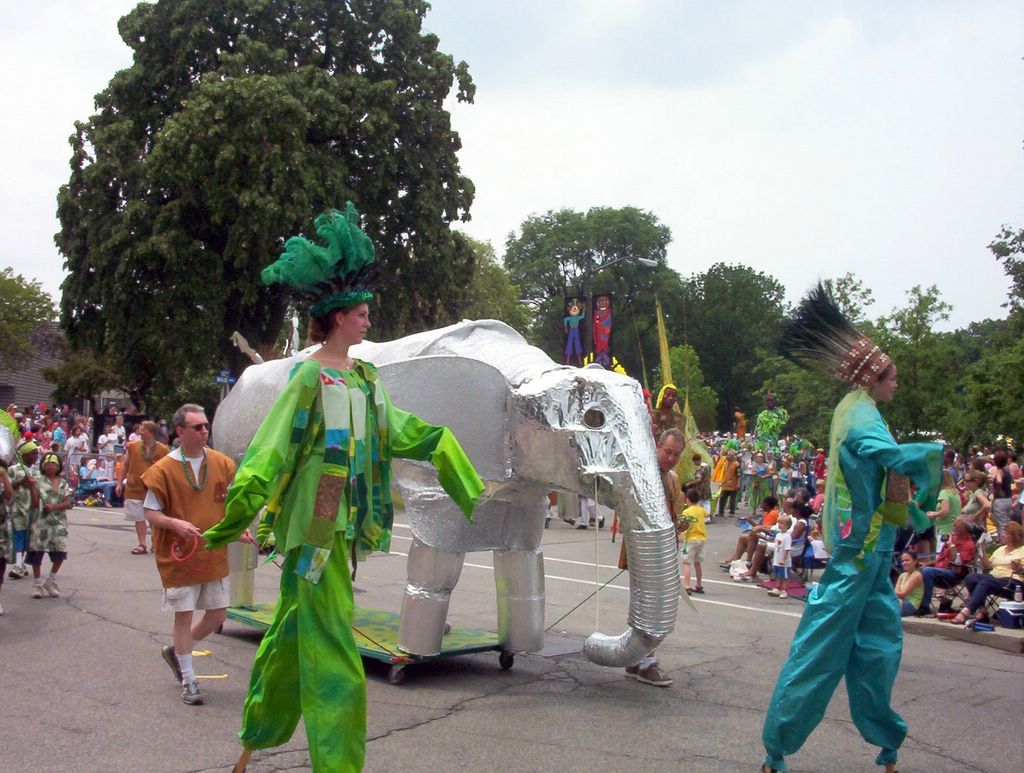
Yellow arch with boats and elephants

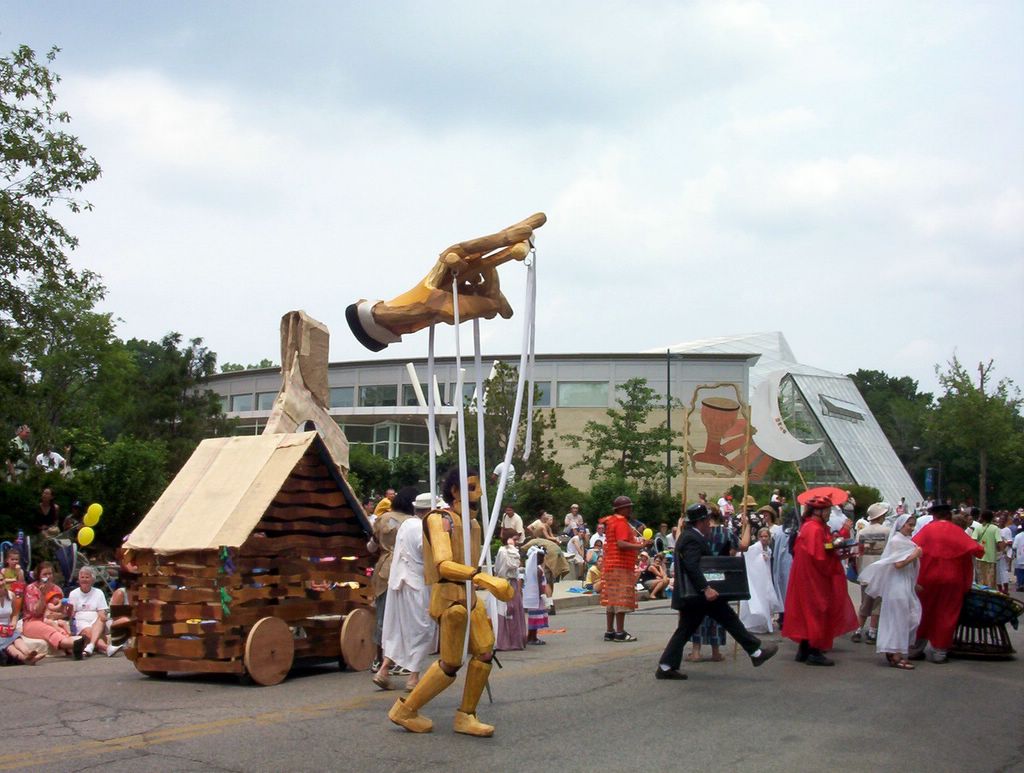

And what is this? I am not sure... Walking trees?
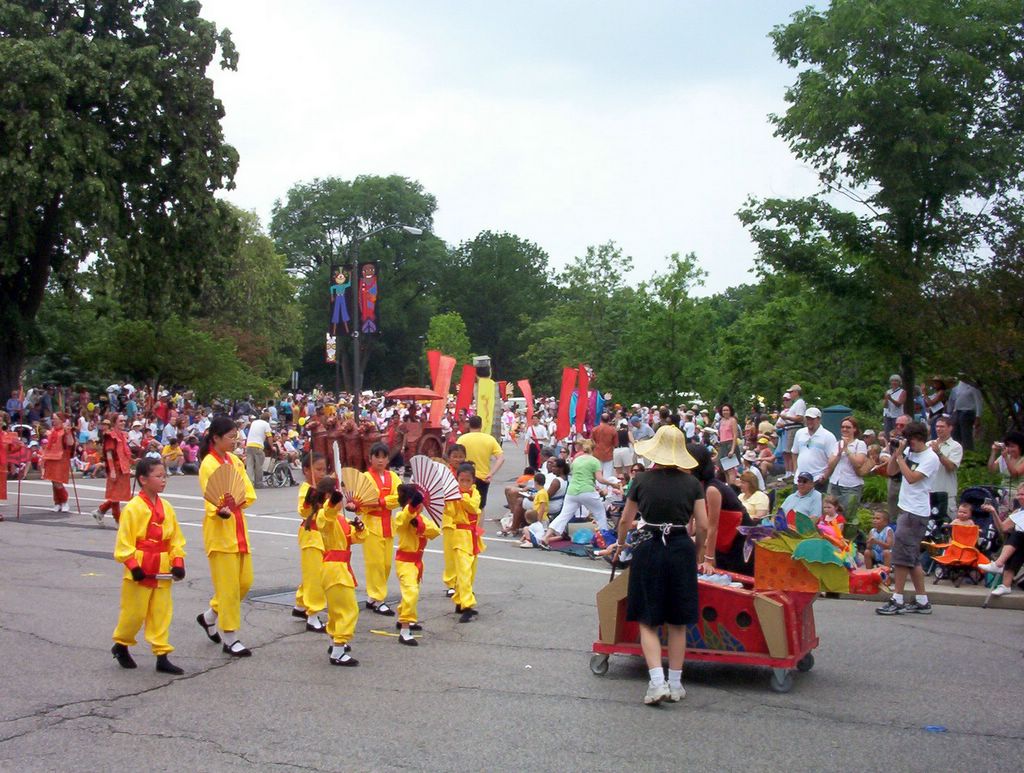

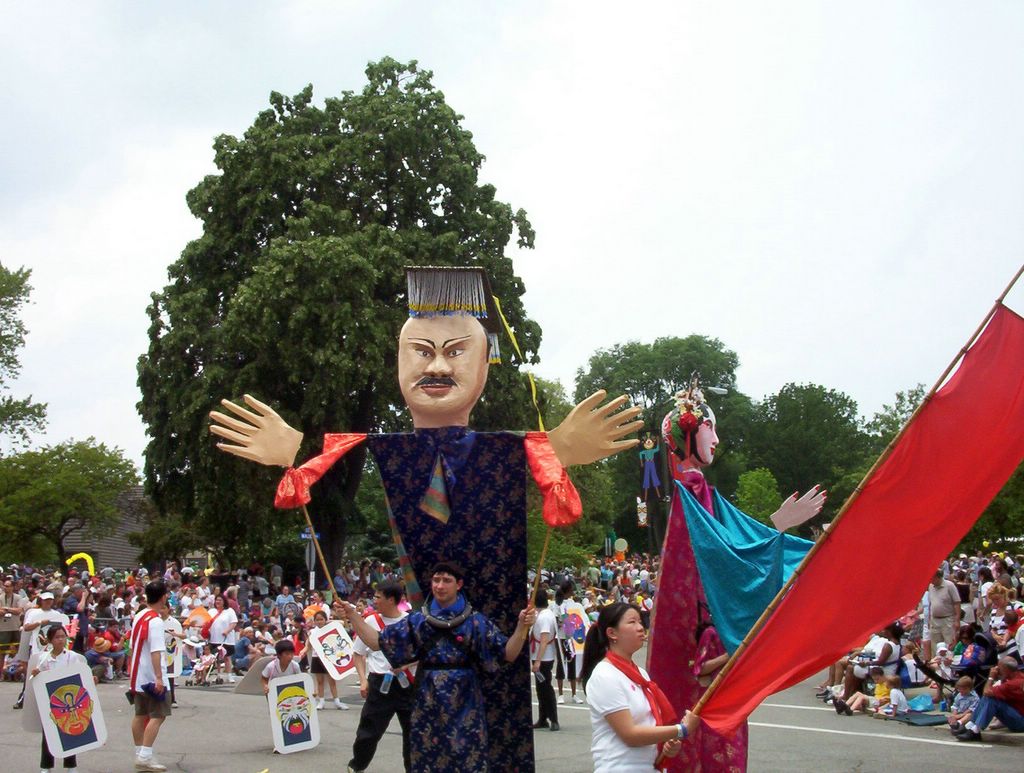
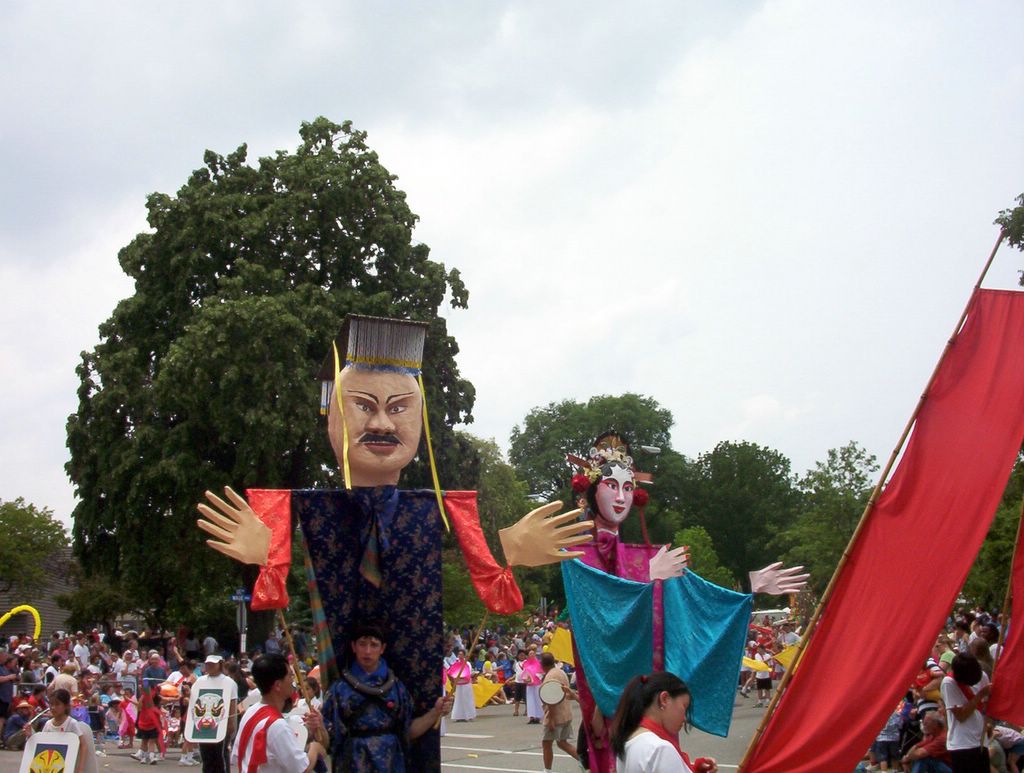
This is the Chinese procession.
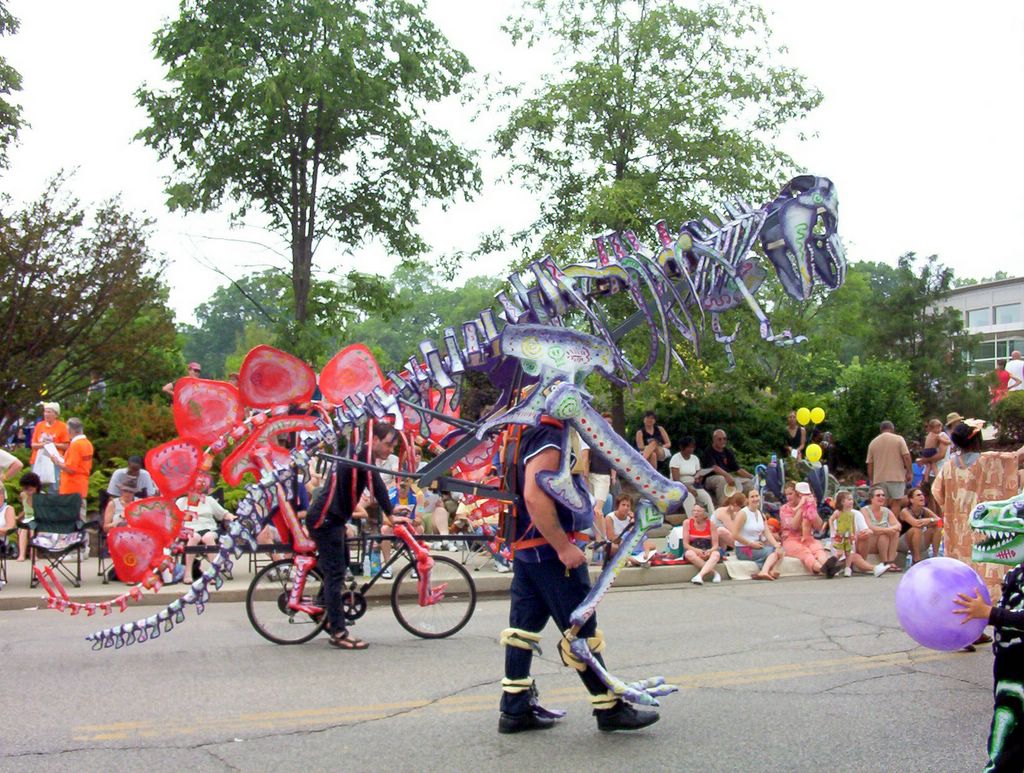
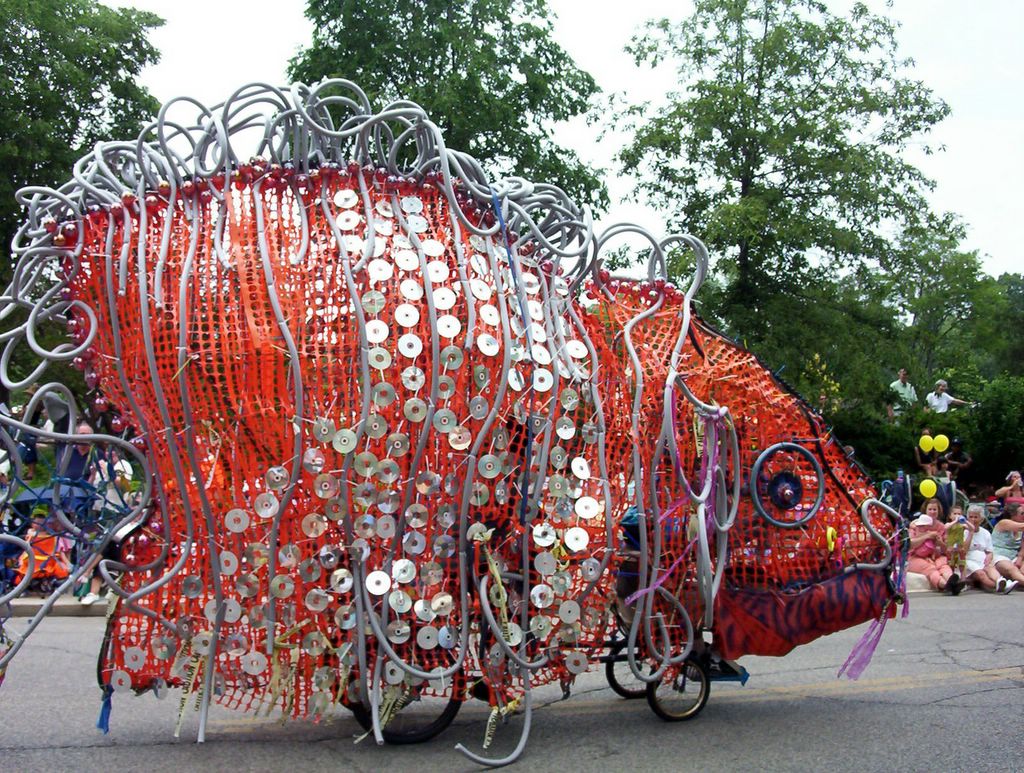
Dinosaurs are back! And some huge fish...

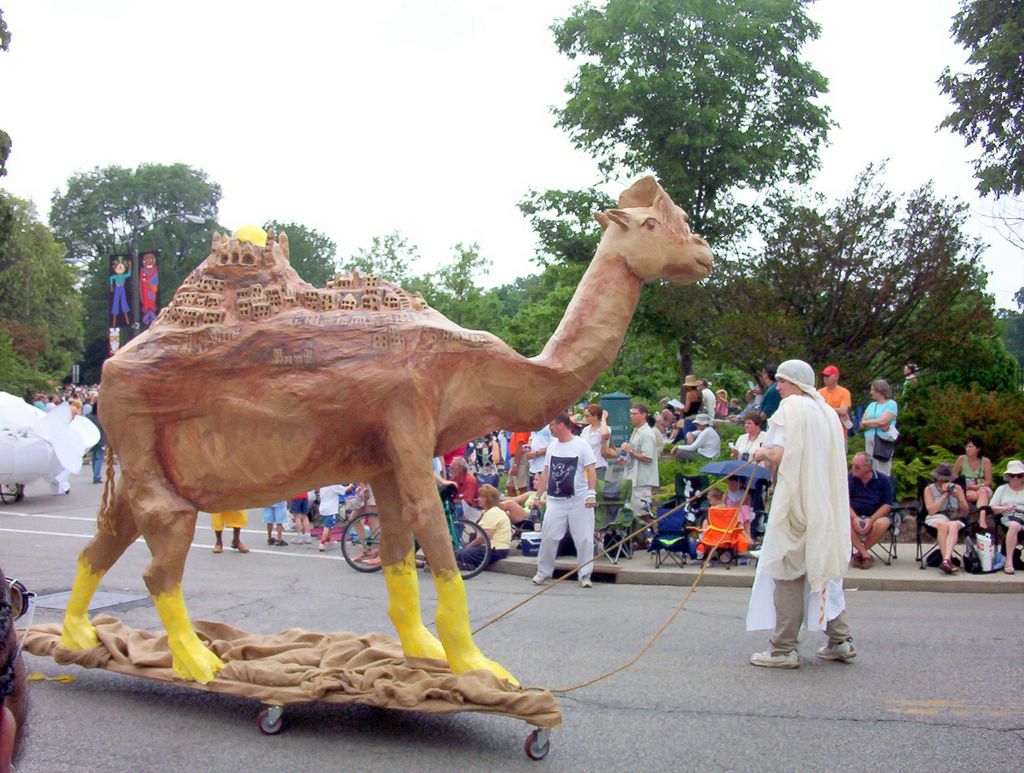
Camel-riding bedouins, and there is a camel carrying a whole city on her back.
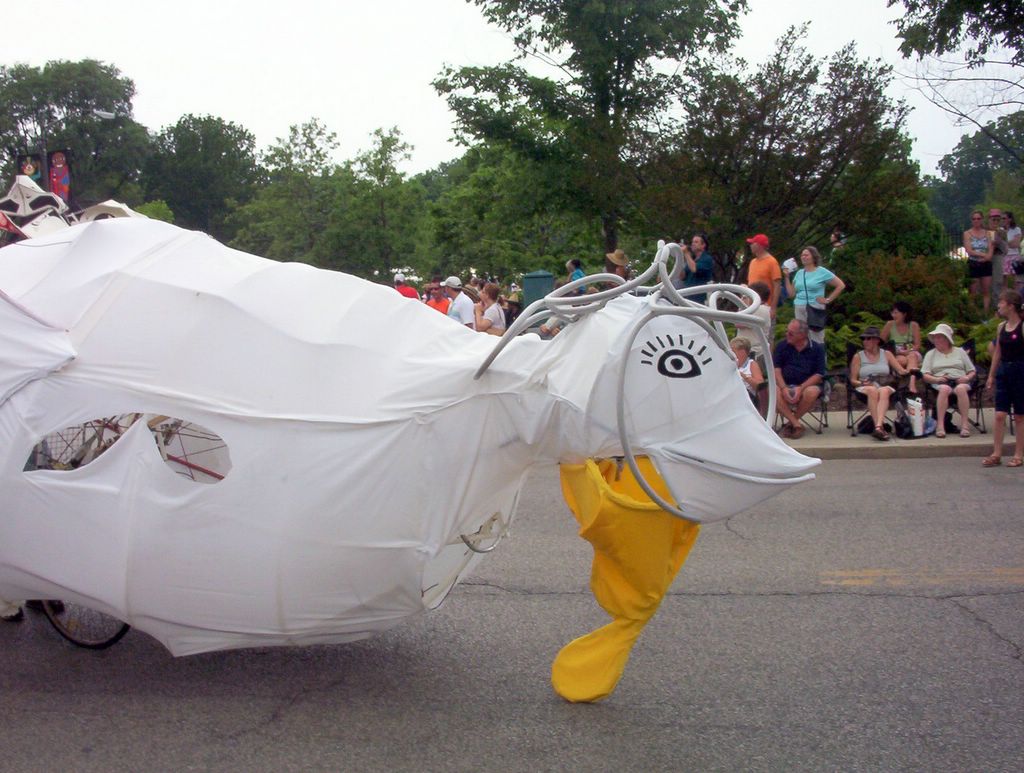
I am not sure what this creature is but it surely looks quite peaceful.

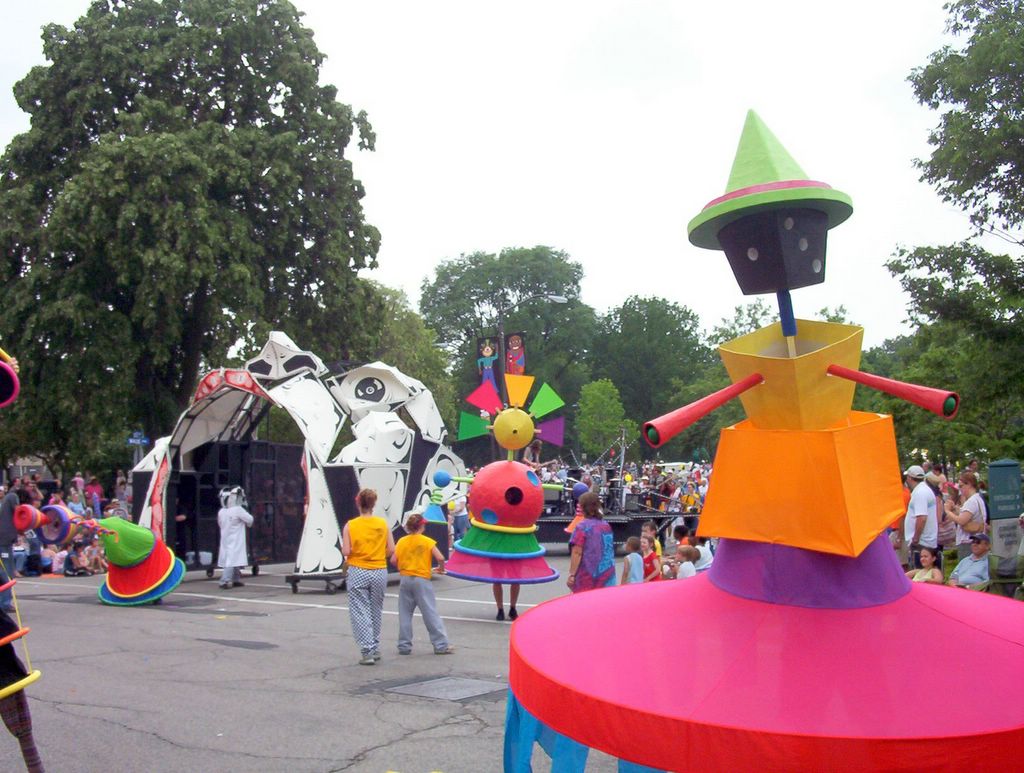

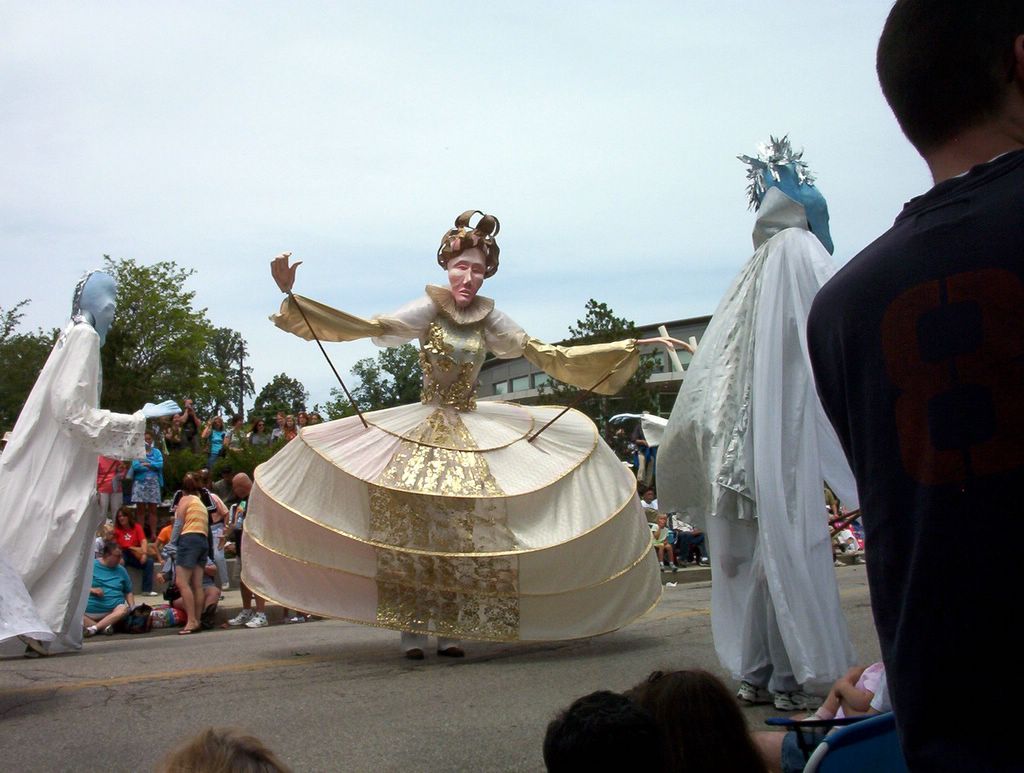

More parade participants.
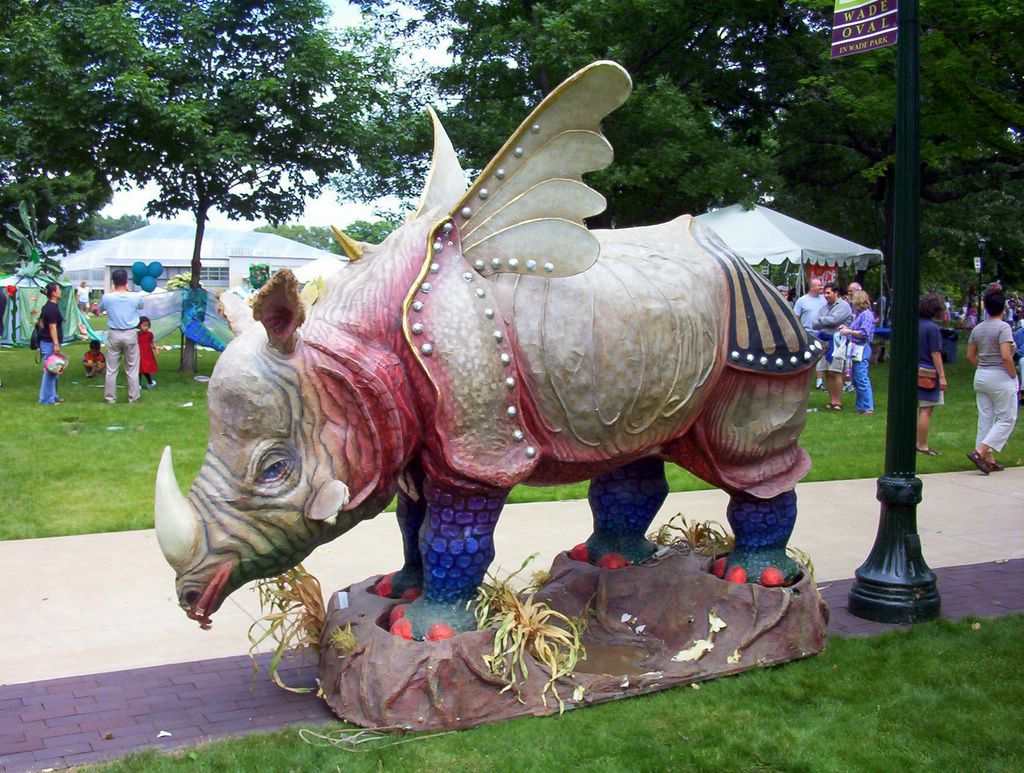
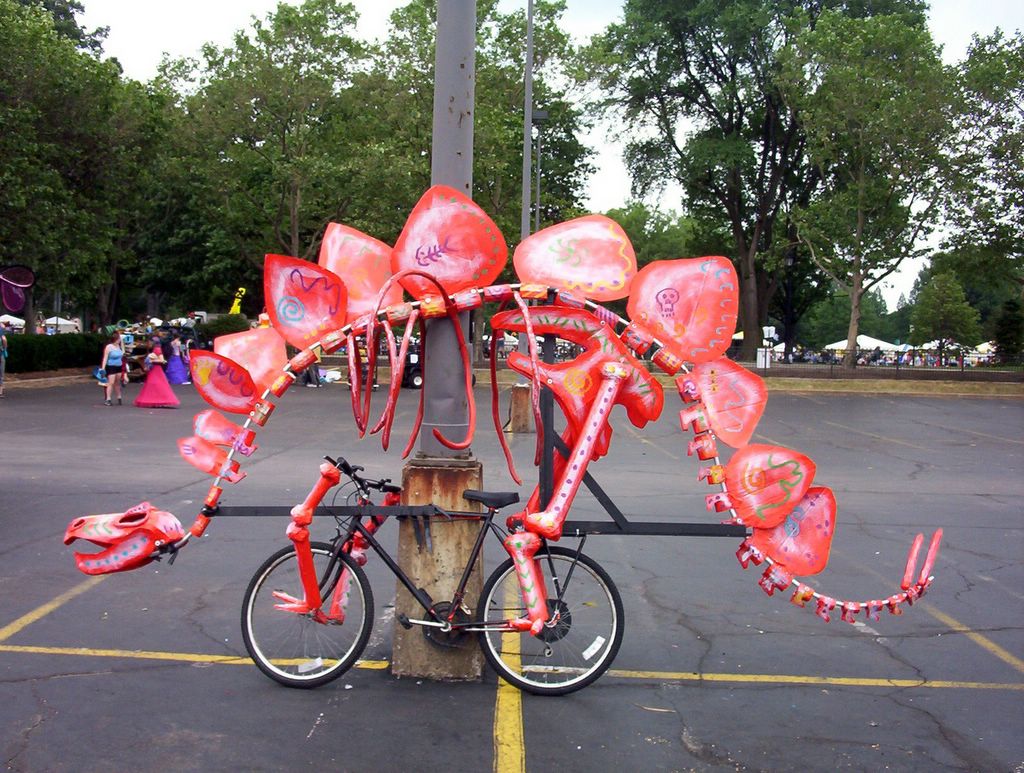
Magical creatures can be seen after the parade - like this rhinoceros with wings and the tired dinosaur taking a nap leaning on this lamp post.
Published: 06/14/2005
Updated: 06/12/2009
Subscribe to:
Posts (Atom)
