Showing posts with label Nebraska. Show all posts
Lee G. Simmons Conservation Park and Wildlife Safari in Nebraska
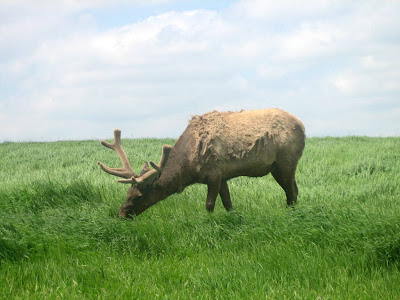
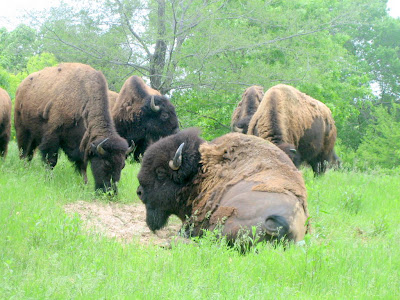
The Wildlife Safari Park is a four mile, drive-through North American wildlife adventure. Visitors feel like they're on an actual safari, coming face-to-face with North American plants and animals such as elk, white-tailed deer, bison, pronghorn antelope and waterfowl. It opened on June 5, 1998.
Prairies and Wetlands
Half of this 440-acre nature area in the Platte River hill country is filled with prairies and wetlands, while the other half is used for conservation and breeding of rare and endangered wildlife.

Among the scenic prairies, wild turkeys roam among large hoofstock.

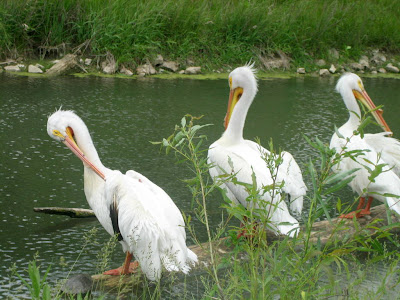
Ducks, swans, geese and pelicans make their way from pond to pond and graceful cranes found their home at Crane Meadows.

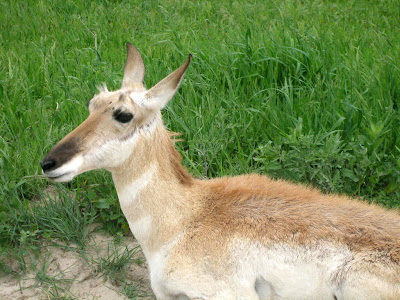
Deer dart between the trees and the antelope race across the meadow. The horticulture at the Wildlife Safari Park includes flowers and plants native to Nebraska.

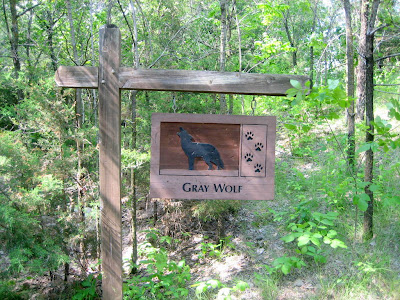
Wolf Canyon

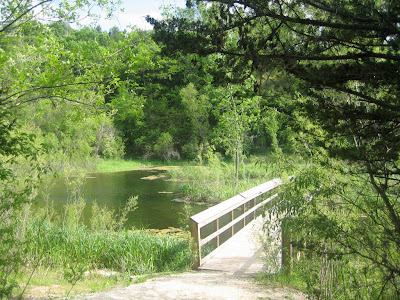
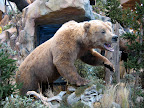
Take a short hike and cross a historic bridge to see black bears and a family of gray wolves at Wolf Canyon and other native, North American wildlife.
Hiking Trails

Wolf Canyon foot trail is for the beginning hiker and Moose Lake foot trail is for the more advanced hiker.

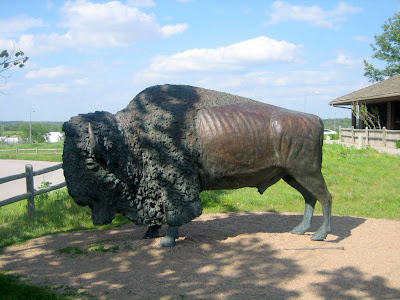
North America's largest bronze bison herd, which consists of nine large sculptures at the entrance, gives visitors an opportunity to touch and stand next to a bigger than life-size bison.
LOCATION: Exit 426 off Nebraska's Interstate 80. Approximately 22 miles from Omaha/Lincoln near Mahoney State Park and Strategic Air and Space Museum.
HOURS: March 27, 2010 to October 31, 2010 from 9:30 a.m. - 5 p.m. daily
ADMISSION: $6 adults, $4 children (3-11), $5 seniors. Omaha's Henry Doorly Zoo Members and reciprocal Zoo members receive $1 off.
View Larger Map
Prairies and Wetlands
Half of this 440-acre nature area in the Platte River hill country is filled with prairies and wetlands, while the other half is used for conservation and breeding of rare and endangered wildlife.
Among the scenic prairies, wild turkeys roam among large hoofstock.
Ducks, swans, geese and pelicans make their way from pond to pond and graceful cranes found their home at Crane Meadows.
Deer dart between the trees and the antelope race across the meadow. The horticulture at the Wildlife Safari Park includes flowers and plants native to Nebraska.
Wolf Canyon
Take a short hike and cross a historic bridge to see black bears and a family of gray wolves at Wolf Canyon and other native, North American wildlife.
Hiking Trails
Wolf Canyon foot trail is for the beginning hiker and Moose Lake foot trail is for the more advanced hiker.
North America's largest bronze bison herd, which consists of nine large sculptures at the entrance, gives visitors an opportunity to touch and stand next to a bigger than life-size bison.
LOCATION: Exit 426 off Nebraska's Interstate 80. Approximately 22 miles from Omaha/Lincoln near Mahoney State Park and Strategic Air and Space Museum.
HOURS: March 27, 2010 to October 31, 2010 from 9:30 a.m. - 5 p.m. daily
ADMISSION: $6 adults, $4 children (3-11), $5 seniors. Omaha's Henry Doorly Zoo Members and reciprocal Zoo members receive $1 off.
View Larger Map
References:
Simmons' Wildlife Safari. Omaha Zoo.
Fallen tree after a tornado in Omaha, Nebraska
Nebraska is in an area called tornado alley.
This is the next morning's view after 3 tornados hit the area.
Tornado radio in Omaha.
Carter Lake
Carter Lake is a shallow oxbow lake in Nebraska and Iowa, located next to Omaha. Carter Lake is a former channel of the Missouri River and was formed in the summer of 1877. The city of Carter Lake, Iowa takes its name from the lake. The lake was formed from the Saratoga Bend in the Missouri River.
The Carter Lake and Levi Carter Park at 3100 Abbott Drive were named after one of Omaha's original industrialists named Levi Carter, who ran a white lead smelter in the area.


Carter Lake near Omaha Airport.


References:
Carter Lake (Iowa-Nebraska). Wikipedia.
The Carter Lake and Levi Carter Park at 3100 Abbott Drive were named after one of Omaha's original industrialists named Levi Carter, who ran a white lead smelter in the area.
Carter Lake near Omaha Airport.
References:
Carter Lake (Iowa-Nebraska). Wikipedia.
Elmwood park in Omaha, Nebraska
The Elmwood Park neighborhood in Omaha, Nebraska is a historically significant area that was developed in the late 19th and early 20th century.
Before the neighborhood was created, the area was the focus of the first court trial ever held in the Nebraska Territory. The case took place in 1857 when F.M. Woods brought a case against J. Pentecost for land theft. Defended by Nebraska Territorial politician Edward Morearty, Pentecost won the trial.

Elmwood park - established in 1890.

In the 1880s C.C. and J.E. George laid out Happy Hollow Boulevard and developed the area south of Dodge and west of 50th to Elmwood Park. They filled in the creek that ran along 50th Street and added sidewalks and streetlights. Homes in the area reflected the Colonial, Georgian and Tudor Revival styles.

A mansion near Elmwood Park.
In 1889 the famous landscaper H.W.S. Cleveland who was hired by the city recommended that Omaha acquire a park large enough to shut out city sights and sounds in order to refresh the senses. Elmwood Park, founded in 1889 at 802 South 60th Street, was one of Omaha's largest parks through the 1950s.
The Omaha Bee described it as a "wild and romantic place... containing a wooded ravine that followed the course of a small stream." They continued, "There are all manner of shady nooks in this dell, and some of the largest forest trees in this section of the country are to be seen in it." The park, along with Happy Hollow Boulevard, was part of Cleveland's parks and boulevard plan for Omaha. Today the boulevard runs north from Elmwood Park past the University of Nebraska at Omaha campus and Memorial Park, onward to Benson.

Elmwood Park.
The Elmwood Park Golf Course was opened in 1916, and featured ravines, grassy fields and roadways throughout. By 1917, the park had grown to 208.13 acres (0.8423 km2), and it was the second largest in the city.

Roundabout at Elmwood Park.
The University of Nebraska at Omaha relocated from its North Omaha campus to a 30-acre (120,000 m2) parcel next to the park in 1937, sealing the park's size permanently.
In the 1940s native Omaha billionaire Warren Buffett set up a golf ball stand at the golf course in the park.
References:
Elmwood Park (Omaha). Wikipedia.
Published: 04/11/2010
Before the neighborhood was created, the area was the focus of the first court trial ever held in the Nebraska Territory. The case took place in 1857 when F.M. Woods brought a case against J. Pentecost for land theft. Defended by Nebraska Territorial politician Edward Morearty, Pentecost won the trial.
Elmwood park - established in 1890.
In the 1880s C.C. and J.E. George laid out Happy Hollow Boulevard and developed the area south of Dodge and west of 50th to Elmwood Park. They filled in the creek that ran along 50th Street and added sidewalks and streetlights. Homes in the area reflected the Colonial, Georgian and Tudor Revival styles.
A mansion near Elmwood Park.
In 1889 the famous landscaper H.W.S. Cleveland who was hired by the city recommended that Omaha acquire a park large enough to shut out city sights and sounds in order to refresh the senses. Elmwood Park, founded in 1889 at 802 South 60th Street, was one of Omaha's largest parks through the 1950s.
The Omaha Bee described it as a "wild and romantic place... containing a wooded ravine that followed the course of a small stream." They continued, "There are all manner of shady nooks in this dell, and some of the largest forest trees in this section of the country are to be seen in it." The park, along with Happy Hollow Boulevard, was part of Cleveland's parks and boulevard plan for Omaha. Today the boulevard runs north from Elmwood Park past the University of Nebraska at Omaha campus and Memorial Park, onward to Benson.
Elmwood Park.
The Elmwood Park Golf Course was opened in 1916, and featured ravines, grassy fields and roadways throughout. By 1917, the park had grown to 208.13 acres (0.8423 km2), and it was the second largest in the city.
Roundabout at Elmwood Park.
The University of Nebraska at Omaha relocated from its North Omaha campus to a 30-acre (120,000 m2) parcel next to the park in 1937, sealing the park's size permanently.
In the 1940s native Omaha billionaire Warren Buffett set up a golf ball stand at the golf course in the park.
References:
Elmwood Park (Omaha). Wikipedia.
Published: 04/11/2010
January 2010 in Omaha: The coldest since 1886
January 8 low temperature: -21 F
January 9 high temperature: 7 F
To find a lower low on Jan. 8, the weather record keepers have to go back to 1886.
The above-freezing forecast will feel like a heat wave. Omaha hasn't seen a day above 32 degrees since Dec. 30, when the mercury hit 33 F. The normal high this time of year is 31 F.
AP Video: Cold Snap Freezes Nation From Wyoming to Miami
References:
Cold weather misery, at a glance. Omaha.com.
Related:
January 9 high temperature: 7 F
To find a lower low on Jan. 8, the weather record keepers have to go back to 1886.
The above-freezing forecast will feel like a heat wave. Omaha hasn't seen a day above 32 degrees since Dec. 30, when the mercury hit 33 F. The normal high this time of year is 31 F.
AP Video: Cold Snap Freezes Nation From Wyoming to Miami
References:
Cold weather misery, at a glance. Omaha.com.
Related:
Durham Museum in Omaha, Nebraska
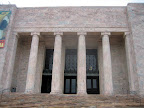
The Durham Museum (formerly known as the Durham Western Heritage Museum) is located at 801 South 10th Street in downtown Omaha, Nebraska. The museum is dedicated to preserving and displaying the history of the United States' western region. The museum is housed in Omaha's Union Station.
Click here to see the album.
References:
Durham Museum. Wikipedia.
Click here to see the album.
References:
Durham Museum. Wikipedia.
OPPD Arboretum - Omaha Public Power District
The OPPD arboretum is designed to create an outdoor education area and is located at 108th and Blondo streets close to an OPPD substation, and is open from dawn till dusk. OPPD stands for Omaha Public Power District.
Click here to see the album.
References:
OPPD Arboretum
The Secret Life of Trees - Photo Journal - WSJ http://goo.gl/3fcZ4
Click here to see the album.
References:
OPPD Arboretum
The Secret Life of Trees - Photo Journal - WSJ http://goo.gl/3fcZ4
2009 Offutt Air Force Base Air Show - Bellevue, Nebraska
Offutt Air Force Base (Offutt AFB) is a U.S. Air Force installation near Omaha, and lies adjacent to Bellevue in Sarpy County, Nebraska. It is the headquarters of the U.S. Strategic Command (USSTRATCOM), the Air Force Weather Agency, and the 55th Wing (55 WG) of the Air Combat Command (ACC).
Click here for the album.
Offutt Air Force Base was named in honor of World War I pilot and Omaha native 1st Lt. Jarvis Offutt. Offutt's legacy includes the construction of the first two bombers to drop atomic bombs and over 40 years as the headquarters for the former Strategic Air Command (SAC) and home for its associated ground and aerial command centers for the U.S. in case of nuclear war during the Cold War.


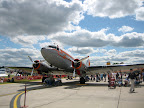
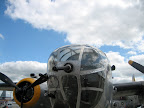
Static displays.


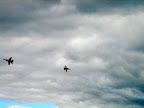
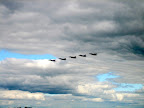
Blue angels.
2009 Offutt Air Force Base Air Show.
References:
Offutt Air Force Base. Wikipedia.
Published: 11/24/2009
Updated: 11/26/2009
Click here for the album.
Offutt Air Force Base was named in honor of World War I pilot and Omaha native 1st Lt. Jarvis Offutt. Offutt's legacy includes the construction of the first two bombers to drop atomic bombs and over 40 years as the headquarters for the former Strategic Air Command (SAC) and home for its associated ground and aerial command centers for the U.S. in case of nuclear war during the Cold War.
Static displays.
Blue angels.
2009 Offutt Air Force Base Air Show.
References:
Offutt Air Force Base. Wikipedia.
Published: 11/24/2009
Updated: 11/26/2009
Arboretums in Lincoln, Nebraska
Maxwell Arboretum has 2 locations:
- City Campus Gardens, 13th & R Street. The City Campus Gardens include the Andrews and Burnett Gardens (perennials), the Cather Garden (native wildflowers, grasses, trees and shrubs), the Donaldson Garden (exotic trees, conifers and oaks), the Love Garden (trees, shrubs, and perennials at the campus entrance), and the Sheldon Garden (contemporary sculpture against a backdrop of mature trees, water gardens and native plant displays).
- East Campus Gardens, 30th and Center Drive just west of the Dental College. The East Campus Gardens include the Maxwell Arboretum (5 acres of five acres displaying 420 varieties of native and exotic species of plants with special collections of hosta and lilacs), the Fleming Slope (perennials), the Magdaline Pfister Appreciation Iris Garden, the Old Mall (trees and shrubs), and The Porch and Old Rose Garden, and the Yeutter Garden (shrubs, perennials and rock plantings).
View Larger Map
From Wikipedia:
The Earl G. Maxwell Arboretum (2 hectares/5 acres) is an arboretum and botanical garden located on the East Campus of the University of Nebraska-Lincoln in Lincoln, Nebraska.
The arboretum began more than 50 years ago when Earl G. Maxwell began to plant trees on the campus. It was subsequently dedicated as the second site of the Nebraska Statewide Arboretum.
Mature oaks include specimens of black, bur, English, pin, sawtooth, shingle, shumard, and swamp white varieties. Other trees include blue ash, chestnut, pawpaw, sweetgum, Black Tupelo, and Scots Pine. Additional plants include lilacs, cold-hardy rhododendrons, and viburnums, as well as over 80 hosta cultivars, and a 1-acre (4,000 m2) prairie with native wildflowers and bluestem and Indian grass.
Sunken Gardens
Click here for full-size images.
Alice Abel Arboretum is a 25 acres (10 hectares) arboretum located at 5000 St. Paul Street on the campus of Nebraska Wesleyan University in Lincoln, Nebraska.
References:
Nebraska Statewide Arboretum, from Wikipedia, the free encyclopedia.
Nebraska Gardens. ILoveGardens.com.
The Secret Life of Trees - Photo Journal - WSJ http://goo.gl/3fcZ4
- City Campus Gardens, 13th & R Street. The City Campus Gardens include the Andrews and Burnett Gardens (perennials), the Cather Garden (native wildflowers, grasses, trees and shrubs), the Donaldson Garden (exotic trees, conifers and oaks), the Love Garden (trees, shrubs, and perennials at the campus entrance), and the Sheldon Garden (contemporary sculpture against a backdrop of mature trees, water gardens and native plant displays).
- East Campus Gardens, 30th and Center Drive just west of the Dental College. The East Campus Gardens include the Maxwell Arboretum (5 acres of five acres displaying 420 varieties of native and exotic species of plants with special collections of hosta and lilacs), the Fleming Slope (perennials), the Magdaline Pfister Appreciation Iris Garden, the Old Mall (trees and shrubs), and The Porch and Old Rose Garden, and the Yeutter Garden (shrubs, perennials and rock plantings).
View Larger Map
From Wikipedia:
The Earl G. Maxwell Arboretum (2 hectares/5 acres) is an arboretum and botanical garden located on the East Campus of the University of Nebraska-Lincoln in Lincoln, Nebraska.
The arboretum began more than 50 years ago when Earl G. Maxwell began to plant trees on the campus. It was subsequently dedicated as the second site of the Nebraska Statewide Arboretum.
Mature oaks include specimens of black, bur, English, pin, sawtooth, shingle, shumard, and swamp white varieties. Other trees include blue ash, chestnut, pawpaw, sweetgum, Black Tupelo, and Scots Pine. Additional plants include lilacs, cold-hardy rhododendrons, and viburnums, as well as over 80 hosta cultivars, and a 1-acre (4,000 m2) prairie with native wildflowers and bluestem and Indian grass.
Sunken Gardens
Click here for full-size images.
Alice Abel Arboretum is a 25 acres (10 hectares) arboretum located at 5000 St. Paul Street on the campus of Nebraska Wesleyan University in Lincoln, Nebraska.
References:
Nebraska Statewide Arboretum, from Wikipedia, the free encyclopedia.
Nebraska Gardens. ILoveGardens.com.
The Secret Life of Trees - Photo Journal - WSJ http://goo.gl/3fcZ4
Sunken Gardens in Lincoln, Nebraska
Click here for full-size images.
From Wikipedia:
The Sunken Gardens were constructed during the winter of 1930-31. It was a project for unemployed men during the depression. It is the only garden in Nebraska listed in the National Geographic Guide "300 Best Gardens to Visit in the United States and Canada."
Nebraska State Capitol Building in Lincoln, Nebraska
Click here for full-size images.
From Wikipedia:
Nebraska State Capitol, constructed between 1922 and 1932, is a skyscraper topped by a golden dome. The tower is crowned by a 6-meter (20 ft) statue of a farmer sowing grain on a pedestal of wheat and corn, to represent the state's agricultural heritage. City zoning rules prevent any other building from rivaling it in height, making it a landmark not only within the city but for the surrounding area. Inside, there are many paintings and iridescent murals depicting the Native American heritage and the history and culture of the early pioneers who settled Nebraska. It is the second tallest U.S. State Capitol building behind the Louisiana State Capitol building in Baton Rouge.
Cabela's Store in La Vista, Nebraska
Author: V. Dimov
Cabela's Store in La Vista, Nebraska. Click here for the slideshow.
Cabela's is a Sidney, Nebraska-based direct marketer and specialty retailer of hunting, fishing, camping and related outdoor recreation merchandise.
Cabela's has a distinctive look to their retail operations, a look which turns them into tourist attractions as well as retail stores. The success of the format is illustrated by the company's Kansas City, Kansas store at over 180,000 square feet (17,000 m2), attracted more than four million customer visits in one year.


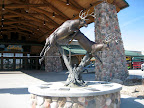
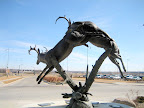
"Leap of Faith" sculpture and the storefront.
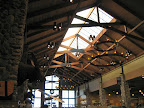
The stores are more like cavernous showrooms, bringing the outdoors inside.


Store interior.
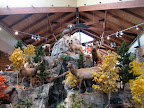
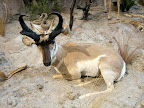
The stores feature museum-quality displays of taxidermied wildlife, large aquariums, indoor mountains, and archery ranges.


Store interior.


Photos.
A rival chain of Cabela's is Bass Pro Shops.
References:
Cabela's from Wikipedia, the free encyclopedia.
Bass Pro Shops from Wikipedia, the free encyclopedia.
Published: 02/22/2009
Updated: 02/22/2009
Cabela's Store in La Vista, Nebraska. Click here for the slideshow.
Cabela's is a Sidney, Nebraska-based direct marketer and specialty retailer of hunting, fishing, camping and related outdoor recreation merchandise.
Cabela's has a distinctive look to their retail operations, a look which turns them into tourist attractions as well as retail stores. The success of the format is illustrated by the company's Kansas City, Kansas store at over 180,000 square feet (17,000 m2), attracted more than four million customer visits in one year.
"Leap of Faith" sculpture and the storefront.
The stores are more like cavernous showrooms, bringing the outdoors inside.
Store interior.
The stores feature museum-quality displays of taxidermied wildlife, large aquariums, indoor mountains, and archery ranges.
Store interior.
Photos.
A rival chain of Cabela's is Bass Pro Shops.
References:
Cabela's from Wikipedia, the free encyclopedia.
Bass Pro Shops from Wikipedia, the free encyclopedia.
Published: 02/22/2009
Updated: 02/22/2009
Joslyn Art Museum in Omaha, Nebraska
Author: V. Dimov
Joslyn Art Museum in Omaha, Nebraska. Click here for the slideshow.
The Joslyn Art Museum, located in Omaha, is the main fine arts museum in the state of Nebraska. The museum opened in 1931, a gift from Sarah H. Joslyn in memory of her husband, George A. Joslyn.


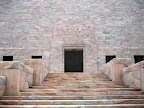
It occupies a large and impressive Art Deco building designed by John and Alan McDonald, constructed of Georgia Pink marble, with 38 different marbles from all over the world in the interior. The structure of Art Deco is based on mathematical geometric shapes.


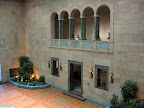
The museum's tiled Fountain Court.


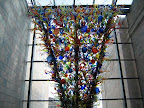
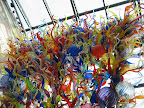
Inside and Out installation by Dale Chihuly at the Joslyn Art Museum.
European collection: 16th and 17th century works include paintings by Veronese, Titian, Claude Lorrain and El Greco. However the strongest collections are from the 19th century, including romantic works by Delacroix and Gustave Doré, realist works by Corot and Gustave Courbet, and an impressionist works by Degas, Monet, Pissarro, and Renoir.
Western American collection: including important collections of work by the Swiss artist Karl Bodmer based on his 1832-34 journey to the Missouri River frontier, and by Alfred Jacob Miller, also illustrating the West of the 1830s.
Although the best known names appear in the European and American collections, it is probably the Western American and Native American collections that have the greatest importance as collections, allowing a rare opportunity to study these genres and periods of art as well as giving an important insight into the history of the western United States.
References:
Joslyn Art Museum, from Wikipedia, the free encyclopedia.
George Catlin, from Wikipedia, the free encyclopedia.
Published: 02/21/2009
Updated: 04/14/2009
Joslyn Art Museum in Omaha, Nebraska. Click here for the slideshow.
The Joslyn Art Museum, located in Omaha, is the main fine arts museum in the state of Nebraska. The museum opened in 1931, a gift from Sarah H. Joslyn in memory of her husband, George A. Joslyn.
It occupies a large and impressive Art Deco building designed by John and Alan McDonald, constructed of Georgia Pink marble, with 38 different marbles from all over the world in the interior. The structure of Art Deco is based on mathematical geometric shapes.
The museum's tiled Fountain Court.
Inside and Out installation by Dale Chihuly at the Joslyn Art Museum.
European collection: 16th and 17th century works include paintings by Veronese, Titian, Claude Lorrain and El Greco. However the strongest collections are from the 19th century, including romantic works by Delacroix and Gustave Doré, realist works by Corot and Gustave Courbet, and an impressionist works by Degas, Monet, Pissarro, and Renoir.
Western American collection: including important collections of work by the Swiss artist Karl Bodmer based on his 1832-34 journey to the Missouri River frontier, and by Alfred Jacob Miller, also illustrating the West of the 1830s.
Although the best known names appear in the European and American collections, it is probably the Western American and Native American collections that have the greatest importance as collections, allowing a rare opportunity to study these genres and periods of art as well as giving an important insight into the history of the western United States.
References:
Joslyn Art Museum, from Wikipedia, the free encyclopedia.
George Catlin, from Wikipedia, the free encyclopedia.
Published: 02/21/2009
Updated: 04/14/2009
Subscribe to:
Posts (Atom)