Showing posts with label Plants. Show all posts

Raised Garden Bed from Costco

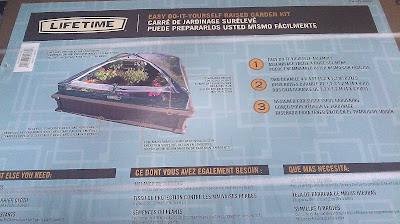
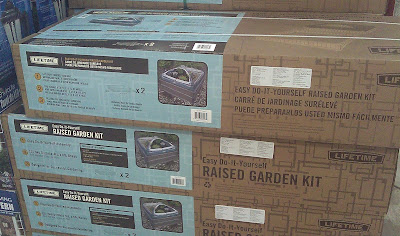
The "Lifetime" Raised Garden Bed Kit contains a clear vinyl plastic tent enclosure and two 4 x 4 garden beds that can be used separately or stacked for an extra-deep bed. It is designed with 8 easy-to-assemble interlocking panels of polyethylene plastic with rust-resistant screws. It won't rot or attract insects like raised garden beds made out of timber.


The interlocking panels create the sidewalls and a weed barrier (not included) creates the bottom of this raised garden bed. This prevents weeds and underground pests from invading your garden. With raised beds you can easily customize the soil to your plants, so you won't be at the mercy of the natural soil conditions in your area.


Because the soil isn't compacted from being walked upon, a raised garden bed doesn't require tilling and provides more efficient drainage. Plant placement is done differently in a raised bed, and this allows you to grow five times as many crops as traditional gardening because it uses 20% of the space of single-row gardens. You'll also appreciate that the interlocking panels give you the option to disassemble and relocate your garden bed if you move or simply want to change your landscaping design. Cost: $99 at Costco, $150 at Amazon. The weed barrier is about $10 at Home Depot and Amazon.
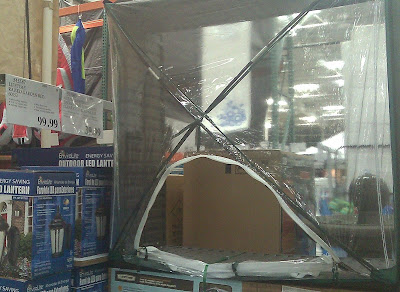


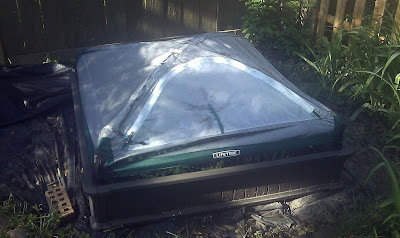
Here is the covered garden bed:
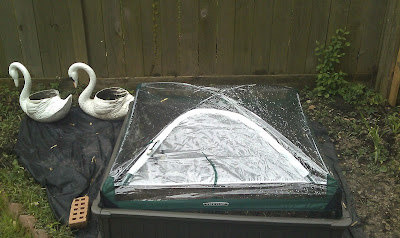


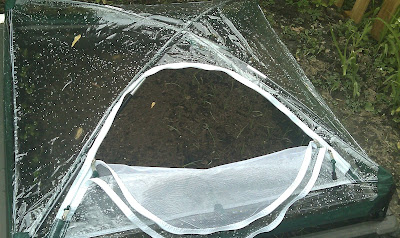
Opened cover:


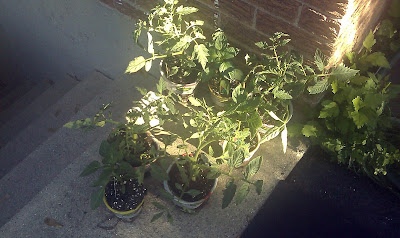
Tomato and pepper plants from Home Depot:


Growing garlic plants with some onions. The garlic is ready when it has 3 leaves. Here are some Green Garlic Recipes for Health - NYTimes http://goo.gl/wY7gK
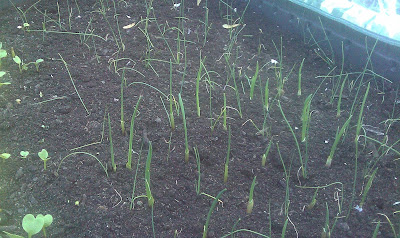


The garlic (grown from cloves from Costco) did very well, especially compared to the onions purchased from Home Depot:
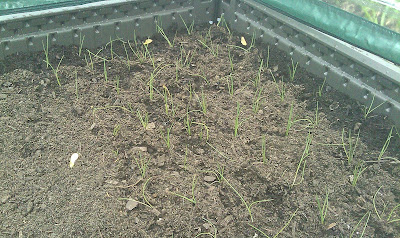


Covered and uncovered garden beds. The plastic covers is available for only one bed in the Costco package:
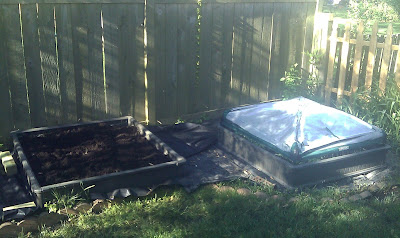
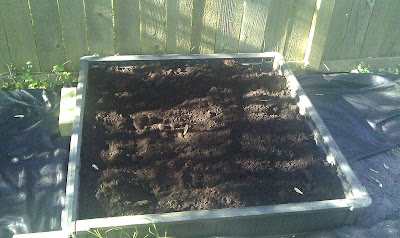


DIY greenhouse and irrigation system for the raised bed

I first saw this in the Square Foot Gardening book, and here is a summary from the Popular Mechanics website: Use galvanized pipe straps to mount 1-in. PVC pipe inside the bed walls. Cut ½-in. flexible PVC tubing twice as long as the beds' width. Bend it, mount it and clip a cover in place.

Use clear polyethylene film. Be careful not to bake your plants on warmer days. Remove the cover or slit vents in it to avoid excessive heat buildup. You can use the same pipes tp construct an irrigation system that is spaced 1 foot apart - serving as a grid if you Square Foot Gardening (SFG) system.

The Costco/Lifetime product comes with 2 beds, and one of them has a plastic cover. The least expensive option is a raised wooden bed from Home Depot for $35 (Home Depot offers more than 70 garden beds).
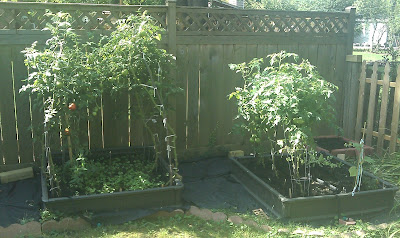


Tomatoes in raised garden beds (after 3 months).

Slideshow:


John from http://www.growingyourgreens.com/ takes you a field trip to Costco to show you a new product they are offering. It's the Lifetime 4' x 4' raised bed kit that comes with two 48"x48"x9" raised beds plus a Green House Dome that allows you to start your growing season earlier:


References:

Video Review of Lifetime Raised Garden Kit from the official Lifetime blog.
Green Garlic Recipes for Health - NYTimes http://goo.gl/wY7gK
Tips for Dealing with Garden Trouble  http://goo.gl/VjKVv


Making a Raised-Bed Garden - Gardening Articles :: Edibles :: Vegetables :: National Gardening Association - http://goo.gl/wuXKi

Planning a Vegetable Garden - Gardening Articles :: Edibles :: Vegetables :: National Gardening Association - http://goo.gl/oYBgi

Planting a Vegetable Garden - Gardening Articles :: Edibles :: Vegetables :: National Gardening Association - http://goo.gl/7fDj9

Raised Garden Beds - How to Build and Install a Raised Garden Bed - Popular Mechanics

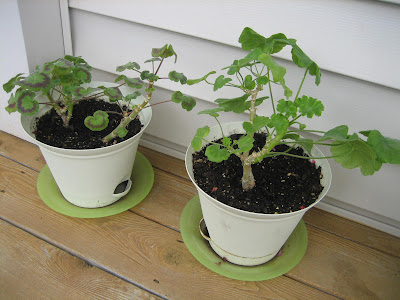
Pelargonium (geranium)


From Wikipedia:

Pelargonium is a genus of flowering plants which includes about 200 species of perennials, succulents, and shrubs, commonly known as geraniums or storksbills. Confusingly, Geranium is the correct botanical name of a separate genus of related plants often called Cranesbills. Gardeners sometimes refer to the members of Genus Pelargonium as "pelargoniums" in order to avoid the confusion, but the older common name "geranium" is still in regular use.

The first species of Pelargonium known to be cultivated was Pelargonium triste, a native of South Africa. It was probably brought to the botanical garden in Leiden before 1600 on ships which stopped at the Cape of Good Hope. In 1631, the English gardener, John Tradescant the elder, bought seeds from Rene Morin in Paris and introduced the plant to England. The name Pelargonium was introduced by Johannes Burman in 1738, from the Greek πελαργός, pelargós, stork, because part of the flower looks like a stork's beak.

Other than grown for their beauty, species of Pelargonium such as P. graveolens are important in the perfume industry and are cultivated and distilled for its scent. The varieties with rose scents are most commercially important.

Pelargoniums are believed to deter mosquitoes.

Garden geranium (Pelargonium x hortorum; syn. Pelargonium zonale) is one of the most common ornamental potted-plants, with over 200 varieties.

Species of Pelargonium are indigenous to Southern Africa and are drought and heat tolerant, and can tolerate only minor frosts. Pelargoniums are extremely popular garden plants, grown as annuals in temperate climates, and thousands of ornamental cultivars have been developed from about 20 of the species.

References:
Pelargonium. Wikipedia.

Plants at Costco (May 2010)

IMAG0240.jpgIMAG0242.jpg
Roseum Elegans Rhododendron

IMAG0241.jpg
Roseum Elegans Rhododendron

IMAG0243.jpgIMAG0244.jpg
Blue spruce - "Blue is Cool"

IMAG0245.jpg
Blue spruce

IMAG0246.jpg
Coleus is a genus of perennial plants.

IMAG0248.jpg

OPPD Arboretum - Omaha Public Power District

The OPPD arboretum is designed to create an outdoor education area and is located at 108th and Blondo streets close to an OPPD substation, and is open from dawn till dusk. OPPD stands for Omaha Public Power District.


Click here to see the album.

References:

OPPD Arboretum
The Secret Life of Trees - Photo Journal - WSJ  http://goo.gl/3fcZ4

TED Talks: One seed at a time, protecting the future of food


The varieties of wheat, corn and rice we grow today may not thrive in a future threatened by climate change. Cary Fowler takes us inside a vast global seed bank, buried within a frozen mountain in Norway, that stores a diverse group of food-crop for whatever tomorrow may bring.
Blog Widget by LinkWithin