A DW correspondent travels to the British Isles and the Channel Island of Jersey located between England and France. It's actually an autonomous island that despite having pledged allegiance to the English Crown in 1066, makes its own laws and has its own fiscal system. And it's blessed with amazing flora and fauna. They also visit the Durrell Wildlife Park.
Showing posts with label Gardening. Show all posts
Showing posts with label Gardening. Show all posts

How to Grow Giant Tomatoes
1. Chose to grow only known a large-fruited tomatoes:
- 'Beefsteak'-type variety
- 'Big Beef'
- 'Big Rainbow'
- 'Dinner Plate'
- 'Giant Belgium'
2. Build your soil with a lot of organic matter/fertilizers in a 2-foot radius (at least) around the plants' future sites so they'll have an ample, natural food supply throughout the growing season. Ensure soil pH of 6.0 to 6.5.
3. Start plants indoors at least 2 months before the time to plant them outdoors. Keep seed pots slightly warmer (70° to 80° F) than average indoor temperatures. When the height of the seedling is three times the diameter of the pot, transplant it into successively bigger pots.
4. A week before transplanting outdoors, harden them off, stop fertilizing and watering, and put plants outside each day to help them adjust to new growing conditions.
5. Give your plants room to grow; 3 to 4 feet apart is about right. Until outside temperatures are above 60° F, cover them or enclose them with cloches, Wall O' Waters, clear plastic, or floating row covers.
6. Feed diligently during the growing season with weekly applications of a liquid supplement such as:
- a complete soluble fertilizer
- manure tea
- fish emulsion
Provide enough water so plantroots never dry out.
7. Support your plants with cages, stakes, or trellises. The fruit's weight can tear the branch away from the main stem, so support branches and large individual fruit with ties made from old pieces of cloth (wire or string ties tend to cut the stems).
8. Prune all suckers and remove the smaller flower clusters so your plants put all their energy into just a few tomatoes from the largest flowers. The largest fruits tend to develop on the lowest branches. Hand-pollinate selected flowers with a small paintbrush or by shaking the plants gently.
References:
Ten Steps to Giant Tomatoes - Gardening Articles :: Edibles :: Vegetables :: National Gardening Association - http://goo.gl/PqAw7
Terrific Tomatoes - Gardening Articles :: Edibles :: Vegetables :: National Gardening Association - http://goo.gl/zrHyR
High Yield Tomato Plants: 50-80 lbs per Plant - YouTube http://goo.gl/65JmE
- 'Beefsteak'-type variety
- 'Big Beef'
- 'Big Rainbow'
- 'Dinner Plate'
- 'Giant Belgium'
2. Build your soil with a lot of organic matter/fertilizers in a 2-foot radius (at least) around the plants' future sites so they'll have an ample, natural food supply throughout the growing season. Ensure soil pH of 6.0 to 6.5.
3. Start plants indoors at least 2 months before the time to plant them outdoors. Keep seed pots slightly warmer (70° to 80° F) than average indoor temperatures. When the height of the seedling is three times the diameter of the pot, transplant it into successively bigger pots.
4. A week before transplanting outdoors, harden them off, stop fertilizing and watering, and put plants outside each day to help them adjust to new growing conditions.
5. Give your plants room to grow; 3 to 4 feet apart is about right. Until outside temperatures are above 60° F, cover them or enclose them with cloches, Wall O' Waters, clear plastic, or floating row covers.
6. Feed diligently during the growing season with weekly applications of a liquid supplement such as:
- a complete soluble fertilizer
- manure tea
- fish emulsion
Provide enough water so plantroots never dry out.
7. Support your plants with cages, stakes, or trellises. The fruit's weight can tear the branch away from the main stem, so support branches and large individual fruit with ties made from old pieces of cloth (wire or string ties tend to cut the stems).
8. Prune all suckers and remove the smaller flower clusters so your plants put all their energy into just a few tomatoes from the largest flowers. The largest fruits tend to develop on the lowest branches. Hand-pollinate selected flowers with a small paintbrush or by shaking the plants gently.
References:
Ten Steps to Giant Tomatoes - Gardening Articles :: Edibles :: Vegetables :: National Gardening Association - http://goo.gl/PqAw7
Terrific Tomatoes - Gardening Articles :: Edibles :: Vegetables :: National Gardening Association - http://goo.gl/zrHyR
High Yield Tomato Plants: 50-80 lbs per Plant - YouTube http://goo.gl/65JmE
How to grow turnips
Turnips are Cool Season Vegetables from the Cabbage Family (Brassica rapa var. rapa from Brassicaceae Family). The plant is not native to North America. Not known in the wild. Probably developed in cooler parts of Europe.
How plant turnips
Propagate by seed. Will germinate at soil temperatures as low as 40 F. Days to emergence: 4 to 7.
From early spring to late summer, sow seeds ¼ to ½ inch deep, 1 inch apart in rows 12 to 18 inches apart. Thin plants to 4- to 6-inch spacings. Plant thickly, and once the plants are 4-6 inches tall, start thinning them by hand.
Plant every 2 weeks for continuous harvest.
Needs plentiful, consistent moisture. Loosen soil deeply or grow in raised beds to encourage good root development.
When to plant turnips
Turnips are a cool-weather crop. Plant them early in the spring as soon as the ground can be worked, and again plant toward the end of summer for a fall crop.
Caution: Some varieties are grown strictly for their greens and produce poor quality roots.
Good turnip varieties:
Gilfeather
Purple Top White Globe
Tokyo Cross
References:
Gardening Articles :: Edibles :: Vegetables :: National Gardening Association http://goo.gl/P65iO
Explore Cornell - Home Gardening - Vegetable Growing Guides - Growing Guide http://goo.gl/VxoyL
Turnips & Rutabagas - Gardening Articles :: Edibles :: Vegetables :: National Gardening Association - http://goo.gl/lhfcw
How plant turnips
Propagate by seed. Will germinate at soil temperatures as low as 40 F. Days to emergence: 4 to 7.
From early spring to late summer, sow seeds ¼ to ½ inch deep, 1 inch apart in rows 12 to 18 inches apart. Thin plants to 4- to 6-inch spacings. Plant thickly, and once the plants are 4-6 inches tall, start thinning them by hand.
Plant every 2 weeks for continuous harvest.
Needs plentiful, consistent moisture. Loosen soil deeply or grow in raised beds to encourage good root development.
When to plant turnips
Turnips are a cool-weather crop. Plant them early in the spring as soon as the ground can be worked, and again plant toward the end of summer for a fall crop.
Caution: Some varieties are grown strictly for their greens and produce poor quality roots.
Good turnip varieties:
Gilfeather
Purple Top White Globe
Tokyo Cross
References:
Gardening Articles :: Edibles :: Vegetables :: National Gardening Association http://goo.gl/P65iO
Explore Cornell - Home Gardening - Vegetable Growing Guides - Growing Guide http://goo.gl/VxoyL
Turnips & Rutabagas - Gardening Articles :: Edibles :: Vegetables :: National Gardening Association - http://goo.gl/lhfcw
How to build raised garden beds with pavers
You can use a variety of materials to construct raised beds. Most beds are made of wood.
However, pavers make great edging material that lasts virtually forever, and this works great when edging up to a concrete path. A simple paver costs between 40 cents and $2 at Home Depot(depending on size). You will need about 30-60 pavers (depending on size) to build one raised garden bed. Here is a good example of such inexpensive paver: Pavestone Holland 4 in. x 8 in. Concrete Paver, 39 cents http://goo.gl/F2OEF
Read more How to build a raised garden bed with pavers at Doctor's Garden.
However, pavers make great edging material that lasts virtually forever, and this works great when edging up to a concrete path. A simple paver costs between 40 cents and $2 at Home Depot(depending on size). You will need about 30-60 pavers (depending on size) to build one raised garden bed. Here is a good example of such inexpensive paver: Pavestone Holland 4 in. x 8 in. Concrete Paver, 39 cents http://goo.gl/F2OEF
Read more How to build a raised garden bed with pavers at Doctor's Garden.
Growing lights for indoor plants
Artificial lighting with full-spectrum CFLs and LEDs is for more energy-efficient than natural light for indoor plants.
Place artificial lights 6 inches over the plants. Either lower the containers as the plants grow, or raise the lights. That's why gardeners often have their lights on chains.
Some gardeners place aluminum foil or whiteboard on the surfaces around containers to reflect light. This lets you maximize the light by reflecting it back toward the seedlings.
References:
How to Start Your Indoor Garden - Popular Mechanics http://goo.gl/hTnZ3
Related:
Walmart.com: Lights of America 24" Fluorescent Grow Light Fixture http://goo.gl/deaIj
Walmart.com: GE Plant Light Kit http://goo.gl/MwsJa
Walmart.com: Bulbrite Industries 60W Plant Grow A19 A Shape Bulb (Set of 4) http://goo.gl/VZd3M
Place artificial lights 6 inches over the plants. Either lower the containers as the plants grow, or raise the lights. That's why gardeners often have their lights on chains.
Some gardeners place aluminum foil or whiteboard on the surfaces around containers to reflect light. This lets you maximize the light by reflecting it back toward the seedlings.
References:
How to Start Your Indoor Garden - Popular Mechanics http://goo.gl/hTnZ3
Related:
Walmart.com: Lights of America 24" Fluorescent Grow Light Fixture http://goo.gl/deaIj
Walmart.com: GE Plant Light Kit http://goo.gl/MwsJa
Walmart.com: Bulbrite Industries 60W Plant Grow A19 A Shape Bulb (Set of 4) http://goo.gl/VZd3M
How to grow leeks
Leeks are Cool Season Vegetable from the Onion Family (Allium ampeloprasum from Alliaceae Family). Not native to North America - Cultivated in Egypt more than 4,000 years ago.
Leeks like lots of fertilizer. Seeds start slowly. 'American Flag' and 'King Richard' are popular varieties.
How to plant leeks
Northern gardeners should plan the leeks in the early spring. Remember to keep the young plants watered well.
If you plant early in the spring you will have leeks until the first fall frost. Some gardeners leave leeks in the ground over the winter under a layer of mulch.
Propagate by seed. Days to emergence: 5 to 7. Raised beds are ideal. Leeks are good for intercropping with other garden plants, especially early-maturing spring greens.
Leeks have shallow root systems and need consistent moisture.
Leek varieties
Grow early or nonhardy varieties for summer harvest. They mature in as little as 50 days after transplanting and will withstand some frost.
Grow late or hardy varieties for fall and winter harvest. They take can take 100-150 days to mature, but can withstand heavy freezes. If well-mulched in fall, they can be harvested through winter and into spring in many places.
Recommended varieties:
American Flag
Broad London
Electra
King Richard
Pancho
References:
Gardening Articles :: Edibles :: Vegetables :: National Gardening Association http://goo.gl/QPc8D
Explore Cornell - Home Gardening - Vegetable Growing Guides - Growing Guide http://goo.gl/gC84
Growing Leeks - Gardening Articles :: Edibles :: Vegetables :: National Gardening Association - http://goo.gl/V3edt
Leeks like lots of fertilizer. Seeds start slowly. 'American Flag' and 'King Richard' are popular varieties.
How to plant leeks
Northern gardeners should plan the leeks in the early spring. Remember to keep the young plants watered well.
If you plant early in the spring you will have leeks until the first fall frost. Some gardeners leave leeks in the ground over the winter under a layer of mulch.
Propagate by seed. Days to emergence: 5 to 7. Raised beds are ideal. Leeks are good for intercropping with other garden plants, especially early-maturing spring greens.
Leeks have shallow root systems and need consistent moisture.
Leek varieties
Grow early or nonhardy varieties for summer harvest. They mature in as little as 50 days after transplanting and will withstand some frost.
Grow late or hardy varieties for fall and winter harvest. They take can take 100-150 days to mature, but can withstand heavy freezes. If well-mulched in fall, they can be harvested through winter and into spring in many places.
Recommended varieties:
American Flag
Broad London
Electra
King Richard
Pancho
References:
Gardening Articles :: Edibles :: Vegetables :: National Gardening Association http://goo.gl/QPc8D
Explore Cornell - Home Gardening - Vegetable Growing Guides - Growing Guide http://goo.gl/gC84
Growing Leeks - Gardening Articles :: Edibles :: Vegetables :: National Gardening Association - http://goo.gl/V3edt
What to Plant in a Fall Vegetable Garden
What to do
Plant CLeaR:
Cabbage
Leafy plants
Root crops
Remember to add a handful of homemade compost to each square foot before you plant.
Read more at Doctor's Garden
Plant CLeaR:
Cabbage
Leafy plants
Root crops
Remember to add a handful of homemade compost to each square foot before you plant.
Read more at Doctor's Garden
How to grow green onion (scallions)
Onions are Cool Season Vegetables, also known as scallions, bunching onions, green onions (Allium cepa var. cepa from Alliaceae Family. Onion is not native to North America. Unknown in wild. Probably originated in the Middle East or Asia.
What type of onion to select
Almost any onions sown from seed can be scallions (also called bunching onions, green onions, spring onions or green tails).
To have scallions in the summer, plant seeds of an onion variety such as 'Beltsville Bunching' or 'Evergreen Bunching' as early in the spring as you can.
Some varieties, such as 'Long White Bunching', don't ever form bulbs. 'White Portugal' is a bulbing onion grown all over the country and harvested young for sale as scallions.
Plant from seed
Bunching onion transplants for sale at the store are not worth buying. Bunching onions planted from seed will be at the eating stage in just a matter of weeks. Some survive winter temperatures as low as -30F.
Propagate by seed. To grow your own onion sets, sow seeds thickly in a block in midsummer. About 2 months after planting, roll down the tops, forcing the plants to form small bulbs. (Those about the size of a dime work best.)
Plant seed ¼ inch deep, ½ inch apart, in rows 12 to 18 inches apart. Thin to 4-inch spacings for large bulbs, 2-inch spacings for smaller bulbs but higher yields, or 1-inch spacings for scallions.
Days to emergence: 4 to 5.
Raised beds are ideal. Onions are good for intercropping with other garden plants, especially early-maturing spring greens.
Onions have shallow root systems and need consistent moisture
Spring-sown early varieties can be harvested just 60 to 80 days after planting.
Recommended varieties:
From seed (early-maturing):
Arsenal
Early Yellow Globe
Precedent
Green or Bunching:
Evergreen Hardy White
He-Shi-Ko
Long White Bunching
Southport White Bunching
Here are 2 varieties I am growing this year (summer 2012):
Tokyo White Bunching from Burpee:
Big Bunch from Burpee (from Home Depot).
References:
Gardening Articles - National Gardening Association http://goo.gl/nO5yT
Explore Cornell - Home Gardening - Vegetable Growing Guides - Growing Guide http://goo.gl/xGERx
Watering Onions - Gardening Association - http://goo.gl/hfRsp
Growing Onions - Gardening Association - http://goo.gl/0P2Cu
Onion Varieties - Gardening Association - http://goo.gl/EHHkU
Planting Onions - Gardening Association - http://goo.gl/lkN1Q
Vegetables for a Fall Garden in the Midwest
What type of onion to select
Almost any onions sown from seed can be scallions (also called bunching onions, green onions, spring onions or green tails).
To have scallions in the summer, plant seeds of an onion variety such as 'Beltsville Bunching' or 'Evergreen Bunching' as early in the spring as you can.
Some varieties, such as 'Long White Bunching', don't ever form bulbs. 'White Portugal' is a bulbing onion grown all over the country and harvested young for sale as scallions.
Plant from seed
Bunching onion transplants for sale at the store are not worth buying. Bunching onions planted from seed will be at the eating stage in just a matter of weeks. Some survive winter temperatures as low as -30F.
Propagate by seed. To grow your own onion sets, sow seeds thickly in a block in midsummer. About 2 months after planting, roll down the tops, forcing the plants to form small bulbs. (Those about the size of a dime work best.)
Plant seed ¼ inch deep, ½ inch apart, in rows 12 to 18 inches apart. Thin to 4-inch spacings for large bulbs, 2-inch spacings for smaller bulbs but higher yields, or 1-inch spacings for scallions.
Days to emergence: 4 to 5.
Raised beds are ideal. Onions are good for intercropping with other garden plants, especially early-maturing spring greens.
Onions have shallow root systems and need consistent moisture
Spring-sown early varieties can be harvested just 60 to 80 days after planting.
Recommended varieties:
From seed (early-maturing):
Arsenal
Early Yellow Globe
Precedent
Green or Bunching:
Evergreen Hardy White
He-Shi-Ko
Long White Bunching
Southport White Bunching
Here are 2 varieties I am growing this year (summer 2012):
Tokyo White Bunching from Burpee:
Big Bunch from Burpee (from Home Depot).
References:
Gardening Articles - National Gardening Association http://goo.gl/nO5yT
Explore Cornell - Home Gardening - Vegetable Growing Guides - Growing Guide http://goo.gl/xGERx
Watering Onions - Gardening Association - http://goo.gl/hfRsp
Growing Onions - Gardening Association - http://goo.gl/0P2Cu
Onion Varieties - Gardening Association - http://goo.gl/EHHkU
Planting Onions - Gardening Association - http://goo.gl/lkN1Q
Vegetables for a Fall Garden in the Midwest
Winter Vegetable Garden - What plants to consider?
Here are some suggestions for Winter Vegetables for the Western United States and When to Plant:
Beets ------------- Anytime
Broccoli ---------- Fall to early spring
Brussels sprouts -- Fall to early spring
Cabbage ----------- Fall to early spring
Carrots ----------- Anytime
Cauliflower ------- Fall to early spring
Chard ------------- Fall to early spring
Kohlrabi ---------- Fall and winter
Lettuce ----------- Fall to spring
Onions ------------ Fall and winter
Peas--------------- Fall to early spring
Radish ------------ Anytime
Spinach ----------- Fall to early spring
Turnips ----------- Fall to early spring
Here is how to plan what to plant according you where you live: Average First and Last Frost Dates by State http://goo.gl/6Bc8P
Read more at Doctor's Garden
Beets ------------- Anytime
Broccoli ---------- Fall to early spring
Brussels sprouts -- Fall to early spring
Cabbage ----------- Fall to early spring
Carrots ----------- Anytime
Cauliflower ------- Fall to early spring
Chard ------------- Fall to early spring
Kohlrabi ---------- Fall and winter
Lettuce ----------- Fall to spring
Onions ------------ Fall and winter
Peas--------------- Fall to early spring
Radish ------------ Anytime
Spinach ----------- Fall to early spring
Turnips ----------- Fall to early spring
Here is how to plan what to plant according you where you live: Average First and Last Frost Dates by State http://goo.gl/6Bc8P
Read more at Doctor's Garden
Useful Gardening Websites and Resources
Many of the U.S. universities have agricultural "extensions" and their websites offer rich, high-quality and practical information about starting and keeping a successful home garden.
Cooperative Extension Search engines searches a good number of those websites: http://www.extension.org/search
Gardening Articles - Edibles - Vegetables - National Gardening Association http://goo.gl/sFfOf
Gardening Articles - Los Angeles County - UCCE http://goo.gl/fA8ti
Gardening Websites selected by University of Maryland - Grow It, Eat it! - http://goo.gl/sxixx
Lighting Indoor Plants | University of Missouri Extension - http://goo.gl/GbsJ2
How to Start Your Own Garden For Almost Free | Kitchen Gardeners International http://goo.gl/ABOH1
Garden Tutorials - mygardenguide.com http://goo.gl/RHTV1
Explore Cornell - Home Gardening - Vegetable Growing Guides http://goo.gl/E4kXo
Extension Online Store - Iowa State University free PDF guides http://goo.gl/8uvwN
Growing Vegetables & Edible Plants - How-To Help and Videos - For Dummies http://goo.gl/8JBWU
Cooperative Extension Search engines searches a good number of those websites: http://www.extension.org/search
Gardening Articles - Edibles - Vegetables - National Gardening Association http://goo.gl/sFfOf
Gardening Articles - Los Angeles County - UCCE http://goo.gl/fA8ti
Gardening Websites selected by University of Maryland - Grow It, Eat it! - http://goo.gl/sxixx
Lighting Indoor Plants | University of Missouri Extension - http://goo.gl/GbsJ2
How to Start Your Own Garden For Almost Free | Kitchen Gardeners International http://goo.gl/ABOH1
Garden Tutorials - mygardenguide.com http://goo.gl/RHTV1
Explore Cornell - Home Gardening - Vegetable Growing Guides http://goo.gl/E4kXo
Extension Online Store - Iowa State University free PDF guides http://goo.gl/8uvwN
Growing Vegetables & Edible Plants - How-To Help and Videos - For Dummies http://goo.gl/8JBWU
Portable walk-in greenhouse
This portable greenhouse is available from Home Depot for $89 and has excellent reviews (it costs $200 from the manufacturer's website, ShelterLogic 6 ft. x 5 ft. Polyethylene Organic Growers Greenhouse). The store showroom unit had concrete blocks at the base ($1.49 each) to prevent from being blown away with strong winds. A indoor-approved heater may be needed during the winter (mostly at night).
The greenhouse features a mesh fabric cover, steel frame, fasteners and 4 earth anchors. Adjustable vents on all sides permit ventilation. There are a zippered screens and side panels with screens to keep bugs out.
The polyethylene fabric cover is designed to disperse sunlight for optimal plant growth.
Features of the greenhouse:
- 238 cu. ft. storage capacity
- 1-piece cover slips over frame
- 3/8 in. steel frame
- Adjustable vents deliver ventilation on all sides
- Half-moon zippered screens and rollup side panels with full-length screens keep bugs out
- Blocks harmful UVA and UVB rays
- Treated inside and outside with fade blockers, anti-aging, anti-yellowing and anti-microbial agents
- Includes 5 ft. x 6 ft. x 6 ft. 6 in. frame, 1-piece fitted cover, bungee fasteners and four 15 in. ShelterAuger earth anchors
- Complete hardware kit and step-by-step instructions (a PDF manual is available from the manufacturer website)
MFG Brand Name : ShelterLogic, MFG Model # : 70635, MFG Part # : 70635
A slightly bigger, and much more expensive, version is also available from Home Depot and Amazon: GrowIt Organic Growers 6 ft. x 8 ft. x 6 ft. 6 in. Peak-Style Greenhouse-70615.0 at The Home Depot - http://goo.gl/mDwMT
References:
6 ft. x 5 ft. Polyethylene Organic Growers Greenhouse-70635 at The Home Depot
GrowIt Organic Growers 6 ft. x 8 ft. x 6 ft. 6 in. Peak-Style Greenhouse-70615.0 at The Home Depot - http://goo.gl/mDwMT
ShelterLogic Grow-It Greenhouses (manuals can be downloaded from the website) http://goo.gl/2V0Iz
The greenhouse features a mesh fabric cover, steel frame, fasteners and 4 earth anchors. Adjustable vents on all sides permit ventilation. There are a zippered screens and side panels with screens to keep bugs out.
The polyethylene fabric cover is designed to disperse sunlight for optimal plant growth.
Features of the greenhouse:
- 238 cu. ft. storage capacity
- 1-piece cover slips over frame
- 3/8 in. steel frame
- Adjustable vents deliver ventilation on all sides
- Half-moon zippered screens and rollup side panels with full-length screens keep bugs out
- Blocks harmful UVA and UVB rays
- Treated inside and outside with fade blockers, anti-aging, anti-yellowing and anti-microbial agents
- Includes 5 ft. x 6 ft. x 6 ft. 6 in. frame, 1-piece fitted cover, bungee fasteners and four 15 in. ShelterAuger earth anchors
- Complete hardware kit and step-by-step instructions (a PDF manual is available from the manufacturer website)
MFG Brand Name : ShelterLogic, MFG Model # : 70635, MFG Part # : 70635
A slightly bigger, and much more expensive, version is also available from Home Depot and Amazon: GrowIt Organic Growers 6 ft. x 8 ft. x 6 ft. 6 in. Peak-Style Greenhouse-70615.0 at The Home Depot - http://goo.gl/mDwMT
References:
6 ft. x 5 ft. Polyethylene Organic Growers Greenhouse-70635 at The Home Depot
GrowIt Organic Growers 6 ft. x 8 ft. x 6 ft. 6 in. Peak-Style Greenhouse-70615.0 at The Home Depot - http://goo.gl/mDwMT
ShelterLogic Grow-It Greenhouses (manuals can be downloaded from the website) http://goo.gl/2V0Iz
How To Plant and Grow Lettuce
Lettuce is a Cool Season Vegetable (Salad Greens, Lactuca sativa from Asteraceae Family). Not native to North America - Mediterranean origin. Was cultivated by Egyptians 6,500 years ago.
With the variety of colors, shapes and flavors available, your salads may never be the same. Lettuce is adapatable to many growing conditions, but likes it cool - around 60 F to 65 F. Grow in spring and fall, and slow bolting by shading summer crops.
Read more at Doctor's Garden.
With the variety of colors, shapes and flavors available, your salads may never be the same. Lettuce is adapatable to many growing conditions, but likes it cool - around 60 F to 65 F. Grow in spring and fall, and slow bolting by shading summer crops.
Read more at Doctor's Garden.
How to Grow Cucumbers in Containers
Cucumbers are Warm Season Vine Vegetables (Cucumis sativus from the Cucurbitaceae Family). Not native to North America - Probably originated in India before spreading to Africa and Southeast Asia.
Whether for pickling or slicing, cucumbers are easy to grow if you give them good soil, full sun and sufficient moisture, and wait for weather to warm before planting. It requires well-drained soil and high fertility.
Vining varieties can climb up to 6 feet with support, or hug the ground if allowed to sprawl. Bush varieties take up only 2 or 3 square feet, while unsupported vining varieties can run along the ground for 6 or more feet.
Read more at Doctor's Garden.
Whether for pickling or slicing, cucumbers are easy to grow if you give them good soil, full sun and sufficient moisture, and wait for weather to warm before planting. It requires well-drained soil and high fertility.
Vining varieties can climb up to 6 feet with support, or hug the ground if allowed to sprawl. Bush varieties take up only 2 or 3 square feet, while unsupported vining varieties can run along the ground for 6 or more feet.
Read more at Doctor's Garden.
What is the best potting soil/mix for vegetable containers?
You can make your own mix:
- 30% peat moss or coco coir
- 30% perlite or vermiculite
- 30% compost or soil
Among the mixes in the store, Miracle-Gro 32-Quart Potting Soil/Mix seems to be the best choice. Don't use garden soil because it is too heavy, it will absorb too much water and will drown the plants.
The cost of Miracle-Gro 32-Quart Potting Soil is less than $10 at Lowe's, Home Depot or Walmart, and should be enough for 6-8 eight-inch planters.
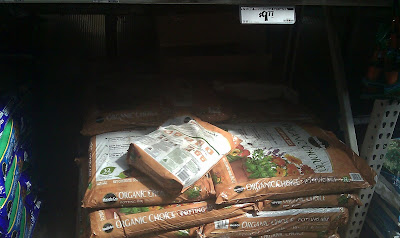
Some users report gnat infestation with Miracle-Gro 32-Quart Potting Soil (check the Amazon reviews).
FoxFarm FX14053 12-Quart Ocean Forest Organic Potting Soil gets great reviews but it is considerable more expensive than Miracle-Gro Potting Soil.
Here are the Approved Growing Media for EarthBox (Potting Mix and Potting Soil are the same).
Depending on where you reside in the U.S., growing media that is suitable for container gardening may be called Potting Mix or Potting Soil.
EarthBox manufacturer recommends using 2 cubic feet (60 dry quarts) of a peat-based (70%-80%) growing media that contains perlite or vermiculite. It should be light and fluffy when dry, and spongy when wet. It should NOT contain any rock, clay, or sand. You should also avoid using topsoil or compost.
The following brands are suitable for planting in the EarthBox:
EarthBox Potting Mix
EarthBox Organic Potting Mix
Lambert Potting Mix
Lambert 100% Organic Potting Mix
Jeff’s Natural Solutions All Organic Growing mix
Premier Horticulture Pro-Mix BX
Premier Horticulture Pro-Mix for Potting & Seeding
Premier Horticulture Pro-Mix Ultimate Organic Mix
Premier Horticulture Bio-Max Garden Mix 3-in-1
Premier Horticulture LiteWay Potting Soil
Espoma Organic Potting Mix
Fox Farm Happy Frog Potting Soil
Jungle Growth Flower & Vegetable Professional Mix
Jungle Growth Pure Organic Potting Mix
Scott’s Miracle-Gro Potting Mix
Scott’s Miracle-Gro Organic Choice Potting Mix
Fafard All Purpose Potting Mix
Fafard Container Mix
E.B. Stone Organics Edna’s Best Potting Soil
E.B. Stone Organics Flower & Vegetable Planting Mix
Kellogg Champion’s Blend Premium Potting Soil
Kellogg Premium Potting Soil
EKO Compost Premium All-Purpose Potting Mix
EKO Compost Premium Outdoor Planting Mix
ASB Greenworld Original Grower Mix
ASB Greenworld Original Grower Mix with Perlite
ASB Greenworld Professional Seed & Plug Mix
Baccto Professional Planting Mix
Baccto Lite Premium Potting Soil
Gardner & Bloom Blue Ribbon Blend Premium Potting Soil
Ferti-lome Ultimate Potting Mix
Sun Gro Horticulture Metro Mix Potting Medium (350, 360...)
Black Gold Seedling Mix
Black Gold Natural & Organic Potting Soil
Sunshine Container Potting Mix
Sunshine Seed Starter Mix
Nature’s All Organic Potting Soil
SummerWinds Potting Soil
Any private label growing media that meets the above specifications
Related reading:
Raised Garden Bed: What soil to select? http://goo.gl/0sbtK (Note: Garden soil is different from potting soil).
Using Soil and Soil Mixes - Successful Container Gardens - University of Illinois Extension http://goo.gl/IJm73
EarthBox: Approved Growing Media http://goo.gl/i77fq
How to Create a Potting Mix for Self-Watering Containers | eHow.com http://goo.gl/nmN3K
How Many Pots Can You Fill with a Bag of Soil? - Bonnie Plants http://goo.gl/KYE5T
Growing Vegetables according to the season | eHow.com http://goo.gl/izBCe
Best Source of Garden Soil to Grow Your Vegetables. - YouTube http://goo.gl/FxsPm
Vermiculite shopping options:
2.0 cu. ft. Vermiculite (Medium Grade), $25, free shipping at The Home Depot http://bit.ly/PN6knJ
Shop Sta-Green 1.5 cu ft Vermiculite at Lowes.com (available locally) http://low.es/PN6n2U
Horticultural Vermiculite at Brew & Grow, $25, 4 cu/ft http://bit.ly/PN6vPX
- 30% peat moss or coco coir
- 30% perlite or vermiculite
- 30% compost or soil
Among the mixes in the store, Miracle-Gro 32-Quart Potting Soil/Mix seems to be the best choice. Don't use garden soil because it is too heavy, it will absorb too much water and will drown the plants.
The cost of Miracle-Gro 32-Quart Potting Soil is less than $10 at Lowe's, Home Depot or Walmart, and should be enough for 6-8 eight-inch planters.
Some users report gnat infestation with Miracle-Gro 32-Quart Potting Soil (check the Amazon reviews).
FoxFarm FX14053 12-Quart Ocean Forest Organic Potting Soil gets great reviews but it is considerable more expensive than Miracle-Gro Potting Soil.
Here are the Approved Growing Media for EarthBox (Potting Mix and Potting Soil are the same).
Depending on where you reside in the U.S., growing media that is suitable for container gardening may be called Potting Mix or Potting Soil.
EarthBox manufacturer recommends using 2 cubic feet (60 dry quarts) of a peat-based (70%-80%) growing media that contains perlite or vermiculite. It should be light and fluffy when dry, and spongy when wet. It should NOT contain any rock, clay, or sand. You should also avoid using topsoil or compost.
The following brands are suitable for planting in the EarthBox:
EarthBox Potting Mix
EarthBox Organic Potting Mix
Lambert Potting Mix
Lambert 100% Organic Potting Mix
Jeff’s Natural Solutions All Organic Growing mix
Premier Horticulture Pro-Mix BX
Premier Horticulture Pro-Mix for Potting & Seeding
Premier Horticulture Pro-Mix Ultimate Organic Mix
Premier Horticulture Bio-Max Garden Mix 3-in-1
Premier Horticulture LiteWay Potting Soil
Espoma Organic Potting Mix
Fox Farm Happy Frog Potting Soil
Jungle Growth Flower & Vegetable Professional Mix
Jungle Growth Pure Organic Potting Mix
Scott’s Miracle-Gro Potting Mix
Scott’s Miracle-Gro Organic Choice Potting Mix
Fafard All Purpose Potting Mix
Fafard Container Mix
E.B. Stone Organics Edna’s Best Potting Soil
E.B. Stone Organics Flower & Vegetable Planting Mix
Kellogg Champion’s Blend Premium Potting Soil
Kellogg Premium Potting Soil
EKO Compost Premium All-Purpose Potting Mix
EKO Compost Premium Outdoor Planting Mix
ASB Greenworld Original Grower Mix
ASB Greenworld Original Grower Mix with Perlite
ASB Greenworld Professional Seed & Plug Mix
Baccto Professional Planting Mix
Baccto Lite Premium Potting Soil
Gardner & Bloom Blue Ribbon Blend Premium Potting Soil
Ferti-lome Ultimate Potting Mix
Sun Gro Horticulture Metro Mix Potting Medium (350, 360...)
Black Gold Seedling Mix
Black Gold Natural & Organic Potting Soil
Sunshine Container Potting Mix
Sunshine Seed Starter Mix
Nature’s All Organic Potting Soil
SummerWinds Potting Soil
Any private label growing media that meets the above specifications
Related reading:
Raised Garden Bed: What soil to select? http://goo.gl/0sbtK (Note: Garden soil is different from potting soil).
Using Soil and Soil Mixes - Successful Container Gardens - University of Illinois Extension http://goo.gl/IJm73
EarthBox: Approved Growing Media http://goo.gl/i77fq
How to Create a Potting Mix for Self-Watering Containers | eHow.com http://goo.gl/nmN3K
How Many Pots Can You Fill with a Bag of Soil? - Bonnie Plants http://goo.gl/KYE5T
Growing Vegetables according to the season | eHow.com http://goo.gl/izBCe
Best Source of Garden Soil to Grow Your Vegetables. - YouTube http://goo.gl/FxsPm
Vermiculite shopping options:
2.0 cu. ft. Vermiculite (Medium Grade), $25, free shipping at The Home Depot http://bit.ly/PN6knJ
Shop Sta-Green 1.5 cu ft Vermiculite at Lowes.com (available locally) http://low.es/PN6n2U
Horticultural Vermiculite at Brew & Grow, $25, 4 cu/ft http://bit.ly/PN6vPX
How to Prune Cucumbers and Tomatoes (video)

Cucumbers after 6 weeks in SIP. Note the tepee (left) and another type of bamboo stick support with trellis (right).
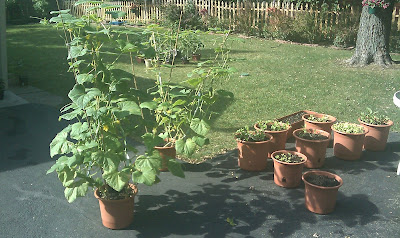
Cucumbers, peppers, lettuce and Swiss chard in SIP.
John from http://www.growingyourgreens.com/ will show you how he prunes his cucumber plants to grow them vertically up a trellis. In this video John will explain why he is pruning or single stemming his cucumbers so that he can better manage them when growing them up a vertical trellis. After watching this video you will learn how to properly train your cucumbers (as well as tomatoes) to get them to grow vertically and produce more fruit.
Related:
How and Why I Prune My Tomatoes | You Grow Girl http://goo.gl/q4GHY
Meinke Garden Center
Meinke Garden Center is probable the oldest privately-owned plant nursery in the Chicago area. There have been family growers on this site since 1871. There 11 on-site greenhouses. The starter vegetables are priced very competitively. I recently bought pepper starter plants for 0.90 cent each.
5803 W Touhy Ave
Niles, IL 60714-4607
(847) 647-9455
View Larger Map
Video from Yellow Pages:
Related:
The nurseries listed below offer currently released Chicagoland Grows plant selections on a retail basis http://goo.gl/Dk5UI
Yelp: Meinke Garden Center http://www.yelp.com/biz/meinke-garden-center-niles
Lurvey's Garden Center http://www.yelp.com/biz/lurveys-garden-center-des-plaines
Pesche's Garden Center http://www.yelp.com/biz/pesches-garden-center-des-plaines
(the last 2 are classified as more expensive than Meinke Garden Center)
5803 W Touhy Ave
Niles, IL 60714-4607
(847) 647-9455
View Larger Map
Video from Yellow Pages:
Related:
The nurseries listed below offer currently released Chicagoland Grows plant selections on a retail basis http://goo.gl/Dk5UI
Yelp: Meinke Garden Center http://www.yelp.com/biz/meinke-garden-center-niles
Lurvey's Garden Center http://www.yelp.com/biz/lurveys-garden-center-des-plaines
Pesche's Garden Center http://www.yelp.com/biz/pesches-garden-center-des-plaines
(the last 2 are classified as more expensive than Meinke Garden Center)
Gardening Advice: "How to grow" guides and more
"How to grow" guides for specific vegetables
How to grow peppers
How to grow garlic in your garden
How to Grow Tomatoes
Best Tomato to Grow in a Container: "Sweet N Neat" Scarlet Tomato
How To Plant and Grow Lettuce
How to Grow Cucumbers in Containers
Tools
Organic fertilizers to use in your home garden
Raised Garden Bed from Costco
Raised Garden Bed: What soil to select?
Grow Box - Sub-irrigated planter (SIP) by Garden Patch vs. EarthBox - sub-irrigated planter, garden container for vegetables
How to repel animals from your vegetable garden? Use pepper/garlic spray
The best resource
The Cooperative Extension Search engines searches a good number of university agricultural extension websites: http://www.extension.org/search
How to grow peppers
How to grow garlic in your garden
How to Grow Tomatoes
Best Tomato to Grow in a Container: "Sweet N Neat" Scarlet Tomato
How To Plant and Grow Lettuce
How to Grow Cucumbers in Containers
Tools
Organic fertilizers to use in your home garden
Raised Garden Bed from Costco
Raised Garden Bed: What soil to select?
Grow Box - Sub-irrigated planter (SIP) by Garden Patch vs. EarthBox - sub-irrigated planter, garden container for vegetables
How to repel animals from your vegetable garden? Use pepper/garlic spray
The best resource
The Cooperative Extension Search engines searches a good number of university agricultural extension websites: http://www.extension.org/search
What Vegetables Should I Grow in My Garden?
What Vegetables Should I Grow in My Garden? Is it better to Grow or Buy? John from http://www.growingyourgreens.com visits a local organic market to talk about what you should grow in your garden. Find out some local prices of produce as it is related to what John is growing in his garden. Learn what you should plant in your vegetable garden:
How to Grow Larger Tomatoes, Peppers and Zucchini (video)
How to Grow Larger Tomatoes, Peppers and Zucchini than your Neighbor - John from http://www.growingyourgreens.com goes on a field trip just 3 houses away to see how his neighbors raised bed is doing. John also discusses soil fertility and how you can grow larger plants and nutrient dense fruits and vegetables.
Top 3 Ways to Become a Better Gardener - John from http://www.growingyourgreens.com/ goes on a field trip to the 18th and Rhode Island permaculture garden to share with you the 3 top ways to become a better gardener. In this video you will learn John's strategy on how he became so knowledgeable about gardening and growing food. After watching this video you will have the knowledge you need to be the best gardener you can be.
Top 3 Ways to Become a Better Gardener - John from http://www.growingyourgreens.com/ goes on a field trip to the 18th and Rhode Island permaculture garden to share with you the 3 top ways to become a better gardener. In this video you will learn John's strategy on how he became so knowledgeable about gardening and growing food. After watching this video you will have the knowledge you need to be the best gardener you can be.
How to grow peppers
Peppers were cultivated in Central and South America in very early times. Columbus brought them to Europe in 1493, and they were quickly adopted and cultivated. In fact, it was the Europeans that gave peppers their name.
Read more How to Grow Peppers at Doctor's Garden.
Read more How to Grow Peppers at Doctor's Garden.
Subscribe to:
Posts (Atom)
