Showing posts with label Tax 12. Show all posts
Showing posts with label Tax 12. Show all posts

The Best Exotic Marigold Hotel (movie)
The Best Exotic Marigold Hotel is a 2012 British comedy-drama film. The screenplay is based on the 2004 novel These Foolish Things, by Deborah Moggach, and features an ensemble all-star cast consisting of Judi Dench, Celia Imrie, Bill Nighy, Ronald Pickup, Maggie Smith, Tom Wilkinson and Penelope Wilton, as a group of British pensioners moving to a retirement hotel in India, run by the young and eager Sonny, played by Dev Patel.
Some of the finest actors in England lend their formidable talents to The Best Exotic Marigold Hotel.
References:
The Best Exotic Marigold Hotel - Wikipedia, the free encyclopedia http://buff.ly/Yb3C2O
Some of the finest actors in England lend their formidable talents to The Best Exotic Marigold Hotel.
References:
The Best Exotic Marigold Hotel - Wikipedia, the free encyclopedia http://buff.ly/Yb3C2O
How to make yogurt with an automatic yogurt maker
1. Buy yogurt with live culture.
2. Boil 1% organic milk. Wait approximately 1 hour to cool off. You can test with your little finger. If your tolerate the heat, it it is just the right temperature.
2. Pour one cup from the boiled milk in a large bowl and add one cup of yogurt. Mix them well.
3. Add the mixture above to the larger bowl where the rest of the milk was boiled. Mix it well.
4. Pour the mixture of milk and yogurt in the 7 jars that come with the yogurt maker (see below). Do not put the lids on the jars.
5. Set the timer to 9 hours. Place the cover. Turn on the yogurt maker.
6. The yogurt will be ready in 9 hours. Take the jars out of the yogurt maker. Place the lids on. Place the jars in a refrigerator for 2 hours. Yogurt will be ready to eat.
I have had excellent results using the automatic yogurt maker YM100, manufactured by Euro Cuisine ($39 at Amazon). Here are the PDF instructions how to use it: http://eurocuisine.net/EYM100.pdf
References:
Euro Cuisine Automatic Yogurt Maker, White.
Making Yogurt - David B. Fankhauser, Ph.D. http://buff.ly/Yb45lD
Related:
Making Yogurt at Home - YouTube http://bit.ly/19m3a2b
How to make bread - without a breadmaker machine
This is a no-knead bread. It relies on slow, low-temperature fermentation in the refrigeration overnight to do the kneading for you. The dough can be kept in a container in the fridge for up to 3 weeks. You can use portions of the dough as needed during that time period of 3 weeks.
Ingredients
1. Active dry yeast
2. Salt
3. Flour
4. Large, resealable container (large water pitcher would do) and a measuring cup
5. Warm water and a spoon
How to make it
1. Take 3 cups of warm water and pour it into the container. Stir in 1.5 tablespoons of salt (I use much less salt, approximately 1/4 teaspoon). Add 1.5 tablespoons of dry yeast and stir. Let the mixture sit for 2-3 minutes, until the yeast fully dissolves and starts bubbling.
2. Add approximately 6 cups of flour. Stir the mixture together with a spoon until a loose sticky dough forms. This the most time consuming step of the process and it takes about 3-5 minutes.
3. When there are no more pockets of unmixed flour or water left, place the lid loosely on top of the container, and let the dough sit at room temperature until it rises. It typically takes 1-2 hours.
4. When the dough has risen to the top, punch it down slightly to fit the lid onto the container. Seal it and place the container in the fridge for a few hours, or overnight. You can keep the dough in the fridge for up to 3 weeks.
5. Take a loaf pan or whatever you want to bake on, and preheat your oven to 450 Fahrenheit (230 Celsius). Grease the pan with oil. While your hands are still oily, pick off a part of the dough. Form it into a loaf and slash the top. Bake the loaf for 30-35 minutes at 450 Fahrenheit (230 Celsius). You can increase the temperature up to 500 Fahrenheit (260 Celsius) for the last 5-10 minutes to improve the crust.
Mnemonic - remember the rule of 3's:
- 3 cups of water
- 1.5 tablespoons of dry yeast
- 1.5 tablespoons of salt
- 3+3 (6) cups of flour
- 30 minute baking time
- 3 week storage in the fridge
I have achieved the best results with the regular Ultragrain unbleached flour from Coscto and their Red Star yeast:
No-Knead Bread Recipe from Bob's Red Mill
References:
How to Make Easy, Fast, Foolproof Bread from Scratch http://bit.ly/UvJQsv
Pane Rustico, White Flour - Italian "Peasant" Bread - David B. Fankhauser, Ph.D. http://buff.ly/Yb4bJO
Traditional Greek bread - YouTube http://buff.ly/YcSVwx
Хляб без месене « нож и виличка http://bit.ly/YjR5FF
I tried this rye flour from Amazon but the bread was too "chewy": Bob's Red Mill Organic Rye Flour Dark, 22-Ounce (Pack of 4):
This rye flour, in a much larger package, may be a better deal: Great River Organic Milling, Organic Specialty Rye Flour, 25-Pound Package:
I am planning to try this barley flour from Amazon: Bob's Red Mill Barley Flour, 20-Ounce (Pack of 4)
Garbanzo Beans, No Salt Added in BPA-free containers from Amazon
Ingredients: Organic Garbanzo Beans, Water, Kombu Seaweed.
Nutrition Facts:
Serving size: 0.5 cup
Amount Per Serving
Calories 120
Calories from Fat 15
Total Fat 1.5g (2%)
Sodium 10mg (0%)
Potassium 250mg (7%)
Total Carbohydrate 19g (6%)
Dietary Fiber 5g (20%)
Protein 7g (14%)
I have tried these and they are tasty considering they do not have any salt. This is a good, healthy lunch option.
Hemp seed as "super food"
What is hemp?
Hemp describes low tetrahydrocannabinol (THC) strains of the plant Cannabis sativa. Of the approximately 2,000 cannabis plants varieties known, 90% contain only low-grade THC and are used for their fiber, seeds, paper, textiles, clothing, biodegradable plastics, construction and medicinal oils. Hemp is one of the earliest domesticated plants.
Hemp is thus legally grown in many countries across the world including Spain, China, Japan, Korea, France, and Ireland.
Hemp is one of the faster growing biomasses known and requires few pesticides and no herbicides.
What is the difference between industrial hemp and marijuana?
Cannabis sativa L. subsp. sativa var. sativa is the variety grown for industrial use, while C. sativa subsp. indica generally has poor fiber quality and is primarily used for recreational and medicinal purposes. Oilseed and fiber varieties of Cannabis (industrial hemp) produce only minute amounts of THC, not enough for any psychoactive effects. Typically, hemp contains below 0.3% THC, while cultivars of Cannabis grown for recreational use can contain anywhere from 2% to over 20%.


Hemp seeds as food
Hemp seeds can be eaten raw, ground into a meal, sprouted, made into hemp milk (akin to soy milk), prepared as tea, and used in baking. Dehulled hemp seed is the whole seed without the mineral rich outer shell.
References:
Hemp. Wikipedia http://en.wikipedia.org/wiki/Hemp
Hemp describes low tetrahydrocannabinol (THC) strains of the plant Cannabis sativa. Of the approximately 2,000 cannabis plants varieties known, 90% contain only low-grade THC and are used for their fiber, seeds, paper, textiles, clothing, biodegradable plastics, construction and medicinal oils. Hemp is one of the earliest domesticated plants.
Hemp is thus legally grown in many countries across the world including Spain, China, Japan, Korea, France, and Ireland.
Hemp is one of the faster growing biomasses known and requires few pesticides and no herbicides.
What is the difference between industrial hemp and marijuana?
Cannabis sativa L. subsp. sativa var. sativa is the variety grown for industrial use, while C. sativa subsp. indica generally has poor fiber quality and is primarily used for recreational and medicinal purposes. Oilseed and fiber varieties of Cannabis (industrial hemp) produce only minute amounts of THC, not enough for any psychoactive effects. Typically, hemp contains below 0.3% THC, while cultivars of Cannabis grown for recreational use can contain anywhere from 2% to over 20%.
Hemp seeds as food
Hemp seeds can be eaten raw, ground into a meal, sprouted, made into hemp milk (akin to soy milk), prepared as tea, and used in baking. Dehulled hemp seed is the whole seed without the mineral rich outer shell.
References:
Hemp. Wikipedia http://en.wikipedia.org/wiki/Hemp
How to build raised garden beds with pavers
You can use a variety of materials to construct raised beds. Most beds are made of wood.
However, pavers make great edging material that lasts virtually forever, and this works great when edging up to a concrete path. A simple paver costs between 40 cents and $2 at Home Depot(depending on size). You will need about 30-60 pavers (depending on size) to build one raised garden bed. Here is a good example of such inexpensive paver: Pavestone Holland 4 in. x 8 in. Concrete Paver, 39 cents http://goo.gl/F2OEF
Read more How to build a raised garden bed with pavers at Doctor's Garden.
Growing lights for indoor plants
Artificial lighting with full-spectrum CFLs and LEDs is for more energy-efficient than natural light for indoor plants.
Place artificial lights 6 inches over the plants. Either lower the containers as the plants grow, or raise the lights. That's why gardeners often have their lights on chains.
Some gardeners place aluminum foil or whiteboard on the surfaces around containers to reflect light. This lets you maximize the light by reflecting it back toward the seedlings.
References:
How to Start Your Indoor Garden - Popular Mechanics http://goo.gl/hTnZ3
Related:
Walmart.com: Lights of America 24" Fluorescent Grow Light Fixture http://goo.gl/deaIj
Walmart.com: GE Plant Light Kit http://goo.gl/MwsJa
Walmart.com: Bulbrite Industries 60W Plant Grow A19 A Shape Bulb (Set of 4) http://goo.gl/VZd3M
What to Plant in a Fall Vegetable Garden
What to do
Plant CLeaR:
Cabbage
Leafy plants
Root crops
Remember to add a handful of homemade compost to each square foot before you plant.
Read more at Doctor's Garden
Plant CLeaR:
Cabbage
Leafy plants
Root crops
Remember to add a handful of homemade compost to each square foot before you plant.
Read more at Doctor's Garden
How to grow green onion (scallions)
Onions are Cool Season Vegetables, also known as scallions, bunching onions, green onions (Allium cepa var. cepa from Alliaceae Family. Onion is not native to North America. Unknown in wild. Probably originated in the Middle East or Asia.
What type of onion to select
Almost any onions sown from seed can be scallions (also called bunching onions, green onions, spring onions or green tails).
To have scallions in the summer, plant seeds of an onion variety such as 'Beltsville Bunching' or 'Evergreen Bunching' as early in the spring as you can.
Some varieties, such as 'Long White Bunching', don't ever form bulbs. 'White Portugal' is a bulbing onion grown all over the country and harvested young for sale as scallions.
Plant from seed
Bunching onion transplants for sale at the store are not worth buying. Bunching onions planted from seed will be at the eating stage in just a matter of weeks. Some survive winter temperatures as low as -30F.
Propagate by seed. To grow your own onion sets, sow seeds thickly in a block in midsummer. About 2 months after planting, roll down the tops, forcing the plants to form small bulbs. (Those about the size of a dime work best.)
Plant seed ¼ inch deep, ½ inch apart, in rows 12 to 18 inches apart. Thin to 4-inch spacings for large bulbs, 2-inch spacings for smaller bulbs but higher yields, or 1-inch spacings for scallions.
Days to emergence: 4 to 5.
Raised beds are ideal. Onions are good for intercropping with other garden plants, especially early-maturing spring greens.
Onions have shallow root systems and need consistent moisture
Spring-sown early varieties can be harvested just 60 to 80 days after planting.
Recommended varieties:
From seed (early-maturing):
Arsenal
Early Yellow Globe
Precedent
Green or Bunching:
Evergreen Hardy White
He-Shi-Ko
Long White Bunching
Southport White Bunching
Here are 2 varieties I am growing this year (summer 2012):
Tokyo White Bunching from Burpee:
Big Bunch from Burpee (from Home Depot).
References:
Gardening Articles - National Gardening Association http://goo.gl/nO5yT
Explore Cornell - Home Gardening - Vegetable Growing Guides - Growing Guide http://goo.gl/xGERx
Watering Onions - Gardening Association - http://goo.gl/hfRsp
Growing Onions - Gardening Association - http://goo.gl/0P2Cu
Onion Varieties - Gardening Association - http://goo.gl/EHHkU
Planting Onions - Gardening Association - http://goo.gl/lkN1Q
Vegetables for a Fall Garden in the Midwest
Portable walk-in greenhouse
This portable greenhouse is available from Home Depot for $89 and has excellent reviews (it costs $200 from the manufacturer's website, ShelterLogic 6 ft. x 5 ft. Polyethylene Organic Growers Greenhouse). The store showroom unit had concrete blocks at the base ($1.49 each) to prevent from being blown away with strong winds. A indoor-approved heater may be needed during the winter (mostly at night).
The greenhouse features a mesh fabric cover, steel frame, fasteners and 4 earth anchors. Adjustable vents on all sides permit ventilation. There are a zippered screens and side panels with screens to keep bugs out.
The polyethylene fabric cover is designed to disperse sunlight for optimal plant growth.
Features of the greenhouse:
- 238 cu. ft. storage capacity
- 1-piece cover slips over frame
- 3/8 in. steel frame
- Adjustable vents deliver ventilation on all sides
- Half-moon zippered screens and rollup side panels with full-length screens keep bugs out
- Blocks harmful UVA and UVB rays
- Treated inside and outside with fade blockers, anti-aging, anti-yellowing and anti-microbial agents
- Includes 5 ft. x 6 ft. x 6 ft. 6 in. frame, 1-piece fitted cover, bungee fasteners and four 15 in. ShelterAuger earth anchors
- Complete hardware kit and step-by-step instructions (a PDF manual is available from the manufacturer website)
MFG Brand Name : ShelterLogic, MFG Model # : 70635, MFG Part # : 70635
A slightly bigger, and much more expensive, version is also available from Home Depot and Amazon: GrowIt Organic Growers 6 ft. x 8 ft. x 6 ft. 6 in. Peak-Style Greenhouse-70615.0 at The Home Depot - http://goo.gl/mDwMT
References:
6 ft. x 5 ft. Polyethylene Organic Growers Greenhouse-70635 at The Home Depot
GrowIt Organic Growers 6 ft. x 8 ft. x 6 ft. 6 in. Peak-Style Greenhouse-70615.0 at The Home Depot - http://goo.gl/mDwMT
ShelterLogic Grow-It Greenhouses (manuals can be downloaded from the website) http://goo.gl/2V0Iz
Anasazi Beans
Estimated to have been in existence for more than 1,500 years, Anasazi beans are small kidney shaped purple and white beans in the same family as pinto beans. They are one of the most popular "new" heirloom beans. They are strikingly colored with speckles of red and white.
Anasazi beans were first discovered on an archaeological dig in the Southwest and were called New Mexico cave beans. After introduction to the public, the beans were renamed Anasazi after the the cliff-dwelling Native American people that inhabited the area now known as the four corners of Arizona, New Mexico, Colorado and Utah. The Anasazi bean is thought to have been a staple in the diet of the native people who lived in this region.
Read more: Facts About Anasazi Beans | eHow.com http://www.ehow.com/about_5437271_anasazi-beans.html#ixzz20bkOYj25
Anasazi beans cook much more quickly than regular beans, and they appear to have been a part of the human diet in the Americas for thousands of years.
Nutrition Facts
Serving size: 0.5 cup
Amount Per Serving / Amount Per Serving and/or % Daily Value*
Calories 300
Calories from Fat 10
Amount Per Serving and/or % Daily Value*
Total Fat 1g (2%)
Saturated Fat 0g (0%)
Trans Fat 0g
Cholesterol 0mg (0%)
Sodium 0mg (0%)
Total Carbohydrate 54g (18%)
Dietary Fiber 18g (72%)
Sugars 0g
Protein 20g
Vitamin A 0%
Vitamin C 0%
Calcium 10%
Iron 30%
References:
Bob's Red Mill Anasazi Beans, 27-Ounce Packages (Pack of 4): Amazon.com: Grocery & Gourmet Food
Kalyn's Kitchen: Crockpot or Stovetop Recipe for Anasazi Bean and Cabbage Soup http://goo.gl/AcD2Z
Ancient Pueblo Peoples - Wikipedia http://goo.gl/w6D8O
Lima Beans
Lima bean, or Phaseolus lunatus, is a legume. It is commonly known as the lima bean or butter bean.
Phaseolus lunatus is of Andean and Mesoamerican origin. During the Spanish Viceroyalty of Peru, lima beans were exported to the rest of the Americas and Europe, and since the boxes of such goods had their place of origin labeled "Lima - Peru", the beans got named as such.
The term "butter bean" is widely utilized for a large, flat and yellow/white variety of lima bean. In the Southern United States the Sieva type are traditionally called butter beans, also otherwise known as the Dixie or Henderson type. In that area, lima beans and butter beans are seen as two distinct types of beans.
In the United Kingdom, "butter beans" refer to either dried beans which can be purchased to re-hydrate, or the canned variety which are ready to use.
Cooking
Very important: Don't soak the beans overnight if you are planning to prepare beans salad. If you soak them, the beans will disintegrate during cooking.
Nutrition Facts
Serving size: 0.25 cup
Amount Per Serving / Amount Per Serving and/or % Daily Value*
Calories 170
Calories from Fat 0
Total Fat 0g (0%)
Saturated Fat 0g (0%)
Cholesterol 0mg (0%)
Sodium 5mg (0%)
Total Carbohydrate 32g (11%)
Dietary Fiber 10g (42%)
Sugars 4g
Protein 10g
Amount Per Serving and/or % Daily Value*
Vitamin A 0%
Vitamin C 0%
Calcium 4%
Iron 15%
References:
Phaseolus lunatus - Wikipedia http://goo.gl/GJYvN
Bob's Red Mill Large Lima Beans, 28-Ounce Packages (Pack of 4): Amazon.com: Grocery & Gourmet Food http://goo.gl/gUBVl
How to grow peppers
Peppers were cultivated in Central and South America in very early times. Columbus brought them to Europe in 1493, and they were quickly adopted and cultivated. In fact, it was the Europeans that gave peppers their name.
Read more How to Grow Peppers at Doctor's Garden.
Read more How to Grow Peppers at Doctor's Garden.
"See It and Say It in Spanish" picture book
This book was published in 1961 and it is still popular:
The author, Margarita Madrigal, has written a whole series of "See It and Say It" books in different languages - see them on Amazon: http://amzn.to/NeFHoE
Another classic by the same author is Madrigal's Magic Key to Spanish: A Creative and Proven Approach [Paperback] with Andy Warhol as Illustrator:
Some of her earlier books were published as early as the 1940's: An Invitation to Spanish:A Gay and Simple Guide to the Reading and Speaking of Modern Spanish, Simon and Schuster, NY (1943):
Here is another more recent book:
Organic fertilizers to use in your home garden
Here are some examples of popular groups of organic fertilizers:
- Earth worm casting (organic fertilizer) (for N). You can make your own with a worm farm ($79 at Amazon)
- Dried Kelp (for K and P). It helps plants develop stronger roots. The mixing powder is more cost effective than the prepared liquid form.
- Fish powder or emulsion (for N). This works especially well for lettuce.
I have personal experience with the following products from Amazon:
John from http://www.growingyourgreens.com shares his ideas about organic fertilizers and other soil ammendments to build up your humus and soil so it will provide what your plants need:
Here are some of the products mentioned in the video:
- Azomite rock dust, micronized, 45 lbs for $35, 10 lbs for $17 (microelements)
- Agrowinn
- Earth worm casting (organic fertilizer)
- Dried Kelp
Some of the products are available from Amazon. I also selected one of the organic fertilizers: Jobe's 09026 Organic Vegetable & Tomato Granular Fertilizer 4-Pound Bag:
How to Grow Larger Vegetables with Rock Dust - Benefits and How to Apply:
References:
Organic Fertilizers - Gardening Articles :: Edibles :: Vegetables :: National Gardening Association - http://goo.gl/v4Blf
Organic Gardening 101 - Gardening Articles :: Edibles :: Vegetables :: National Gardening Association - http://goo.gl/U0CJj
Grow Box - Sub-irrigated planter (SIP) by Garden Patch
Sub-irrigated planter (SIP) is a generic name for a planting box used in container gardening and commercial landscaping. A SIP is any method of watering plants where the water is introduced from the bottom, allowing the water to soak upwards to the plant through capillary action. SIP's are available as products, under brand names such as EarthBox, Grow Box, Earthainer, or as do-it-yourself projects made from plastic buckets and boxes.
The Grow Box (http://www.agardenpatch.com) "automatically" adds the right amount of water and fertilizer so you never have to guess. Add potting mix, fertilizer, water and sunshine.
The main comparison is between the original EarthBox, Grow Box that copies the system with added reservoir at the front, and DIY SIP (2 5-gallon buckets or 2 storage containers).
Earthbox drips water. There is no such problem with the Growbox. Unfortunately, the Grow Box reservoir is also a breeding area for mosquitos. The Grow Box manufactures sells "Mosquito Dunks" from their website.
Both require potting mixes. EarthBox offers dolomite with the box while GrowBox does not. Azomite is an alternative available from Amazon:
Blake Whisenant, Inventor of the Earthbox, demonstrates how it works:
Earth Box Set up - HerringtonCatalog video:
Getting Started with your Grow Box - WPHF video:
Here is a helpful video: Grow an Organic Vegetable Garden with John's Favorite Products:
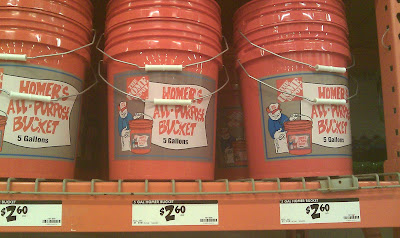
5-gallon bucket at Home Depot.
References:
5 Self-Watering Planters Make Vegetable Gardening Easy : TreeHugger - http://goo.gl/Cn4to
Let’s Make 2-Liter SIPs! http://goo.gl/ZSFgs and http://goo.gl/zbZr1
The Grow Box is Great For Vegetables - About.com http://goo.gl/4ALtj
7 Tips for Growing Vegetables in Grow Boxes - About.com http://goo.gl/ZhzW3
The Garden Patch Grow Box - MrBrownThumb http://goo.gl/SUfsR
Tips for Growing Your Own Food - ABC News http://goo.gl/b8P6N
Earthbox Experiment - a set on Flickr http://goo.gl/lh4i4
Earth Box Garden - Clearwater Florida - YouTube: http://goo.gl/Fx5ri and http://goo.gl/JqKWm
Sub-irrigated planter - Wikipedia, the free encyclopedia - http://goo.gl/enL2b
A Closer Look at How The GrowBox Works http://goo.gl/CQHOo
Does The GrowBox Container Garden System Work? http://goo.gl/fM2Dr
The Grow Box (http://www.agardenpatch.com) "automatically" adds the right amount of water and fertilizer so you never have to guess. Add potting mix, fertilizer, water and sunshine.
The main comparison is between the original EarthBox, Grow Box that copies the system with added reservoir at the front, and DIY SIP (2 5-gallon buckets or 2 storage containers).
Earthbox drips water. There is no such problem with the Growbox. Unfortunately, the Grow Box reservoir is also a breeding area for mosquitos. The Grow Box manufactures sells "Mosquito Dunks" from their website.
Both require potting mixes. EarthBox offers dolomite with the box while GrowBox does not. Azomite is an alternative available from Amazon:
Blake Whisenant, Inventor of the Earthbox, demonstrates how it works:
Earth Box Set up - HerringtonCatalog video:
Getting Started with your Grow Box - WPHF video:
Here is a helpful video: Grow an Organic Vegetable Garden with John's Favorite Products:
5-gallon bucket at Home Depot.
References:
5 Self-Watering Planters Make Vegetable Gardening Easy : TreeHugger - http://goo.gl/Cn4to
Let’s Make 2-Liter SIPs! http://goo.gl/ZSFgs and http://goo.gl/zbZr1
The Grow Box is Great For Vegetables - About.com http://goo.gl/4ALtj
7 Tips for Growing Vegetables in Grow Boxes - About.com http://goo.gl/ZhzW3
The Garden Patch Grow Box - MrBrownThumb http://goo.gl/SUfsR
Tips for Growing Your Own Food - ABC News http://goo.gl/b8P6N
Earthbox Experiment - a set on Flickr http://goo.gl/lh4i4
Earth Box Garden - Clearwater Florida - YouTube: http://goo.gl/Fx5ri and http://goo.gl/JqKWm
Sub-irrigated planter - Wikipedia, the free encyclopedia - http://goo.gl/enL2b
A Closer Look at How The GrowBox Works http://goo.gl/CQHOo
Does The GrowBox Container Garden System Work? http://goo.gl/fM2Dr
"Owner's and Instruction Manual" books for cats, dogs and humans
From Amazon:
The Teen Owner’s Manual is here to answer your most pressing questions: How can I teach my teenager to make smart decisions? How do I keep her safe on the Web? How do I get him to communicate? How and when should I talk to her about sex? Whatever your concerns, you’ll find the answers right here—courtesy of parenting author Sarah Jordan and adolescent medicine specialist Dr. Janice Hillman.
The "Owner's and Instruction Manual" series of books covers a wide range of topics - see most of them here: http://amzn.to/MLSAvy
EarthBox - sub-irrigated planter
Sub-irrigated planter (SIP) is a generic name for a planting box used in container gardening and commercial landscaping. A SIP is any method of watering plants where the water is introduced from the bottom, allowing the water to soak upwards to the plant through capillary action. SIP's are available as products, under brand names such as EarthBox, Grow Box, Earthainer, or as do-it-yourself projects made from plastic buckets and boxes.
The patented EarthBox was developed by commercial farmers. The EarthBox measures 30 by 13-1/2 by 12 inches (l x w x h) for a soil capacity of 2-1/2 cubic feet. The box rests on four wheels and easily rolls into full sun and then moves to the back row so another Earthbox can get sun rays. The growing kit includes fertilizer, dolomite, and two germination covers. EarthBox is expensive at $44 to $55 (with shipping).
Blake Whisenant, Inventor of the Earthbox, demonstrates how it works:
Read more here: EarthBox - sub-irrigated planter, garden container for vegetables
How to find the free Kindle lending library if you are an Amazon Prime subscriber
You can find the Amazon Prime lending library books online by searching in the Kindle Store for 'prime eligible', then selecting 'Kindle eBooks' from the filters on the left side. Here's a direct link to the full library with more than 160,000 electronic books:
http://www.amazon.com/s/ref=sr_nr_n_0?rh=n%3A133140011%2Ck%3Aprime+eligible%2Cn%3A!133141011%2Cn%3A154606011&bbn=133141011&keywords=prime+eligible&ie=UTF8&qid=1333901260&rnid=133141011
Here is much more limited selection of the Prime Lending Library (about 100 bestsellers):
http://www.amazon.com/s/ref=nb_sb_ss_c_1_14?url=search-alias%3Ddigital-text&field-keywords=prime+lending+library&sprefix=prime+lending+%2Caps%2C289
You must borrow the electronic books from your Kindle device, not from the Amazon website. Instructions for borrowing from your Kindle are here - http://amazon.com/kindlelendinglibrary. Scroll down to the 'How to borrow from your Kindle' section. You can only read the borrowed books from a physical Kindle device, not from Kindle web reader or Kindle app for iPhone, iPod or iPad.
References:
Amazon.com: Customer Discussions: Are "Free Bestsellers" free for only Prime? - http://goo.gl/pu8l7
Amazon.com Help: Kindle Owners' Lending Library - http://goo.gl/daKeE
Subscribe to:
Posts (Atom)
