The Drum by Nikki Giovanni
daddy says the world is
a drum tight and hard
and i told him
i’m gonna beat
out my own rhythm
Related:
MP3 reading, Amazon
http://www.amazon.com/The-Drum/dp/B000SG5ZQA
Virginia Tech University Distinguished professor of history and renown poet Nikki Giovanni discusses her relationship with the late Rosa Parks, and her new book for adolescents, 'Rosa':
Showing posts with label Literature. Show all posts
Showing posts with label Literature. Show all posts

Chekhov: "Any idiot can face a crisis; it is this day-to-day living that wears you out."
From The Writer's Almanac:
January 29 is the birthday of writer Anton Chekhov, born in Taganrog, Russia (1860). Chekhov is one of the inventors of the modern short story. His stories were usually short, full of passive characters, and without much of a plot. They didn't have big emotional climaxes, and they usually ended with a moment that revealed something about the main characters' lives.
His first play, The Seagull, opened in 1885. It got horrible reviews, and he walked out on it at intermission and vowed never to write another play. But two years later, it was produced again, this time to rave reviews. The success inspired him to go on to write the plays Three Sisters (1901), The Cherry Orchard (1904), and Uncle Vanya (1897), which are now considered classics.
Chekhov said, "Any idiot can face a crisis; it is this day-to-day living that wears you out."
References:
The Writer's Almanac:
Oscar Wilde's birthday - October 16
From Writer's Almanac:
Oscar Wilde is considered by many to be the world's greatest wit. He's the author of The Picture of Dorian Gray (1891), Salome (1891), An Ideal Husband (1895), and The Importance of Being Earnest (1895).
He was a brilliant conversationalist. There are entire books devoted to Oscar Wilde's one-liners. Sherlock Holmes creator Sir Arthur Conan Doyle wrote in his memoir about how he once had dinner with Wilde: "His conversation left an indelible impression upon my mind. He towered above us all, and yet had the art of seeming to be interested in all that we could say. He had delicacy of feeling and tact. ... He took as well as gave, but what he gave was unique. He had a curious precision of statement, a delicate flavour of humour and a trick of small gestures to illustrate his meaning, which were peculiar to himself."
His most famous play, The Importance of Being Earnest, opened in London on Valentine's Day 1895; he was 40 years old. A few months later, he was convicted of "acts of gross indecency," meaning that he had a male lover. He was sentenced to two years hard labor. When he got out of prison he moved to Paris, where his health deteriorated and he died at the age of 46 in a seedy hotel, at which he was registered under the name Sebastian Melmoth. Poet W.H. Auden later wrote: "From the beginning Wilde performed his life and continued to do so even after fate had taken the plot out of his hands."
Oscar Wilde said, "Life is never fair. ... And perhaps it is a good thing for most of us that it is not."
P. G. Wodehouse's birthday - October 15
From Writer's Almanac:
When he was two years old, his parents went off to Hong Kong, leaving him to be raised by various aunts. He would later feature lots of scary, mean-spirited aunts in his fiction, and he once wrote: "It is no use telling me that there are bad aunts and good aunts. At the core they are all alike."
He's the author of 96 books, most of those about a butler named Jeeves who is forever rescuing his employer, Bertie Wooster, from all sorts of ludicrous situations.
Wodehouse was exiled from England after some satirical comments he made on German radio during World War II, when he was taken prisoner by the Germans. He moved to France and then the United States, became an American citizen at the age of 73, continued to write stories about English castles and butlers, and eventually settled in Long Island, where on a daily basis he walked his dogs, had cocktails with lunch, and watched a soap opera — all in addition to writing novels at his typewriter. He lived to be 93.
References:
Writer's Almanac.
Ode to Chocolate by Barbara Crooker
From Writer's Almanac:
Ode to Chocolate by Barbara Crooker (excerpt)
I hate milk chocolate, don't want clouds
of cream diluting the dark night sky,
don't want pralines or raisins, rubble
in this smooth plateau. I like my coffee
black, my beer from Germany, wine
from Burgundy, the darker, the better.
Ode to Chocolate by Barbara Crooker (excerpt)
I hate milk chocolate, don't want clouds
of cream diluting the dark night sky,
don't want pralines or raisins, rubble
in this smooth plateau. I like my coffee
black, my beer from Germany, wine
from Burgundy, the darker, the better.
Related:
Photo Essay: Making Chocolate in Belize http://goo.gl/2DPi
"A small daily task, if it be really daily, will beat the labors of a spasmodic Hercules"
From Writer's Almanac:
English novelist Anthony Trollope was born in London in 1815. Many of Trollope's novels originated from daydreams that he had as a child.
When Trollope was 19, he began working as a clerk for the post office, eventually being placed in Ireland as a postal surveyor. In addition to his literary achievements, he is credited with inventing the modern British mailbox. It was in Ireland that he began writing novels, churning them out regularly at a rate of three books every two years. He would write 1,000 words an hour before breakfast; he said, "A small daily task, if it be really daily, will beat the labors of a spasmodic Hercules." He wrote realistic novels about the daily life of ordinary people, including The Warden (1855), Barchester Towers(1857), and Framley Parsonage (1861).
"Don't mention Macbeth" - BBC
The palace entertains two distinguished and highly superstitious actors. Blackadder is careful not to mention the name of the Scottish play. Funny clip taken from the classic BBC comedy Blackadder.
Bulgarian Poets: Hristo Fotev (Bulgarian: Христо Фотев)
Hristo Fotev was born on 25 March 1934, and spent most of his life in Burgas, a city anchored on Black Sea coast of South-Eastern Bulgaria.
References (some in Bulgarian):
Hristo Fotev Stepped in Immortality, Standart News, 2002.
Biography of Hristo Fotev. Slovoto.
Poems of Hristo Fotev. Slovoto.
Poems of Hristo Fotev. Bulgarian National Library.
References (some in Bulgarian):
Hristo Fotev Stepped in Immortality, Standart News, 2002.
Biography of Hristo Fotev. Slovoto.
Poems of Hristo Fotev. Slovoto.
Poems of Hristo Fotev. Bulgarian National Library.
Bulgarian Poets
 Click below to read the relevant posts from this website:
Valeri Petrov (Bulgarian: Валери Петров)
Petya Dubarova
Hristo Fotev (Bulgarian: Христо Фотев)
Damian Damianov
Evtim Evtimov
Nedialko Iordanov
Petya Dubarova
Hristo Fotev (Bulgarian: Христо Фотев)
Damian Damianov
Evtim Evtimov
Nedialko Iordanov
Image source: Dimcho Debelyanov. Portrait of Dimcho Debelyanov, exhibited in Debelyanov House, in Koprivshtitsa (Bulgaria), Wikipedia, public domain.

Published: 11/29/2009
Updated: 12/27/2009
Bulgarian Poets: Valeri Petrov (Bulgarian: Валери Петров)
From Wikipedia:
Valeri Petrov (Bulgarian: Валери Петров), pseudonym of Valeri Nisim Mevorah (Валери Нисим Меворах) (born 22 April 1920) is a popular Bulgarian poet, screenplay writer, playwright and translator of paternal Jewish origin.
Born in the capital Sofia to lawyer Nisim Mevorah (and Bulgarian ambassador to the USA in 1945 - 47 and representative to the UN) and high-school French teacher Mariya Petrova, Valeri Petrov studied at the Italian School in the city, finishing in 1939. He graduated in medicine from Sofia University in 1944.
When he was 15, Valeri Petrov published his first book. He served as a doctor in a military hospital and in the Rila Monastery.
Valeri Petrov is particularly esteemed for the quality of his translation of the entire works of Shakespeare.
Collected Poems 1943-2004 By Richard Wilbur:
Valeri Pterov turned 90 in April 2010. The poem below is among his latest works (in Bulgarian):
(Труд, 16.04.2010 20:24)
Напоследък, признавам си - в мен се ражда една
мисъл, малко себична:
от разрухата в нашата злополучна страна
полза май имам лична.
Какво стана с живота ни! Не ми се говори!
Хитреци, за които вечно няма затвори,
порнографии, подкупи, заплатени убийства,
инсталации, клоуни, идиотски шеги и с това,
дето най ти е мило, дето най ти е скъпо,
словоблудстване тъпо
със велики понятия и прекрасни идеи,
клевети за герои и венци за злодеи,
а не само у нас - по петте континента
се върти тази грозна, отвратителна лента...
И от всичко това, от туй време на злоби
е, уви, мойта полза и тя в туй е, че май,
ако друг бе животът ни, то по-трудно било би,
отколкото днес е, да му кажеш: - Гуд бай!
References:
Valeri Petrov, from Wikipedia, the free encyclopedia.
Translating Shakespeare for the twenty-first century By Rui Manuel G. de Carvalho Homem, A. J. Hoenselaars.
Poems in Sega.bg (in Bulgarian).
Website about Valeri Petrov (in Bulgarian).
Valeri Petrov, from Wikipedia, the free encyclopedia.
Translating Shakespeare for the twenty-first century By Rui Manuel G. de Carvalho Homem, A. J. Hoenselaars.
Poems in Sega.bg (in Bulgarian).
Website about Valeri Petrov (in Bulgarian).
Валери Петров: А още ми се пише. Trud.bg, national newspaper (in Bulgarian).
Old and Young | Flickr http://goo.gl/l9eM
Валери Петров: Усещам ХХI век като голямо изпитание. Spisanie8.bg, 2011.
Bulgarian Poets: Radoi Ralin (Bulgarian: Радой Ралин)
From Wikipedia:
Radoy Ralin (Bulgarian: Радой Ралин) (April 23, 1923 - July 22, 2004), born Dimitar Stoyanov (Bulgarian: Димитър Стоянов), was a famous Bulgarian dissident, poet, and satirist.
His works have been translated into 37 languages.
Radoy Ralin, in memoriam, 2004 (PDF).
References:
Radoi Ralin in The Columbia guide to the literatures of Eastern Europe since 1945 By Harold B. Segel.
Radoi Ralin - Much-loved Bulgarian satirist who gave expression to his dissidence in epigrams, novels, poems and plays. The Times, 2004.
Bulgarian Poets: Elisaveta Bagryana (Bulgarian: Елисавета Багряна)
 From Wikipedia:

Elisaveta Bagryana (Bulgarian: Елисавета Багряна) (April 16, 1893 – March 23, 1991), born Elisaveta Belcheva (Bulgarian: Елисавета Белчева), was a Bulgarian poet who, along with Dora Gabe (1886-1983), is considered one of the major Bulgarian female poets.
It was after World War I ended, that she truly entered into the literary world, and with the arrival of her first book, The Eternal and the Holy (Vechnata i svyatata, 1927), she earned the confirmation of her peers. She also started writing children stories.
Her works have been translated into over 30 languages. She was nominated for a Nobel Prize.
Selected verses from her poem Descendant are shown below, in Bulgarian:
Потомка (in Bulgarian, English translation: Descendant), from Slovo.bg
Няма прародителски портрети,
ни фамилна книга в моя род
и не знам аз техните завети,
техните лица, души, живот.
Може би прабаба тъмноока,
в свилени шалвари и тюрбан,
е избягала в среднощ дълбока
с някой чуждестранен, светъл хан.
Конски тропот може би кънтял е
из крайдунавските равнини
и спасил е двама от кинжала
вятърът, следите изравнил.
Затова аз може би обичам
необхватните с око поля,
конски бяг под плясъка на бича,
волен глас, по вятъра разлян.
References:
Elisaveta Bagriana, Wikipedia.
Elisaveta Bagryana in The Columbia literary history of Eastern Europe since 1945 By Harold B. Segel.
Elisaveta Bagryana in Who's who in twentieth-century world poetry By Mark Willhardt, Alan Michael Parker.
Image source: Elisaveta Bagriana, Wikipedia.
Bulgarian Poets: Dora Gabe (Bulgarian: Дора Габе)
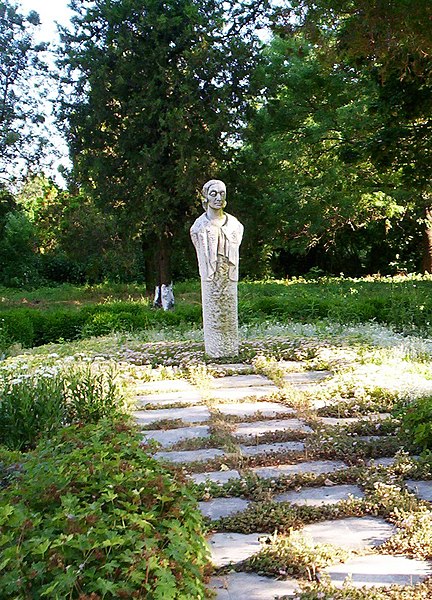 From Wikipedia:
Dora Gabe (Bulgarian: Дора Габе, 26 August 1886–16 November 1983) was а Bulgarian poetess. She published poetry for adults and children, as well as travel books, short stories and essays.
Gabe was born in the village of Dabovik near Varna to the family of Peter Gabe, a Russian immigrant. She studied natural science at the University of Sofia, French philology in Geneva and graduated from the University in Grenoble. Among her best-known works are Wait, Sun, Invisible eyes and The world is a secret. After 1917, Gabe translated a large number of foreign books. She died at the age of 95.
The poem "Pибари" ("Fishermen") in Bulgarian, from Slovo.bg
Водата е спокойна, тъмносиня
и лодката оставя светла диря.
Последния летовник си замина
и опустя, затихна манастиря.
Сега е морския шум ясен и по-близък,
вълната плитко в пясъка разляна,
а на скалата, в каменната хижа,
рибарската дружина е събрана.
Широко и безгрижно е запяла
от своя кът, тъй малък и тъй тесен,
над хижата минава ято закъсняло,
заслушано в рибарската и песен.
...
Морето се размъти, вятър духа,
рибарите затегнаха даляни.
Ще трябва вече да вървим оттука
И лястовиците за път са сбрани.
Къде ще идем? Свят широк, далечен,
а водната пустиня е безкрайна.
И кораба - и той замина вече,
като мираж далечен, като тайна.
Тъй малки бяха дните ни, тъй къси,
изпратиха ни с лодката рибари
и ги пое морето във дъха си
като деца и братя, и другари.
References:
Dora Gabe. Wikipedia.
Дора Габе. Wikipedia (in Bulgarian).
Books:
Dora Gabe in New Directions in Prose and Poetry 45 By James Laughlin.
Дора Габе in Христоматия за 3. клас. Литературен калейдоскоп By Нели Иванова, Лилия Черкезова (in Bulgarian).
Image source: The monument of the poet Dora Gabe, village Dabovik, Bulgaria. Wikipedia, Parvev, public domain.

Bulgarian Poets: Pencho Slaveykov (Bulgarian: Пенчо Славейков)
 From Wikipedia:
Pencho Slaveykov (Bulgarian: Пенчо Славейков) (27 April 1866 – 10 June 1912) was a Bulgarian poet and the youngest son of the writer Petko Slaveykov.
He was born in Tryavna during the Bulgarian National Revival under Ottoman rule. After an accident in January 1884 he fell ill (possibly from polio), and despite lengthy treatments in Bulgaria and abroad, he was left with serious impairments - he could not walk without a cane, and he wrote and spoke with difficulties. He suffered from "melancholic episodes, which forced him to find a cure in literature."
He was a director of the Bulgarian National Theatre (1908–1909) and a director of the National Library of Bulgaria (1909–1911).
He was fired from the post of director of the National Library because of political conflict with the minister of culture, and left Bulgaria, living in Switzerland before moving to Italy. He remained in Rome for three months, but set off in May 1912 to travel through the mountains looking for a cure. He arrived in the small town of Brunate near Lake Como, where he died on 28 May (10 June of Gregorian calendar).
Slaveykov was buried in Brunate's cemetery and his remains were moved to Bulgaria in 1921. Due to his death, the suggestion by Swedish professor Al. Jensen that Slaveykov be awarded a Nobel Prize was not considered by the Nobel Prize committee.
Slaveykov is portrayed on the obverse of the Bulgarian 50 levs banknote (1999 and 2006).
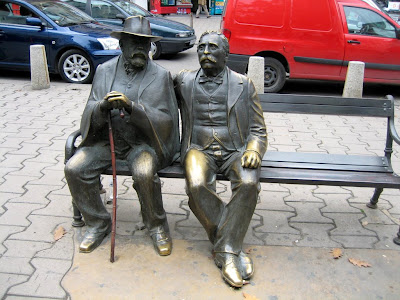
Pencho Slaveykov (left sculpture) and his father Petko (right sculpture) on Slaveykov Square in Sofia.
Престана поройния дъжд (poem, in Bulgarian)Pencho Slaveikov in Bulgaria, a travel guide By Philip Ward:
Престана поройния дъжд,
отмина вихра ненадеян;
гръмовний сетен ек заглъхва,
далеко някъде отвеян.
И само капчици се ронят
от листовцете разведрени,
и падат — благодатни сълзи,
от блясък слънчев позлатени.
Pencho Slaveykov in Merriam-Webster's encyclopedia of literature By Merriam-Webster, Inc:
References:
Pencho Slaveykov, Wikipedia, the free encyclopedia.
Image source: Pencho Slaveykov. Wikipedia, public domain.

Category: Bulgarian poets. Wikipedia.
Photos from MuseumSlaveykovi.org.
Publications at Slovo.bg (in Bulgarian).
Bulgarian Poets: Dobri Chintulov (Bulgarian: Добри Чинтулов)
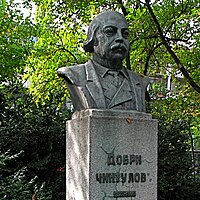 From Wikipedia:
Dobri Chintulov (Bulgarian: Добри Чинтулов) (1822 – 27 March 1886) was a Bulgarian poet, teacher and composer of the Bulgarian National Revival period.
Born in the Thracian town of Sliven in September 1822 to the family of a craftsman, Chintulov studied at the Greek school in his hometown, he also received education in Romania and Russia. Chintulov wrote a number of patriotic and revolutionary songs and poems, some of which became renowned as anthems of the liberation of the Bulgarians from the Ottoman Empire.
Chintulov worked as a teacher for years, but had to quit due to problems with his sight. Although ill and half-blind, Chintulov was among those who welcomed the liberating Russian forces in Sliven during the Russo-Turkish War of 1877–1878. Receiving a pension until the end of his life, Chintulov died in Sliven on 27 March 1886, disappointed with the post-Liberation reality.
Chintulov's poetic legacy is not large in numbers, as only around 20 of his poems have survived, he had to burn his manuscripts twice. Three of his best known works are "Rise Up, Rise Up, Balkan Hero", "The Wind is Resounding, the Mountain is Moaning", and "Where are you, Faithful Love of the People?"
In Bulgarian:
Стани, стани юнак балкански (Rise Up, Rise Up, Balkan Hero)
Стани, стани юнак балкански
от сън дълбок се събуди,
срещу народа отомански
ти българите поведи!
Song video: Стани, стани юнак балкански (Rise Up, Rise Up, Balkan Hero)
Вятър ечи, Балкан стене (The Wind is Resounding, the Mountain is Moaning)
Вятър ечи, Балкан стене,
сам юнак на коня
с тръба зове свойте братя:
всички на оръжие!
Song video: Вятър ечи, Балкан стене (The Wind is Resounding, the Mountain is Moaning)
References:
Dobri Chintulov. Wikipedia.
Image source: Dobri Chintulov. Wikipedia, Михал Орела, Creative Commons Attribution 3.0 Unported License.

Dobri Chintulov in Bulgaria By R. J. Crampton.
Dobri Chintulov in A short history of modern Bulgaria By R. J. Crampton.
Bulgarian Poets: Georgi Dzhagarov (Bulgarian: Георги Джагаров)
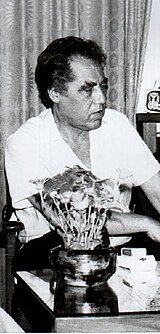 From Wikipedia:
Georgi Dzhagarov (Bulgarian: Георги Джагаров) (14 July 1925-1995) was a Bulgarian playwright, poet and politician.
Dzhagarov's most famous poem is devoted to his home country of Bulgaria: "A land like the palm of my hand."
България (in Bulgarian)
Земя като една човешка длан...
Но по-голяма ти не си ми нужна,
Щастлив съм аз, че твойта кръв е южна,
че е от кремък твоят стар Балкан.
Какво, че виха вълци и чакали
из твоите полета и гори?
С онез, които бяха с теб добри,
ти бе добра, но злите не пожали.
Земя, като една човешка длан...
Но счупи се във тази длан сурова
стакана с византийската отрова
и кървавия турски ятaгян.
Търговци на тютюн и кръв човешка
продаваха на дребно твойта пръст,
но паднаха под теб с пречупен кръст,
че беше малка ти, но беше тежка.
И стана чудо: смертю смерт поправ,
усмихнаха се чардаклии къщи
и заплющяха знамена могъщи,
и път се ширна – радостен и прав.
Сега цъфтиш! Набъбва чернозема
под ласкавите български ръце,
дъхти на здравец твоето лице
и нова песен вятърът подема
Земя, като една човешка длан...
Но ти за мен си цяло мироздание,
че аз те меря не на разстояние,
а с обич, от която съм пиян!
During his lifetime, there were rumors that Georgi Dzhagarov was a heavy drinker but this had not affected his literature work. He died from pancreatic cancer in 1995.
References:
Newspaper Segabg.com and part 2 (in Bulgarian).
Image source: Wikipedia, Creative Commons license.
Newspaper Segabg.com and part 2 (in Bulgarian).
Image source: Wikipedia, Creative Commons license.

Updated: 04/17/2010
Bulgarian Poets: Nikola Vaptsarov (Никола Вапцаров)
 From Wikipedia:
Nikola Vaptsarov (Bulgarian: Никола Вапцаров) (7 December 1909 - 23 July 1942) was a Bulgarian poet and revolutionary. He was born in Bansko and trained as a machine engineer at the Naval Machinery School in Varna, later Naval Academy. Vaptsarov worked machinist jobs most of his life and wrote in his spare time. His only released book of poetry is Motoring Verses (1940). Because of his underground activity against the government of Boris III and the German troops in Bulgaria, he was arrested in March 1942. The court imposed the death penalty on July 23, 1942, Vaptsarov wrote his last poem at 2 pm and was executed by a firing squad the same evening at age of 33.
His poetry has been translated in 98 languages throughout the world. Vaptsarov Peak in eastern Livingston Island, Antarctica is named after the famous Bulgarian poet.

Vaptsarov Peak on Livingston Island, Antarctica. The peak is named after the famous Bulgarian poet Nikola Vaptsarov (1909-42). Image source: Wikipedia, GNU Free Documentation License.

The first verse of the poem Spring (in Bulgarian, source: slovo.bg):
Пролет
Пролет моя, моя бяла пролет,
още неживяна, непразнувана,
само в зрачни сънища сънувана,
как минуваш ниско над тополите,
но не спираш тука своя полет.
English translation: Spring
Spring of mine, O spring of mine so white,
as yet unlived, as yet unfeasted,
alone in visions vague yet dreamt of,
how low above the poplars do you skim,
yet without pausing in your flight.
Video: Margret Nikolova - Prolet moya (1971) (in Bulgarian).
Прощално (in Bulgarian)
На жена ми
Понякога ще идвам във съня ти
като нечакан и неискан гостенин.
Не ме оставяй ти отвън на пътя –
вратите не залоствай.
Ще влезна тихо. Кротко ще приседна,
ще вперя поглед в мрака да те видя.
Когато се наситя да те гледам –
ще те целуна и ще си отида.
English translation: On Parting (A Farewell)
To My Wife
Sometimes I'll come when you're asleep,
An unexpected visitor.
Don't leave me outside in the street.
Don't bar the door!
I'll enter quietly, softly sit.
And gaze upon you in the dark.
Then when my eyes have gazed their fill,
I'll kiss you and depart.
Vaptsarov's last poem, written hours before his death:
Борбата е безмилостно жестока... (in Bulgarian)
Борбата е безмилостно жестока.
Борбата както казват, е епична.
Аз паднах. Друг ще ме смени и...
толкоз.
Какво тук значи някаква си личност?!
14 ч. – 23.07.1942 г.
English translation: The fight is hard and pitiless
The fight is hard and pitiless
The fight is epic, as they say.
I fell. Another takes my place -
Why single out a name?
2 PM, 23 July 1942
Nikola Vaptsarov in Rough guide to Bulgaria By Jonathan Bousfield, Dan Richardson:
Bansko (Bulgarian: Банско) is a town in southwestern Bulgaria, located at the foot of Pirin at an altitude of 925 m above sea level. It is considered to be the most developed Ski and Winter Resort in Eastern Europe, and one of the best in Europe. Bansko is the birthplace of 20th century Bulgarian poet Nikola Vaptsarov and Bulgarian enlighteners Paisiy Hilendarski and Neofit Rilski.
Image source: Vaptsarov as a sailor in Varna, Wikipedia, public domain.

Bulgarian Poets: Hristo Botev (Христо Ботев)
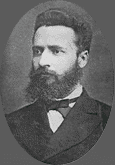 From Wikipedia:
Hristo Botev (Bulgarian: Христо Ботев, also transliterated as Hristo Botyov) (January 6, 1848 – June 2, 1876), was a Bulgarian poet and national revolutionary. Botev is widely considered by Bulgarians to be a symbolic historical figure and national hero.
Botev was born in Karlovo. His father, Botyo Petkov (1815–1869), was a teacher and one of the most significant figures of the late period of the Bulgarian National Revival towards the end of the Ottoman rule. In 1863, after completing his elementary education in Kalofer, Botev was sent by his father to a high school in Odessa. While there, he was deeply impressed by the work of the liberal Russian poets of the day.
In May 1876, Hristo Botev came to the April Uprising rebels' rescue with a detachment of Bulgarian political emigrees resident in Romania, ending with the unit's rout (and Botev's death at the age of 28).
One of Botev's best known poems is Hadzhi Dimitar (Хаджи Димитър), written to honor Dimitar Nikolov Asenov (10 May 1840 – 18 July 1868), better known as Hadzhi Dimitar (Хаджи Димитър) was one of the most prominent Bulgarian voivods and revolutionary workers for the Liberation of Bulgaria from Ottoman rule. The most famous couplet from the poem probably is (in Bulgarian):
Настане вечер – месец изгрее,
звезди обсипят сводът небесен;
гора зашуми, вятър повее, –
Балканът пее хайдушка песен!

Hadzhi Dimitar (Хаджи Димитър). Image source: Wikipedia, public domain.

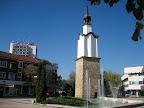
The city of Botevgrad in Bulgaria is named after Hristo Botev.
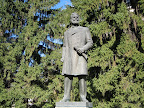
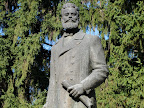
The monument of Hristo Botev in Botevgrad, Bulgaria.
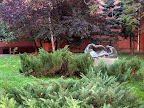
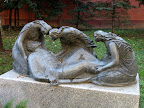
A monument depicting the scene from Hadji Dimitar with the three fairies tendering the wounded rebel's wounds.
References
HristoBotev.com (in Bulgarian).
Videos (in Bulgarian)
Христо Ботев - "Великите българи" 1 of 3.
Христо Ботев - "Великите българи" 2 of 3.
Христо Ботев - "Великите българи" 3 of 3.
Хаджи Димитър.
Жив е той , жив е! / Jiv e toi, jiv e!
2 Юни, Ден на Христо Ботев.
Related reading
http://www.nationalgeographic.bg/?cid=101&article=4829
Strannopriemnicata.wordpress.com ("virtual museum").
Image source: Hristo Botev, Bulgarian revolutionary and poet, Wikipedia, public domain.

Hristo Botev in Bulgaria: The Bradt Travel Guide By Annie Kay:
Hristo Botev in Bulgaria By Richard Watkins, Christopher Deliso:
Bulgarian Poets: Lyuben Karavelov (Любен Каравелов)
 From Wikipedia:
Lyuben Karavelov (Bulgarian: Любен Каравелов) (c. 1834 - 21 January 1879) was a Bulgarian writer and an important figure of the Bulgarian National Revival. During this period, Bulgaria was under Turkish rule. At his first newspaper Svoboda (Freedom) in Bucharest (1869–1873), we worked and became friends with poet and revolutionary Hristo Botev who devoted a poem to him. In 1870, Karavelov was elected chairman of the Bulgarian Revolutionary Central Committee, where he worked with Vasil Levski, the leader of the Internal Revolutionary Organization. Karavelov admired the political systems of Switzerland (which he believed was the model for the ethnically diverse Balkans) and the United States; and he praised the American public education system.
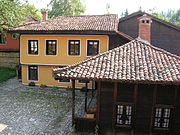
Karavelov House, in Koprivshtitsa. Image source: Wikipedia, public domain.

Following the capture and execution of Levski in 1873, the disheartened Karavelov gradually abandoned his revolutionary zeal, attracting Botev's severe criticism, and started publishing a new Znanie (Knowledge) journal and popular science books. Karavelov died in 1879, soon after the liberation of Bulgaria, in Rousse.
One of Lyuben Karavelov's most famous works (in Bulgarian and English) is shown below, source: Slovo.bg. The English translation is unofficial and uses abbreviations in the style of text messaging.
Хубава си, моя горо (My Forest, You Are Lovely)
Хубава си, моя горо,
миришеш на младост,
но вселяваш в сърцата ни
само скръб и жалост:
който веднъж те погледне,
той вечно жалее,
че не може под твоите
сенки да изтлее,
а комуто стане нужда
веч да те остави,
той не може, дорде е жив,
да те заборави.
Хубава си, моя горо,
миришеш на младост,
но вселяваш в сърцата ни
само скръб и жалост,
твойте буки и дъбове,
твойте шуми гъсти
и цветята, и водите,
агнетата тлъсти,
и божурът, и тревите,
и твойта прохлада,
всичко, казвам, понякогаш
като куршум пада
на сърцето, което е
всякогаш готово
да поплаче, кога види
в природата ново,
кога види как пролетта
старостта изпраща
и под студът, и под снегьт
живот се захваща.
("Знание", г. I, кн. 9, 15 май 1875)
Video: Hubava Si, Moya Goro (My Forest, You Are Lovely).
Lyrics: Hubava Si, Moya Goro (My Forest, You Are Lovely)
in Bulgarian alphabet
in Bulgarian
in English
Хубава си, моя горо,
hubava si moia goro
U r beautiful my forest
миришеш на младост,
mirishesh na mladost
u smell of youth
но вселяваш в сърцата ни
no vseliavash v sartzata ni
but u inspire in our hearts
само скръб и жалост.
samo skrab i zhalost
only sorrow and sadness
Който веднъж те погледне,
koito vednazh te pogledne
who looks at u only once
той вечно жалее,
toi vechno zhalee
he aslways sorrows
че не може под твоите
che ne mozhe pod tvoite
that he can’t under urs
сенки да изтлее.
senki da iztlee
shadows to wither away
А комуто стане нужда
a komuto stane nuzhda
and who becomes necessary to
веч да те остави,
vech da te ostavi
leave u forever
той не може, дорде е жив,
toi ne mozhe dorde e zhiv
he can’t until he’s alive
да те заборави.
da te zabravi
to forget u
Твоите буки и дъбове,
tvoite buki i dabove
ur beech-trees and oak-trees
твоите шуми гъсти,
tvoite shumi gasti
ur thick foliage leaves
и цветята и водите,
chvetiata i vodite
the flowers and the waters
агнетата тлъсти, и божурът, и тревите
agnetata tlasti,i bozhurat,i trevite
the fat lambs, and the globe flower, and the grasses
и твойта прохлада,
i tvoita prohlada
and ur coolness
всичко, казвам, понякогаж
vsichko kazvam,poniakogazh
everything I’m saying,sometimes
като куршум пада
kato kurshum pada
falls like a bullit
на сърцето, което е
na sartzheto,koeto e
to the heart,which is
всякогаж готово
vsiakogazh gotovo
everytime ready
да поплаче, кога види
da poplache,koga vidi
to cry,when it sees
в природата ново,
v prirodata novo
in the nature something new
кога види как пролетта
koga vidi kak proletta
when it sees how the spring
старостта изпраща,
starostta izprashta
sends off the old age
и под студа и под снега
i pod studa i pod snega
and under the cold and under the snow
живот се захваща.
zhivot se zarazhda
a life arises.
Video: A documentary about Lyuben Karavelov last years (1 of 3 parts).
Lyuben Karavelov's house in Bulgaria By Richard Watkins, Christopher Deliso:
Lyuben Karavelov in Bulgaria By R. J. Crampton:
Image source: Lyuben Karavelov, Wikipedia, public domain.
Bulgarian Poets: Peyo Yavorov (Пейо Яворов)
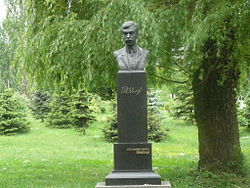
Monument of Peyo Yavorov in the Borisova gradina in Sofia, from the grateful Armenians. Image source: Wikipedia, Elena Chochkova, Creative Commons Attribution 3.0 Unported License.

From Wikipedia:
Peyo Yavorov (Bulgarian: Пейо Яворов; born Пейо Крачолов; January 1, 1878–October 17, 1914) was a Bulgarian Symbolist poet. He was considered to be one of the finest poetic talents of Bulgaria.
Most of his poems are romantic in subject, and dedicated to the two women in his life — Mina Todorova and Lora Karavelova. His first (and arguably greatest) love Mina died from tubercolosis, which greatly saddened Yavorov. She was buried in the Paris cemetery Père Lachaise.
Later on he met Lora, the daughter of statesman Petko Karavelov. They married, although Yavorov never loved her the way he loved Mina. The saved letters between Lora and Peyo proved their ardent and wild love.
Yavorov and Karavelova had a very turbulent marriage. Yavorov was very popular at that time and had many female admirers, which provoked Lora’s jealousy. They often had heated quarrels with Lora blaming Yavorov that he did not love her enough.
In November 1913 a fatal tragedy befell the family – after a quarrel Lora committed suicide. The same night Yavorov also made an attempt on his own life, and the bullet went through his temporal bone which left him almost blind. In despair over the trial provoked by Lora's death and the rumor that he had killed her, Yavorov poisoned and then shot himself on 29 October 1914, at the age of 36.

Yavorov Peak on Livingston Island in the South Shetland Islands, Antarctica is named after Peyo Yavorov.
One of Peyo Yavorov's most famous works (in Bulgarian and English), source: Slovo.bg:
Две хубави очи
Две хубави очи. Душата на дете
в две хубави очи; - музика - лъчи
Не искат и не обещават те...
Душата ми се моли,
дете,
душата ми се моли!
Страсти и неволи
ще хвърлят утре върху тях
булото на срам и грях.
Булото на срам и грях -
не ще го хвърлят върху тях
страсти и неволи.
Душата ми се моли,
дете,
душата ми се моли...
Не искат и не обещават те! -
Две хубави очи. Музика, лъчи
в две хубави очи. Душата на дете...
Two Beautiful Eyes
Two beautiful eyes. The soul of a child
In two beautiful eyes – music, rays.
They don’t want and they don’t promise...
My soul is praying,
Child,
My soul is praying!
Passions and miseries
Will throw tomorrow upon them
The veil of shame and sin
The veil of shame and sin
Will not throw upon them
Passions and miseries.
My soul is praying,
Child,
My soul is praying...
They don’t want and don’t promise!
Two beautiful eyes. Music, rays.
In two beautiful eyes. The soul of a child.
Yavorov from Bulgaria By Jonathan Bousfield, Dan Richardson, Rough Guides, Richard Watkins:
Video: Peyo Yavorov (in Bulgarian).
Related reading:
Пейо Яворов / Peyo Yavorov: The two women in his life. Facebook page.
Subscribe to:
Posts (Atom)
